
Blog
Corbetti Geothermal Signs Drilling Deal, Targets Early 2027
Estimated reading time: 6 minutes · Last updated:
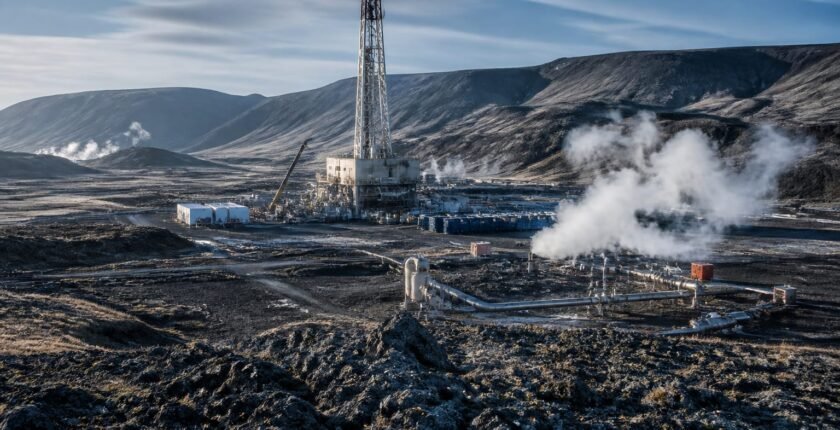
The Corbetti geothermal project in Ethiopia has hired British contractor Marriott Drilling Group to drill up to four exploration wells, with work planned for early 2027. The deal was signed on 28 October 2026, after Taranis Operations Ltd took a majority stake. The Private Infrastructure Development Group (PIDG) keeps about 40 percent and is adding $7.2 million in equity. The wells will show whether heat beneath the Corbetti Caldera, near Shashemene in Oromia Regional State, can support a 150 MW plant. That question has hung over the scheme since Reykjavik Geothermal took it on in 2011. Ownership and contracts have been rewritten several times, and no electricity has been sold. The drilling contract does not amount to financial close.
The signing of the drilling contract with Marriott is an important milestone of the project
Kevin Ziemer, Managing Director, Taranis
Key takeaways
- Drilling deal signed: Marriott Drilling Group signed on 28 October 2026 to drill up to four exploration wells in the Corbetti Caldera, with drilling scheduled for early 2027.
- New majority owner: Taranis Operations Ltd, linked to the Perrodo family's industrial interests, now controls Corbetti after entering in 2026 via a convertible arrangement tied to up to $27 million.
- PIDG stays in: PIDG retains roughly 40 percent and is adding $7.2 million in equity through InfraCo Africa Business Development Limited.
- Shrinking ambition: Corbetti was pitched at up to 1,000 MW in 2013 and 520 MW in 2017, and is now planned as 150 MW in phases of 50 MW and 100 MW.
- No power date yet: The contract value, the full construction financing and a revised date for commercial generation have not been disclosed.
Table of contents
- Key takeaways
- What the Marriott Drilling Contract Covers, and What It Leaves Open
- Who Now Owns Corbetti and Who Is Paying for the Next Stage
- Why Corbetti Has Stalled Since 2011
- Why Ethiopia Wants Geothermal Beside Its Dams
- What could move Corbetti forward, and what could stall it again
- What to be careful about
- Frequently asked questions
What the Marriott Drilling Contract Covers, and What It Leaves Open
Marriott Drilling Group's contract covers up to four exploration wells inside the Corbetti Caldera. PIDG says the drilling equipment should reach Ethiopia over the coming months. Site preparation has already started, and drilling is scheduled for early 2027.
Exploration is the gate every geothermal plant must pass. A solar farm can be sized from sunshine records and a dam from river flows, but a geothermal developer learns the temperature, volume and productivity of its resource by drilling into it. At Corbetti, the well results will guide choices about production and injection wells, the steam field and the initial 50 MW generating unit.
Plenty remains undisclosed. Neither side has published the value of the Marriott contract, the total Taranis paid for control, or the size of the financing package needed to build the plant. Financial close, the point at which all construction funding is committed, has not been reached for the 150 MW development, and the developers have given no new date for commercial generation.
Who Now Owns Corbetti and Who Is Paying for the Next Stage
Taranis Operations Ltd now leads Corbetti. It is an investment vehicle tied to the Perrodo family's industrial interests, and its majority stake replaces the earlier arrangement in which the founding sponsors ran the project. Taranis came in during 2026 through a convertible financing arrangement linked to a prospective investment of up to $27 million.
PIDG, a development-finance group backed by several international governments, remains the main minority holder with roughly 40 percent. Its fresh $7.2 million of equity flows through InfraCo Africa Business Development Limited and sits alongside money from Taranis for the next development stage.
Kevin Ziemer, Managing Director of Taranis, called the Marriott deal "an important milestone of the project" and said the company plans to push on with exploration and later development. Omar Jabri, Head of Business Development for Africa at InfraCo, said the new investor and contractor give the developers the means to confirm the resource, and that a successful drilling campaign would let the project move towards financial close. Both framings rest on the same unknown: what the wells find.
Why Corbetti Has Stalled Since 2011
Ethiopia opened geothermal exploration to private licence holders in 2009. Reykjavik Geothermal started work on Corbetti in 2011 and signed a framework agreement with Ethiopian Electric Power in October 2013. At that point the field was pitched as a development of up to 1,000 MW, starting with a 50 MW phase. Berkeley Energy and Iceland Drilling were partners from the start, and InfraCo Africa joined the sponsors in 2015.
Corbetti Geothermal PLC put its name to a 520 MW scheme in December 2017, in deals struck with the government and Ethiopian Electric Power. It was treated as a landmark for private power in Ethiopia, yet commercial generation never followed. The plan was cut to 150 MW in two phases, and in March 2020 the power purchase agreement and the implementation agreement were both redrawn to match: 50 MW first, then 100 MW more.
New paperwork did not unblock it. When the Center for Strategic and International Studies assessed the project in 2020, it found that financial close was being held up by government approvals, contracts and financing that were still unfinished. In May 2024 PIDG announced a two-year extension of the power purchase agreement to allow exploration drilling, together with procurement of an owner's engineer. That drilling did not lead to a working plant. Over the years, the headline ambition has shrunk from 1,000 MW in 2013 to 150 MW.
Why Ethiopia Wants Geothermal Beside Its Dams
Hydropower supplies the overwhelming majority of Ethiopia's electricity, which leaves supply exposed to rainfall and water levels. Geothermal plants offer a different profile: continuous output that does not depend on daily sunshine, wind or the rainy season. The Ethiopian Rift Valley holds substantial geothermal resources, including the Corbetti and Tulu Moye fields, both in Oromia.
Both fields were set up as early cases of independent power production. Under that model, private investors finance and run a plant and sell its electricity to Ethiopian Electric Power under a long-term contract. The March 2020 agreements for the two projects set terms on tariffs, foreign exchange, project risks and other obligations.
Those deals have become a test of whether Ethiopia can structure power projects that lenders will fund, combining private capital, foreign-currency debt and long-term purchase commitments. Corbetti's history shows that a signed power purchase agreement is no guarantee that money or construction will follow.
| Date | Milestone | Planned capacity | Lead parties |
|---|---|---|---|
| October 2013 | Framework agreement with Ethiopian Electric Power | Up to 1,000 MW, 50 MW first | Reykjavik Geothermal |
| December 2017 | Agreements with Corbetti Geothermal PLC | 520 MW | Government, Ethiopian Electric Power |
| March 2020 | Revised power purchase and implementation agreements | 150 MW (50 + 100) | Corbetti, alongside Tulu Moye |
| May 2024 | Two-year power purchase agreement extension | 150 MW | PIDG |
| 28 October 2026 | Drilling contract with Marriott Drilling Group | 150 MW | Taranis Operations Ltd, PIDG |
What could move Corbetti forward, and what could stall it again
The case for
- A drilling contractor is signed and site preparation has begun, with drilling scheduled for early 2027.
- Taranis Operations Ltd has taken majority control, giving the project a single lead investor.
- PIDG has committed an extra $7.2 million in equity through InfraCo Africa Business Development Limited.
The case against
- Exploration may show the resource cannot support the planned 50 MW first phase.
- The financing package for building the 150 MW plant has not been disclosed or secured.
- Earlier agreements in 2013, 2017 and 2020 did not lead to commercial generation.
What to be careful about
- The up to four exploration wells could return temperatures or flow rates too weak to justify the 50 MW first phase.
- Construction financing for the 150 MW plant has not been arranged, and its size is undisclosed.
- Outstanding government approvals and contractual terms, flagged by the Center for Strategic and International Studies in 2020, could again slow progress to financial close.
The bottom line
Corbetti's revival is real but narrow. A contractor is signed, a new majority owner is in place, PIDG has put in $7.2 million more, and the site is being prepared. What has been bought is a test, not a power station. Up to four wells will decide whether the caldera can feed a first 50 MW unit and a later 100 MW expansion. Everything after that, from production wells to a financing package nobody has priced publicly, depends on those results. The project has reached signed agreements before, in 2013, 2017 and 2020, without generating power. Early 2027 will show whether drilling actually starts, and the wells that follow will show whether 150 MW is a plan or another revision.
What to watch
- Watch for exploration drilling to begin at the Corbetti Caldera in early 2027, the start window PIDG has given.
- Watch for the arrival of Marriott Drilling Group's equipment in Ethiopia, expected over the coming months; no exact date has been set.
- Watch for results from the up to four wells and any move towards financial close; no revised date for commercial generation has been announced.
Frequently asked questions
How big will the Corbetti geothermal plant be?
The current plan is 150 MW, built in two phases. A first phase of 50 MW would be followed by a second adding 100 MW, under agreements revised in March 2020.
When will Corbetti start producing electricity?
No date has been announced. Exploration drilling is scheduled for early 2027, and the developers have said the results will decide whether they proceed towards financing and building the plant.
How is Tulu Moye linked to the Corbetti project?
Tulu Moye is a separate geothermal project in Oromia. Each of the two projects had its power purchase and implementation agreements redrawn in March 2020, and both were structured as independent power projects selling to Ethiopian Electric Power.
Related reading