
Blog
Verbund Earnings Fall 29% as Low Water Cuts Hydropower
Estimated reading time: 5 minutes · Last updated:
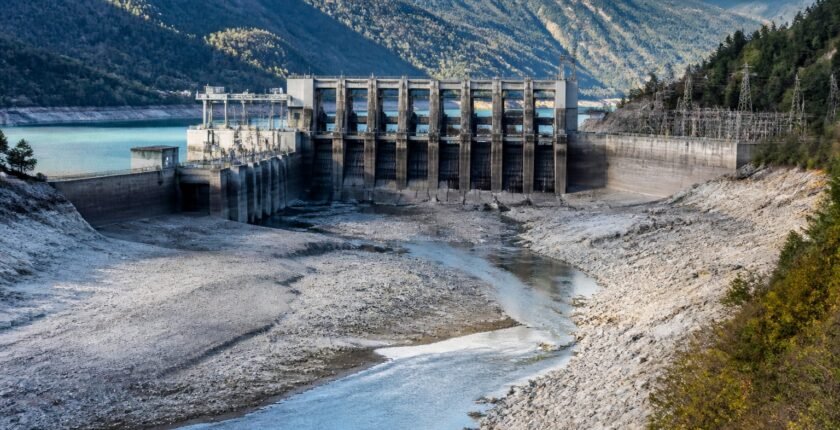
Verbund earnings slumped in the first nine months of 2026, with EBITA down 29%, because the Austrian utility's rivers carried far less water than usual. Its hydropower output fell 20.2% to 15,984GWh, and the price it secured for that power dropped by €33.80 per MWh to €79.70. Revenue slipped 5.4% to €5.56 billion. Verbund described its water supply as "historically low" and now expects full-year 2026 EBITDA of approximately €2.12 billion. Wind and solar output rose, but those assets are far too small to offset a loss of this size. The forecast also depends on the final weeks of the year. It assumes normal generation in November and December after a dry October.
Key takeaways
- Profit hit: Verbund's EBITA fell 29% in the first nine months of 2026, while revenue declined 5.4% to €5.56 billion.
- Hydro volume and price: Verbund's hydropower generation dropped 4,047GWh to 15,984GWh, and its achieved hydro price fell to €79.70 per MWh.
- Water flows: Verbund's run-of-river hydro coefficient was 0.61, against 0.79 in 2025 and a long-term average 39 percentage points higher.
- Renewables offset: Verbund's wind and solar generation rose 70GWh to 1,622GWh, but total company-owned generation still fell 17.6%.
- Guidance: Verbund now forecasts full-year 2026 EBITDA of approximately €2.12 billion. The forecast assumes average generation in November and December.
Table of contents
How Dry Rivers Cut Verbund's Hydropower Output by a Fifth
Hydropower generation came in at 15,984GWh, which was 4,047GWh below the first nine months of 2025. That is a 20.2% decline from about 20,031GWh a year earlier, so roughly one unit in every five was lost.
The hydro coefficient for run-of-river plants shows the cause. These stations hold little water back, so their output follows river flow. The coefficient measures flow against the long-term norm. Verbund put it at 0.61, down from 0.79 in 2025 and 39 percentage points below the long-term average.
Lower volume was only half the problem. The average price Verbund achieved for its own hydro output fell by €33.80 to €79.70 per MWh. That is a fall of about 30% from roughly €113.50. Selling a fifth less power at nearly a third less per unit explains why the Hydro segment's results showed what the company called a "significant drop in earnings".
Why Wind and Solar Growth Could Not Fill the Gap
Verbund's wind and photovoltaic fleet produced 1,622GWh, an increase of 70GWh, with help from new facilities that came online. Weather worked against the gain. The wind and solar generation coefficient was 0.80 against a planned 1.00, an outcome Verbund said was "below expectations".
The scale of the two fleets explains why the gain did not help much. Hydro still produced close to ten times as much electricity as wind and solar, so 70GWh of growth barely registers against a 4,047GWh shortfall. Output from all company-owned plants fell 17.6% year on year.
Higher volume did not lift profit either. Verbund said its New Renewables segment earned less than in 2025 because sales prices were weaker, even though it generated more power. The Grid segment posted what the company called a "slight decline".
What Verbund's Revised Guidance Assumes About the Rest of 2026
Two parts of the group performed better. The Sales segment grew its earnings, and Verbund put that improvement down to positive measurement effects together with the business of supplying power to end customers. All Other Segments also improved. These gains softened the group's decline but did not reverse it.
After publishing the nine-month figures, Verbund revised its full-year 2026 forecast to EBITDA of approximately €2.12 billion. EBITDA measures earnings before interest, tax, depreciation and amortisation. That makes it broader than the EBITA measure behind the 29% fall, because EBITA still subtracts depreciation.
The new forecast already includes the below-average water supply Verbund reported for October. It also assumes that hydropower, wind and solar all generate at average levels in November and December. So far this year, run-of-river flows have reached 0.61 of the norm and wind and solar 0.80 of plan. If the last two months are also weak, the forecast could be revised again.
| Metric | 9M 2025 | 9M 2026 | Change |
|---|---|---|---|
| Hydropower generation | ~20,031GWh | 15,984GWh | -4,047GWh (-20.2%) |
| Achieved hydro price | ~€113.50/MWh | €79.70/MWh | -€33.80/MWh |
| Run-of-river coefficient | 0.79 | 0.61 | -0.18 |
| Wind and PV generation | ~1,552GWh | 1,622GWh | +70GWh |
| Revenue | ~€5.88bn | €5.56bn | -5.4% |
What could lift or weigh on Verbund's full-year result
The case for
- Verbund's guidance needs only average hydro, wind and solar output in November and December, which is a lower bar than the 0.61 and 0.80 coefficients recorded so far.
- New wind and solar facilities have already added 70GWh of output, and more capacity means a larger base if weather improves.
- The Sales segment and All Other Segments increased their earnings, which gives the group some buffer against generation losses.
The case against
- October water supply was already below average, so the year-end period started poorly.
- Achieved hydro prices have fallen €33.80 per MWh, so even a recovery in flows would earn less per unit than in 2025.
- New Renewables earnings fell despite higher volume, so weak prices limit the benefit of further growth in that segment.
What to be careful about
- A dry or windless November and December would put the approximately €2.12 billion EBITDA forecast under pressure, because it assumes average generation.
- Hydro output is far larger than Verbund's wind and solar output, so the group's earnings depend heavily on river flows in a single year.
- Weaker sales prices are hurting both the Hydro and New Renewables segments at once, which reduces the benefit of any recovery in volume.
The bottom line
Verbund's nine-month results show how much a hydro-heavy utility depends on the weather in any one year. River flows and achieved prices fell at the same time, and the damage to the Hydro segment outweighed modest gains in other parts of the group. Revenue fell 5.4% while EBITA fell 29%. That gap suggests the losses were concentrated in higher-margin output. On the company's own figures, the full-year result now depends on two months of normal conditions, after coefficients for both water and wind and solar ran below plan. If November and December are as dry as October, the €2.12 billion EBITDA forecast will come under pressure. If conditions return to average, the guidance should hold.
What to watch
- Watch Verbund's generation in November and December 2026. The approximately €2.12 billion EBITDA forecast assumes average hydropower, wind and solar output in those two months.
- Watch for Verbund's full-year 2026 results to see whether the revised guidance held. The company has not given a publication date.
Frequently asked questions
What is Verbund's EBITDA forecast for 2026?
Verbund expects full-year 2026 EBITDA of approximately €2.12 billion. The forecast includes a below-average water supply in October and assumes average hydropower, wind and solar generation in November and December.
Is EBITA the same as EBITDA?
No. EBITA subtracts depreciation, while EBITDA does not, so EBITDA is the broader measure. Verbund's 29% fall refers to EBITA, but its full-year guidance of approximately €2.12 billion is given as EBITDA.
How much of Verbund's power comes from hydro compared with wind and solar?
In the first nine months of 2026, Verbund generated 15,984GWh from hydropower and 1,622GWh from wind and photovoltaic plants. Hydro was close to ten times larger, even after a 20.2% decline.
Did Verbund's revenue fall as much as its profit?
No. Revenue fell 5.4% to €5.56 billion, while EBITA fell 29%. Higher earnings in the Sales segment and All Other Segments helped offset part of the decline.
Related reading