
Blog
Egypt’s Gulf of Suez 3 Wind Farm Secures $588m Debt
Estimated reading time: 7 minutes · Last updated:
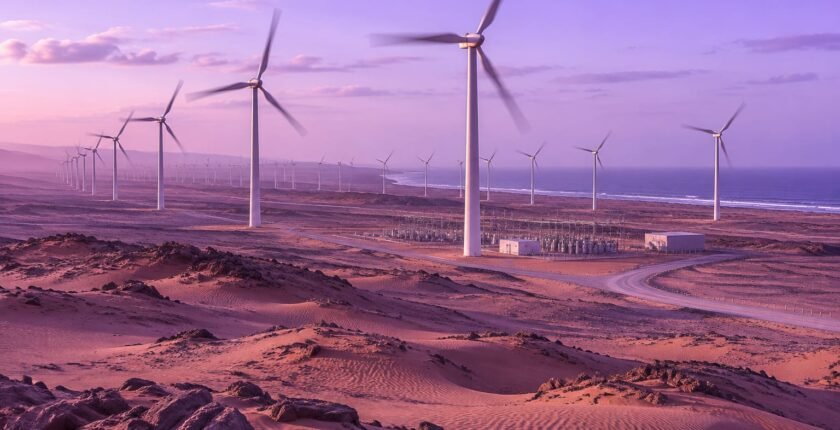
The Gulf of Suez 3 wind farm, a 900MW project near Ras Shokeir in Egypt, reached financial close on 12 November 2026 with roughly $588 million in syndicated, non-recourse debt. The Japan Bank for International Cooperation (JBIC) is lending up to about $285 million of it. French, Dutch and German lenders supply the rest, and Chinese manufacturer Goldwind provides 86 turbines. ENGIE leads development for a consortium that also includes Orascom Construction and Aeolus, a renewable-energy platform backed by Toyota Tsusho. The $588 million covers the debt alone, and the developers have not published the project's full cost. A first 300MW block is scheduled to begin commissioning in January 2028, with full commercial operation planned for the third quarter of that year.
Key takeaways
- Financing closed: The 900MW Gulf of Suez 3 wind farm in Egypt reached financial close on 12 November 2026 with about $588 million in syndicated, non-recourse debt.
- Japan anchors the loans: JBIC is lending up to roughly $285 million, with Proparco, Société Générale, Crédit Agricole CIB, FMO and KfW IPEX-Bank covering the balance and NEXI insuring the commercial banks.
- Minority lead developer: Toyota Tsusho-backed Aeolus owns 40% of the project, ENGIE 35% and Orascom Construction 25%, through Shokeir Wind Energy.
- Turbines and timeline: Goldwind will install 86 turbines rated at 10.5MW each, with the full 900MW due in commercial operation in the third quarter of 2028.
- Egypt portfolio: With Ras Ghareb and Red Sea Wind Energy, the partners' Egyptian wind capacity rises from 912.5MW to about 1.81 gigawatts.
Table of contents
- Key takeaways
- Japan Funds Almost Half of the Debt, Europe the Rest
- Why the Equity Bridges Sit Outside the $588 Million
- Who Owns the Wind Farm and Who Buys Its Power
- Goldwind Turbines and an Orascom Build Started Before Close
- How Gulf of Suez 3 Reshapes the Partners' Egypt Portfolio
- What supports the project and what could slow it
- What to be careful about
- Frequently asked questions
Japan Funds Almost Half of the Debt, Europe the Rest
JBIC's commitment of up to roughly $285 million makes it the anchor lender, covering close to half of the $588 million package. Five European institutions share the balance: Proparco, Société Générale and Crédit Agricole Corporate and Investment Bank from France, FMO from the Netherlands and KfW IPEX-Bank from Germany. Subtracting one figure from the other leaves around $303 million for that group, although JBIC's amount is a ceiling rather than a fixed sum.
Japanese involvement goes further than the JBIC loan. Nippon Export and Investment Insurance (NEXI) is insuring the money advanced by the commercial banks in the syndicate, which moves part of their credit exposure onto the Japanese insurer.
The loans are non-recourse. In project finance, that term means lenders are repaid mainly from the wind farm's own revenue and assets, not from the balance sheets of ENGIE or its partners. That structure explains why the long-term power contract and its government guarantee carry so much weight with the banks.
Why the Equity Bridges Sit Outside the $588 Million
Each sponsor has arranged separate short-term financing for its share of equity. An equity-bridge loan lets a shareholder fund its stake during construction and refinance or repay that money later, so the sponsors do not have to put in all their cash up front.
KfW is providing the bridge for ENGIE and Mizuho the one for Aeolus. FMO and British International Investment (BII) are jointly backing Orascom Construction's bridge, and that facility is the main British contribution to the deal. It also means FMO sits in two places, as a senior lender and as an equity-bridge provider.
None of these facilities has a published value. Because they are separate from the syndicated debt, adding them to $588 million to estimate the total capital raised would produce a misleading number. The full investment in Gulf of Suez 3 remains undisclosed, which limits any judgement on cost per megawatt.
Who Owns the Wind Farm and Who Buys Its Power
Shokeir Wind Energy is the project company that will develop, own and run the site under a 25-year build-own-operate arrangement. Aeolus holds 40%, more than either partner. ENGIE holds 35% and acts as lead developer, and Orascom Construction holds the remaining 25%.
Headlines framed around ENGIE miss the ownership picture. The French group leads the project but is a minority owner, and Japanese capital reaches the scheme through Toyota Tsusho's backing of Aeolus as well as through JBIC, NEXI and Mizuho.
Revenue will come from a 25-year power-purchase agreement with the state-owned Egyptian Electricity Transmission Company. A power-purchase agreement is a long-term contract that fixes who buys a plant's output and on what terms. Egypt's Ministry of Finance guarantees the buyer's obligations, which puts a sovereign backstop behind the contracted income the lenders depend on. The tariff has not been made public.
Goldwind Turbines and an Orascom Build Started Before Close
Goldwind will supply, install and commission 86 turbines, each rated at 10.5MW. Multiplied out, that comes to about 903MW of nameplate capacity, slightly above the 900MW the project will connect to the Egyptian grid.
The Chinese group has divided the job between two units. Its overseas subsidiary handles the equipment and its shipment from China. Its Egyptian arm takes on transport within the country, installation, commissioning and maintenance over the life of the contract.
Orascom Construction is responsible for the civil and electrical balance-of-plant, the infrastructure around the turbines, including a high-voltage substation, and will provide some locally made components. Building started in June 2026, about five months before financial close, so the sponsors carried early works before lenders were committed. The first 300MW is due to begin commissioning in January 2028, with the full 900MW expected in commercial operation in the third quarter of 2028.
How Gulf of Suez 3 Reshapes the Partners' Egypt Portfolio
This is the consortium's third wind farm in Egypt, following the 262.5MW Ras Ghareb plant and the 650MW Red Sea Wind Energy project. Those two total 912.5MW, so adding 900MW takes the partners' Egyptian wind capacity to about 1.81 gigawatts, close to double.
For ENGIE, the site also stands out within its own fleet. At 900MW it would exceed the company's 846MW Assuruá wind complex in Brazil once complete. ENGIE expects the Egyptian farm to generate around four terawatt-hours of electricity a year.
Egypt aims for renewables to supply 42% of its generation by 2030 and to depend less on gas-fired plants. Gulf of Suez 3 adds to that push, though how far it moves the national share depends on figures, such as total demand and the current renewable share, that fall outside this deal.
| Institution | Country | Role | Disclosed amount |
|---|---|---|---|
| JBIC | Japan | Senior lender | Up to about $285 million |
| Proparco, Société Générale, Crédit Agricole CIB | France | Senior lenders | Not itemised |
| FMO | Netherlands | Senior lender; equity bridge for Orascom | Not itemised |
| KfW IPEX-Bank / KfW | Germany | Senior lender; equity bridge for ENGIE | Not itemised |
| NEXI | Japan | Insures commercial lenders | Not disclosed |
| Mizuho | Japan | Equity bridge for Aeolus | Not disclosed |
| British International Investment | Britain | Equity bridge for Orascom | Not disclosed |
| Goldwind | China | 86 turbines, install and maintain | Not disclosed |
What supports the project and what could slow it
The case for
- A 25-year power-purchase agreement with the Egyptian Electricity Transmission Company, guaranteed by Egypt's Ministry of Finance, gives the project contracted revenue.
- Construction has been under way since June 2026, so financial close follows work already in progress rather than starting it.
- Debt is spread across Japanese, French, Dutch and German lenders, with NEXI insurance behind the commercial banks.
The case against
- The project's revenue rests on a single state-owned buyer, so the Ministry of Finance guarantee carries much of the credit weight.
- The total investment, the equity-bridge amounts and the tariff are undisclosed, leaving the project's economics hard to assess from outside.
- Delivery depends on shipping 86 large turbines from China and finishing a high-voltage substation in time for January 2028 commissioning.
What to be careful about
- Revenue depends on one state-owned offtaker, the Egyptian Electricity Transmission Company, backed by a Ministry of Finance guarantee.
- Any slippage in turbine shipments from China or in Orascom's substation work could push the first 300MW past its January 2028 commissioning date.
- Because the full project cost is undisclosed, cost overruns would be difficult for outsiders to identify.
The bottom line
Gulf of Suez 3 shows how a large wind project in Egypt gets built through layered international support: Japanese loans and insurance, European development and commercial lenders, British and Dutch equity bridges, and Chinese turbines. The structure leans heavily on the 25-year contract with the Egyptian Electricity Transmission Company and the Ministry of Finance guarantee behind it, because the debt is non-recourse. The numbers that would let outsiders judge value for money, the total cost, the bridge amounts and the tariff, remain private. The next tests are physical rather than financial: getting 86 Goldwind turbines and a high-voltage substation ready for commissioning in January 2028, and full operation in the third quarter of that year.
What to watch
- Commissioning of the first 300MW section is scheduled to begin in January 2028.
- The full 900MW is expected to reach commercial operation in the third quarter of 2028.
- Progress toward Egypt's goal of renewables supplying 42% of generation by 2030, to which Gulf of Suez 3 contributes.
Frequently asked questions
Who owns the Gulf of Suez 3 wind farm?
The project company Shokeir Wind Energy is owned 40% by Aeolus, 35% by ENGIE and 25% by Orascom Construction. ENGIE is lead developer even though Aeolus, backed by Toyota Tsusho, holds the bigger stake.
Is $588 million the total cost of the Egypt wind farm?
No. The $588 million is the syndicated debt package only. The developers have not disclosed the full investment, and the separate equity-bridge loans have no published value.
When will Gulf of Suez 3 start producing power?
Commissioning of the first 300MW is scheduled for January 2028. The complete 900MW is expected to enter commercial operation in the third quarter of 2028, after which ENGIE expects about four terawatt-hours a year.
What is Britain's role in the Gulf of Suez 3 deal?
British International Investment is not a senior lender. Together with FMO, it is providing equity-bridge financing for Orascom Construction's stake.
Related reading