
Blog
Bulgaria Tenders €350m Yadenitsa Pumped Storage Expansion
Estimated reading time: 6 minutes · Last updated:
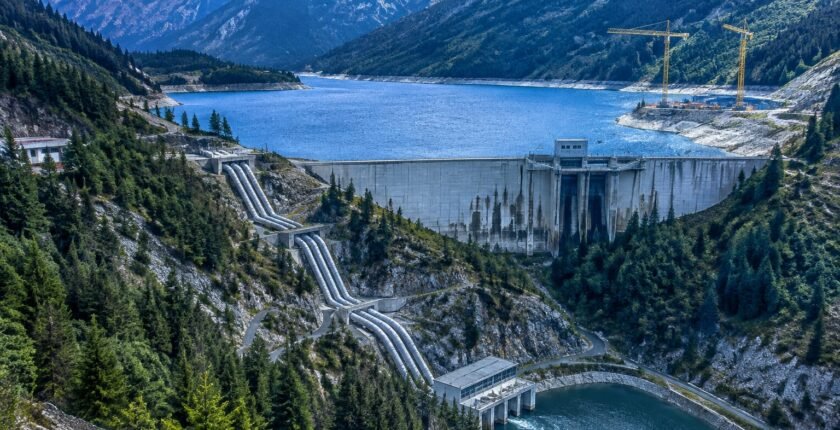
Bulgaria's state-owned National Electricity Company, NEK EAD, has opened a €350 million tender to build the Yadenitsa reservoir and dam and connect them to the existing Chaira pumped-storage hydropower plant. A reversible pressure tunnel 6,750m long and about 7m in diameter will join the new basin to the Chaira reservoir. That raises the usable volume of the plant's lower system from around 4.2 million m3 to 13.4 million m3. The extra 9.2 million m3 is the purpose of the Yadenitsa pumped storage project. NEK is not building a new power station. It is enlarging the body of water an existing one can draw on, so Chaira can run longer pumping and generating cycles as Bulgaria adds more wind and solar.
The project is of strategic importance for the long-term storage of electricity and for enhancing the flexibility of the electricity system as the share of generation from renewable energy sources increases.
NEK EAD, National Electricity Company
Key takeaways
- Tender value: NEK EAD's Yadenitsa tender is worth €350 million and covers a new reservoir, its dam and a reversible tunnel to the Chaira reservoir.
- Storage gain: The Yadenitsa project lifts usable volume in Chaira's lower basin system from about 4.2 million m3 to 13.4 million m3, an addition of 9.2 million m3.
- Tunnel: A reversible pressure tunnel 6,750m long and roughly 7m in diameter will carry water both ways between Yadenitsa and Chaira.
- EU status: Yadenitsa was placed on the European Union's second list of Projects of Common Interest in April 2026, under reference 2.21.
Table of contents
- Key takeaways
- What the €350m Yadenitsa Contract Bundles Together
- How a 6.75km Reversible Tunnel Joins Yadenitsa to Chaira
- Why a Fault Line and a Landslide Are Written Into the Tender
- Why More Lower Storage Moves Chaira Toward Weekly Cycles
- What supports and what threatens the Yadenitsa expansion
- What to be careful about
- Frequently asked questions
What the €350m Yadenitsa Contract Bundles Together
NEK EAD has put the entire Yadenitsa build into a single procurement. The winning bidder takes on the new reservoir and its dam, plus the reversible pressure tunnel that ties it to Chaira. Around both sit the hydraulic, geotechnical and infrastructure jobs needed to make them work.
At the dam, the scope runs from the main embankment and its structures to an injection gallery, a shaft spillway and a discharge gallery. A chute leads to an energy dissipator, and there is a bottom outlet. Instrumentation and monitoring systems are included. So is a small hydropower plant fed by environmental flows, meaning water released downstream of a dam to sustain the river.
The tunnel brings its own set of hydraulic structures. Across the wider site, the contractor would also protect the reservoir banks and stabilise a landslide. Erosion control, electrical connections and access roads are part of the job too. One tender puts the interfaces between dam, tunnel and slopes in a single set of hands. No award date or bid deadline has been published.
How a 6.75km Reversible Tunnel Joins Yadenitsa to Chaira
A pumped-storage plant stores energy by moving water between two reservoirs. It pumps water uphill when electricity is plentiful and runs it back through turbines when demand rises. Chaira works on this principle. The size of its lower compensating basin limits how long each cycle can last.
Yadenitsa reservoir is the core of the scheme. It will connect to the Chaira reservoir through a reversible pressure tunnel 6,750m long and about 7m across. Water can travel in either direction, serving both the pumping cycle and the generating cycle. Supporting works include an intake at Yadenitsa and surge shafts at both Yadenitsa and Chaira. There is also an access window into the tunnel and equipment for filling and emptying the waterway.
NEK says the facilities will form "a system of connected vessels", with two basins behaving as one. The combined usable volume climbs from 4.2 million m3 to 13.4 million m3, roughly 3.2 times today's figure. The new dam will be a rockfill structure. An asphalt-concrete diaphragm inside it forms the watertight element.
Why a Fault Line and a Landslide Are Written Into the Tender
The tender treats ground conditions as part of the core job. It names three hazards. The first is the reservoir bank where it meets the Yadenitsa fault, which needs reinforcement. The second is a landslide near the temporary explosives storage area, which needs stabilisation. The third covers the slopes around the dam's energy dissipator and the access roads, which need erosion protection.
Spelling these out matters to bidders. A contractor pricing the work must allow for fault and slope remediation from day one, rather than meeting it halfway through excavation. That makes the €350 million figure a better guide to the real job than it would be if these hazards were left out of the scope.
The river below the dam is in scope as well. The contractor will correct the Yadenitsa River downstream of the structure. A monitoring and measurement system will track how the new dam behaves once it holds water. A 20kV electrical connection with standby supplies completes the package.
Why More Lower Storage Moves Chaira Toward Weekly Cycles
Chaira belongs to Bulgaria's Belmeken-Sestrimo-Chaira hydropower complex. It is a significant source of electricity storage and system balancing for the country's grid. Yadenitsa is designed to extend what that plant can do, not to add a separate generating station.
The current lower reservoir keeps Chaira to short operating cycles. More water at the bottom of the system lets the plant work toward weekly operation. In practice, it could absorb surplus power over longer stretches and release it when the grid needs it. NEK frames this as support for integrating wind and solar. It calls the project strategically important for long-term electricity storage as renewables take a larger share of generation.
European recognition followed in April 2026. Yadenitsa joined the European Union's second list of Projects of Common Interest under reference 2.21. That is a designation for energy infrastructure the EU treats as a priority. The listing confirms Brussels sees value in the scheme. It does not, on what has been published, attach any specific EU funding to it.
| Element | Usable volume | Status |
|---|---|---|
| Chaira lower compensating basin today | About 4.2 million m3 | Existing |
| Added by Yadenitsa | 9.2 million m3 | Under tender |
| Combined connected system | 13.4 million m3 | After completion |
What supports and what threatens the Yadenitsa expansion
The case for
- The added 9.2 million m3 builds on an existing plant, so the tender buys storage without the cost of a new generating station.
- Longer cycles toward weekly operation would let Chaira absorb surplus wind and solar output over extended periods.
- Inclusion on the EU's second Projects of Common Interest list in April 2026 gives the project European-level recognition.
The case against
- The tender itself names a fault zone, a landslide and erosion-prone slopes, each a possible source of delay or extra cost.
- A 6,750m tunnel of about 7m diameter is a large underground job, and no construction timeline has been published.
- No EU funding has been tied to the project's PCI status in anything published so far.
What to be careful about
- Ground conditions at the Yadenitsa fault and the landslide near the explosives storage area could prove harder to stabilise than the tender scope assumes.
- Bundling dam, tunnel and site works into one €350 million contract concentrates delivery risk on a single contractor.
- Without a published schedule, the date when Chaira gains its extra 9.2 million m3 of usable storage remains open.
The bottom line
The Yadenitsa tender is a bet on squeezing more value out of a plant Bulgaria already owns. For €350 million, NEK EAD expects to roughly triple the usable water in Chaira's lower system and move the station toward weekly cycling. That is the kind of longer-duration flexibility a grid with more wind and solar needs. The engineering case is clear. The open questions are about delivery. The tender itself flags a fault zone, a landslide and erosion-prone slopes. No award date or build schedule has been published. EU recognition has arrived through the Projects of Common Interest list, but money has not been attached to it. The contract award will be the first hard signal of progress.
What to watch
- Watch for NEK EAD to name the winning bidder for the €350 million Yadenitsa contract; no award date has been set.
- Watch for a construction schedule for the 6,750m reversible tunnel and the new dam; NEK has published none.
- Watch for any EU funding decision linked to Yadenitsa's Projects of Common Interest listing under reference 2.21; none has been announced.
Frequently asked questions
Is Yadenitsa a new hydropower plant?
No. Yadenitsa is a new reservoir and dam linked by tunnel to the existing Chaira pumped-storage plant, enlarging its lower basin system. The only new generating unit in the scope is a small hydropower plant that runs on environmental flows.
How much extra storage does the Yadenitsa project add?
It adds 9.2 million m3 of usable volume. That takes Chaira's lower reservoir system from about 4.2 million m3 to 13.4 million m3, according to NEK EAD.
What does Projects of Common Interest status mean for Yadenitsa?
In April 2026 the European Union put Yadenitsa on its second list of Projects of Common Interest, reference 2.21. The listing marks it as priority energy infrastructure, but no specific EU funding for the project has been announced.
Related reading