
Blog
Bedrock Energy Raises $24M for AI Geothermal Drill Rigs
Estimated reading time: 7 minutes · Last updated:
Bedrock Energy, a Texas geothermal startup, has raised $24 million to put more of its AI-guided geothermal drill rigs into the field, as first reported by TechCrunch on 16 November 2026. The company says its rigs can cut drilling time by up to 80%. They steer boreholes with directional drilling and Bedrock's own subsurface models. The aim is to lower the cost of boring into the earth, one reason ground-source heat pumps remain uncommon in US buildings. Clean Energy Ventures and Clearvision Ventures led the round. Joselyn Lai, co-founder and CEO, said the money will buy more rigs and take Bedrock into new regions. She also said data center developers are now asking whether the systems could free up grid capacity.
A year of revenue for a data center is very meaningful.
Joselyn Lai, co-founder and CEO, Bedrock Energy
Key takeaways
- The raise: Bedrock Energy closed a $24 million round led by Clean Energy Ventures and Clearvision Ventures, following an $8.5 million seed in 2023 and a $12 million Series A in 2025.
- The claim: Bedrock says pairing oil-and-gas directional drilling with its own subsurface models cuts shallow geothermal drilling time by up to 80%, on holes down to roughly 1,000 feet.
- The expansion: CEO Joselyn Lai plans to push Bedrock beyond its current drilling footprint of Utah, Colorado, New York, Alberta and Texas, adding New England, New Jersey, the upper Midwest and more Western states.
- The data center angle: Lai said a Michigan data center developer told her that freeing a few megawatts could let a facility start operating months, or even a year, sooner.
Table of contents
- Key takeaways
- How Directional Drilling Targets the Cost of Geothermal Heat Pumps
- Why Data Center Developers Are Calling a Heat Pump Startup
- Where the $24 Million Goes and What Bedrock Has Built So Far
- Who Is Backing Bedrock as Its Rounds Keep Growing
- What could help or hold back Bedrock's expansion
- What to be careful about
- Frequently asked questions
How Directional Drilling Targets the Cost of Geothermal Heat Pumps
A geothermal heat pump trades heat with the shallow ground, which holds a nearly constant temperature through the year. In winter the system draws warmth out of the earth. In summer it pushes a building's surplus heat back down. The technology has existed for decades. Yet only a fraction of US buildings use one, according to the 2025 US geothermal market report, and the expense of drilling is part of the explanation.
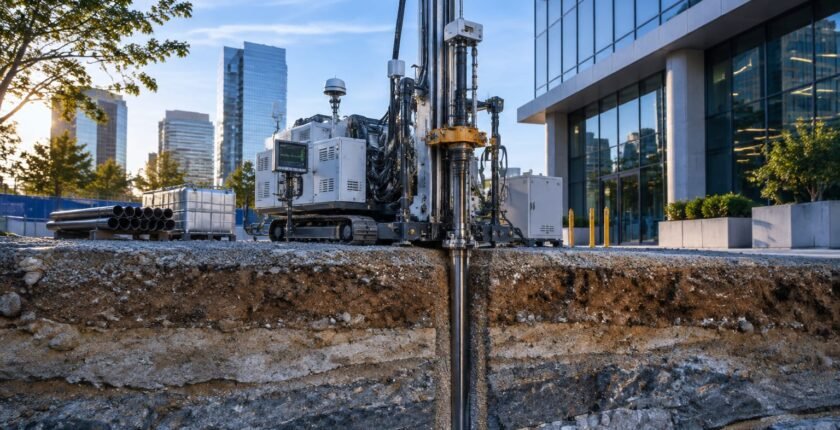
Bedrock says most heat pump drillers rely on rigs much like the ones used for water wells. Those machines do the job, but they offer little precision. Bedrock's alternative borrows directional drilling from the oil and gas industry. It steers the bit using models the company has built of what lies underground, on holes that reach down roughly 1,000 feet.
The company claims this pairing lets it choose where each borehole sits and how it is drilled, which it says protects performance and lifespan. Sensors placed in the boreholes send data back to sharpen the models. The headline figure, a drilling time cut of up to 80%, comes from Bedrock itself. It is the number to test as the fleet grows.
Commercial properties have been the core customers so far. Their footprints are small, so deep, precisely placed boreholes get the most heating and cooling out of limited land.
Why Data Center Developers Are Calling a Heat Pump Startup
Lai said Bedrock has been in talks with data center developers, and their interest splits two ways. Some want to cool server racks directly. Others care about something less obvious. A geothermal system draws power at a steady, flat rate, so installing it on neighbouring properties can open up meaningful room on the grid.
For a developer waiting on power, that room has a calendar value. Lai described a conversation with a developer in Michigan. The developer told her that freeing up a few megawatts might let the facility begin operating several months earlier, possibly a full year. She stressed that a year of revenue is a large sum for a data center.
This is the most speculative part of Bedrock's pitch. No data center contract was named, and the Michigan example came from a conversation rather than a project. The logic is plausible, because heat pumps on nearby buildings would lower peak demand on shared infrastructure. But whether utilities would hand that freed capacity to a data center is a question only grid operators can answer.
Where the $24 Million Goes and What Bedrock Has Built So Far
Texas, where Bedrock is based, is one of five places the company works today, alongside Utah, Colorado, New York and Alberta. Lai said the new money will carry the company into New England, New Jersey, the upper Midwest and further Western states. Expansion in this business means hardware, so Bedrock plans to add rigs to its fleet to serve the new regions.
The company's track record is still modest. Lai said Bedrock has drilled boreholes at nine sites. Some new customers have already paid ahead of drilling that she expects in the next year or two. Advance payments signal real demand before the rigs arrive. Still, nine sites is a small base for proving a speed claim across very different geology, from Alberta to the upper Midwest.
Lai also pitched the long-run economics. A running geothermal heat pump needs far less upkeep than a conventional HVAC system, she said. In her view, something you install once and then leave working for a long time is attractive as infrastructure from a financial standpoint.
Who Is Backing Bedrock as Its Rounds Keep Growing
Clean Energy Ventures and Clearvision Ventures led the new round. Other participants were Energy Impact Partners, Wireframe Ventures, Susquehanna Sustainable Investments, GVP Climate, Titanium Ventures, Great Wave Ventures, Elemental Impact, SFV Capital, MUUS, the Autodesk Foundation and Temasek Trust's Catalytic Capital for Climate and Health.
The round follows a $12 million Series A in 2025 and an $8.5 million seed round in 2023. Each raise has been larger than the last. The new round is twice the size of the Series A, and the three rounds together come to about $44.5 million.
The investor list mixes dedicated climate funds with a corporate foundation and a philanthropic arm of Temasek Trust. That breadth suggests backers see shallow geothermal as building infrastructure, not a niche product. The growing round sizes also reflect how capital-heavy the model is. Every new region needs physical rigs and crews before it brings in revenue.
| Round | Year | Amount | Lead investors |
|---|---|---|---|
| Seed | 2023 | $8.5 million | Not stated |
| Series A | 2025 | $12 million | Not stated |
| Latest round | 2026 | $24 million | Clean Energy Ventures, Clearvision Ventures |
What could help or hold back Bedrock's expansion
The case for
- Directional drilling and subsurface modelling, if they deliver the claimed cut of up to 80% in drilling time, attack the main cost barrier to ground-source heat pumps.
- Customers have already prepaid for drilling expected within the next year or two, giving the new rigs work before they arrive.
- Data center developers short on grid power have a reason to value the flat load profile of geothermal systems on neighbouring sites.
The case against
- Nine drilled sites is a small record from which to extend an 80% speed claim into new geology in New England, New Jersey and the upper Midwest.
- Each new region needs physical rigs and crews, so growth stays tied to capital and equipment rather than software alone.
- The data center opportunity rests so far on conversations, including the Michigan example, rather than named contracts.
What to be careful about
- The up to 80% drilling time reduction is Bedrock's own figure and may not hold across the geology of the regions it plans to enter.
- Freed grid capacity only benefits a data center if the utility makes it available, which is outside Bedrock's control.
- Prepaid customers expect drilling within a year or two, so delays in adding rigs could strain those commitments.
The bottom line
Bedrock Energy's $24 million round is a bet that the cost of drilling, not the heat pump itself, has kept shallow geothermal on the margins. The company's answer is oil-and-gas directional drilling guided by its own subsurface models. Its claimed time saving of up to 80% is the claim everything else rests on. The record so far is nine sites and five markets, with prepaid customers waiting. The data center pitch could widen the market sharply, but it remains a set of conversations. The next year or two will show whether more rigs in new regions turn a fast-drilling claim into steady, repeatable economics for commercial buildings.
What to watch
- Watch for Bedrock's first drilling jobs in New England, New Jersey or the upper Midwest; no date has been set for entering those regions.
- Drilling for customers who have already paid is expected within the next year or two, according to Lai, and will show whether the new rigs arrive on time.
- Watch whether any data center developer, such as the Michigan company Lai described, signs a contract with Bedrock; none has been named.
Frequently asked questions
How much money has Bedrock Energy raised in total?
Bedrock has raised about $44.5 million across three rounds. That total combines an $8.5 million seed in 2023, a $12 million Series A in 2025 and the new $24 million round led by Clean Energy Ventures and Clearvision Ventures.
How deep does Bedrock Energy drill for geothermal heat pumps?
Bedrock focuses on shallow geothermal, with boreholes reaching roughly 1,000 feet. At that depth the ground temperature stays steady through the year, which is what a geothermal heat pump relies on.
Where does Bedrock Energy operate?
Bedrock's home state of Texas is one of five markets where it drills now; the others are Utah, Colorado, New York and Alberta. According to CEO Joselyn Lai, the new funding will extend it to New England, New Jersey, the upper Midwest and additional Western states.
Can geothermal heat pumps help data centers get power sooner?
Joselyn Lai argues they can. Geothermal systems on neighbouring properties draw a flat load that could free grid capacity. She said a Michigan developer told her freeing a few megawatts might let a facility open months or up to a year earlier.
Related reading