
Blog
Pure Hydrogen Pipeline Spanning 121 Miles Opens in China
Estimated reading time: 7 minutes · Last updated:
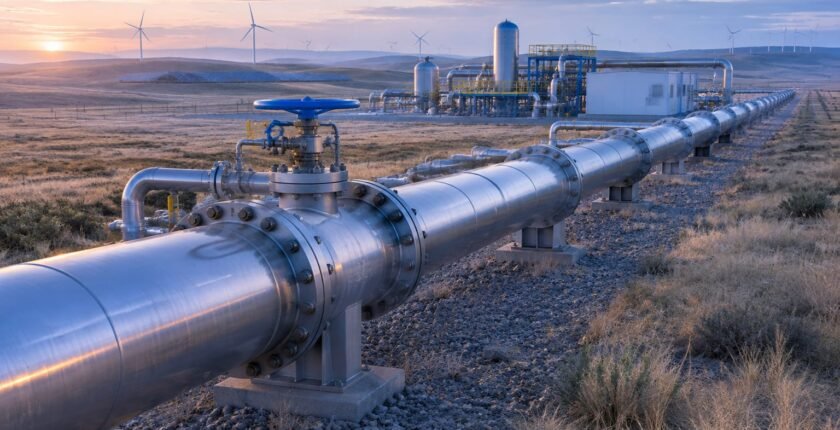
A pure hydrogen pipeline running 121 miles (195 km) has started delivering green hydrogen to industrial customers in Baotou, a manufacturing city in north China's Inner Mongolia Autonomous Region. The line was built by Inner Mongolia Huadian Hydrogen Energy Industry Technology Development Co., Ltd. It is designed to move up to 100,000 tonnes of hydrogen a year. Project officials estimate that the cost of shipping the gas could drop by about 77 percent once the line runs at its full design volume. The start of operations was announced on 19 November 2026 at the 2026 Hydrogen Energy Industry Development Conference in Baotou. For now, the pipeline serves a production base of roughly 7,800 tonnes a year, a small fraction of what it was built to carry.
Key takeaways
- Route and length: The 195 km (121-mile) Baotou pipeline links a green hydrogen plant in Darhan Muminggan United Banner with industrial users in Baotou, Inner Mongolia.
- Projected cost cut: Project officials estimate that transport costs could fall from around $1.94 to roughly $0.45 per kilogram, about 77 percent, but only at full design capacity.
- Capacity gap: The line can carry up to 100,000 tonnes a year, while current supply rests on about 7,800 tonnes of annual production, and no date for full output has been given.
- Steel built for hydrogen: Baotou Iron and Steel Group developed an anti-embrittlement steel for the project, because hydrogen can seep into ordinary pipeline steel and weaken it under high pressure.
- Policy backing: China's state news agency reported that the National Energy Administration chose the line as one of the country's first hydrogen-energy pilot projects.
Table of contents
- Key takeaways
- Where the Baotou Hydrogen Comes From and Who Uses It
- What the 77 Percent Cost Cut Depends On
- Why Hydrogen Is Hard to Move and How the Builders Responded
- How One Pipeline Fits China's Hydrogen Ambitions
- The case for and against the Baotou pipeline
- What to be careful about
- Frequently asked questions
Where the Baotou Hydrogen Comes From and Who Uses It
The pipeline starts at a green hydrogen production site in Darhan Muminggan United Banner and ends at factories in Baotou. Green hydrogen is hydrogen made by splitting water with electricity from renewable sources, a process called electrolysis. In Inner Mongolia, that power comes from large wind and solar farms, which makes the region a natural base for this kind of production.
Baotou Mayor Meng Qingwei said the fuel would help cut carbon from older industries in the city: metallurgy, chemical production, industrial gases and transport. Wang Xinyu, a director at the developer, Inner Mongolia Huadian Hydrogen Energy Industry Technology Development Co., Ltd., made a similar case. He said the line would widen the use of green hydrogen in chemicals, metallurgy and transportation.
Wang also framed the project as a lesson for the rest of the country. He said it would give engineers practical experience in building and operating large pure hydrogen pipelines. China's state news agency reported that the National Energy Administration selected the line as one of the first hydrogen-energy pilot projects in the country. Pilot status signals that the pipeline is meant to serve as a test case, not just a local supply link.
What the 77 Percent Cost Cut Depends On
The headline figure is a projection, not a result. Project officials estimate that moving green hydrogen through the line could cost about $0.45 per kilogram, down from around $1.94. That is a saving of roughly $1.49 per kilogram, or about 77 percent. The estimate applies to the pipeline running at its design capacity of 100,000 tonnes a year.
The line is nowhere near that volume today. It currently supports a production capacity of about 7,800 tonnes a year, which is roughly 7.8 percent of what it was built to carry. A pipeline's cost per kilogram falls as more gas flows through it. So the 77 percent figure depends on production growing many times over at the supply end.
Authorities have not said when the pipeline will reach full capacity. That is the open question behind the cost claim. Until a timetable appears for new electrolysis capacity in Darhan Muminggan United Banner, the $0.45 figure is a description of what the infrastructure could do. It is not yet what Baotou's industrial users pay.
Why Hydrogen Is Hard to Move and How the Builders Responded
Transport is one of the main bottlenecks for hydrogen as an industrial fuel. Trucking the gas in tube trailers costs a lot and moves only small amounts per trip. Pipelines can carry far more, but they need materials and engineering that standard gas lines do not.
The core problem is hydrogen embrittlement. Hydrogen molecules are tiny, small enough to work their way into steel. Once inside, they can make the metal brittle, which is a serious risk in a line held at high pressure. Natural gas does not cause the same damage, so existing gas pipeline designs cannot simply be reused.
For this project, Baotou Iron and Steel Group developed a steel made specifically to resist embrittlement. The construction crews faced other problems too. The route crosses mountains and difficult ground, and high-pressure hydrogen lines set strict standards for welding and corrosion protection. How that steel performs over years of service will matter as much as the opening itself.
How One Pipeline Fits China's Hydrogen Ambitions
Official figures put China's hydrogen production in 2025 at more than 39 million tonnes. Against that total, the Baotou line's full design capacity of 100,000 tonnes a year is roughly a quarter of 1 percent. Its significance lies in what it proves, not in the volume it carries.
China set out its long-term approach in 2022 in the National Hydrogen Energy Development Plan (2021-2035). The plan aims for an orderly hydrogen industry across the country by 2030. It also calls for faster growth in hydrogen made from renewable power, as part of China's goals for carbon peaking and carbon neutrality.
A dedicated pipeline connects these goals in a concrete way. Renewable hydrogen tends to be made where wind and sun are plentiful, which is often far from the factories that would burn or process it. If the Baotou line reaches its design volume and the projected costs hold, it would offer a working model for linking the two over long distances.
| Measure | Current position | At design capacity | Who gives the figure |
|---|---|---|---|
| Annual hydrogen volume | About 7,800 tonnes production capacity supported | Up to 100,000 tonnes | Project figures |
| Transport cost per kg | Around $1.94 (starting point) | Approximately $0.45 | Project officials' estimate |
| Cost reduction | None yet realised | About 77 percent | Project officials' estimate |
| Date for full capacity | Not announced | Not announced | Authorities |
The case for and against the Baotou pipeline
The case for
- Wind and solar farms in Inner Mongolia supply the power for electrolysis close to the start of the line.
- At design capacity, project officials estimate transport costs could fall to about $0.45 per kilogram from around $1.94.
- Pilot-project selection by the National Energy Administration gives the line a role as a national test case for long hydrogen pipelines.
- Purpose-built anti-embrittlement steel from Baotou Iron and Steel Group targets the main technical failure risk for hydrogen lines.
The case against
- Current supply of about 7,800 tonnes a year fills roughly 7.8 percent of the 100,000-tonne design capacity.
- No date has been given for reaching full capacity, so the 77 percent saving has no timetable.
- The new steel and the welding and corrosion work have no long operating record under high-pressure hydrogen.
What to be careful about
- The projected 77 percent cost reduction may not appear if production at Darhan Muminggan United Banner does not grow well beyond about 7,800 tonnes a year.
- Embrittlement resistance of the purpose-built steel has yet to be proven over years of high-pressure operation.
- Demand from Baotou's chemical, metallurgy, industrial gas and transport users must rise enough to absorb a much larger volume of hydrogen.
The bottom line
The Baotou pipeline is now running, but its main promise is still on paper. A 195 km line with purpose-built steel shows that China can build long, high-pressure infrastructure for pure hydrogen across difficult ground. The economics are less settled. The estimated drop to about $0.45 per kilogram depends on volumes more than ten times today's supply, and nobody has given a date for reaching them. The pilot label from the National Energy Administration means the line will be watched as a template. Whether it becomes one depends on two things: production growth in Darhan Muminggan United Banner, and how the new steel holds up over years of service.
What to watch
- Watch for a timetable to bring the pipeline up to its 100,000-tonne design capacity; no date has been set.
- Watch for new electrolysis capacity in Darhan Muminggan United Banner beyond the current 7,800 tonnes a year, which the projected cost savings depend on; no date has been announced.
- Watch progress toward the 2030 goal of the National Hydrogen Energy Development Plan (2021-2035) for an orderly nationwide hydrogen industry.
Frequently asked questions
Is the Baotou line China's first pure hydrogen pipeline?
The line has been called China's first pure hydrogen pipeline to carry green hydrogen more than 100 km (62 miles), but that label has no named official behind it. China's state news agency reported that the National Energy Administration chose it as one of the country's first hydrogen-energy pilot projects.
What is hydrogen embrittlement?
Hydrogen embrittlement is damage caused when very small hydrogen molecules seep into steel and make it brittle, which is dangerous in high-pressure pipelines. Baotou Iron and Steel Group developed a steel designed to resist it for this project.
How much hydrogen does the Baotou pipeline carry now?
The line currently supports a green hydrogen production capacity of about 7,800 tonnes a year. Its design capacity is up to 100,000 tonnes a year, and authorities have not said when it will get there.
Who will use the hydrogen from the pipeline?
Baotou Mayor Meng Qingwei named chemical manufacturing, metallurgy, industrial gases and transportation as the sectors the fuel would help decarbonise. The hydrogen goes to industrial customers in Baotou.
Related reading