
Blog
Lead-Carbon Storage Project Hit by CNY 103m Battery Lawsuit
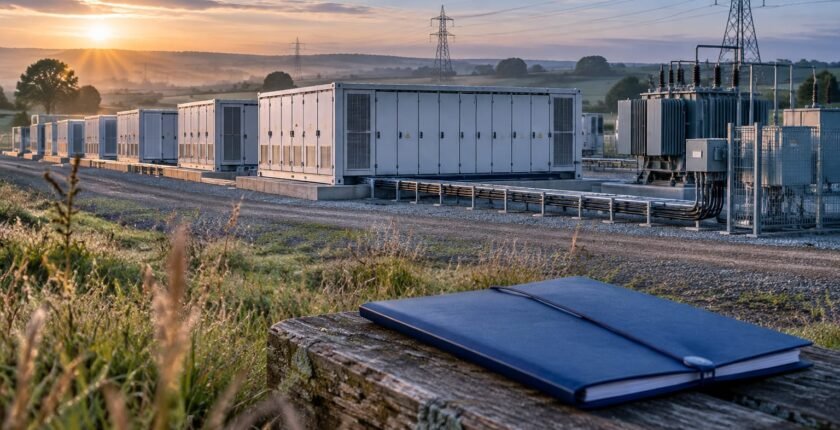
Estimated reading time: 6 minutes · Last updated:
A subsidiary of State Power Investment Corporation (SPIC) is suing the three contractors that built the first phase of the Heping Gongchu lead-carbon storage plant in Zhejiang province. It is seeking CNY 103.08 million ($14.4 million). The project owner, Diantou Zhechu (Changxing) Smart Energy Co., Ltd., alleges the batteries fell short of contracted quality and performance standards. It says the plant therefore discharged less electricity and earned less revenue than it should have. The suit surfaced on 14 November 2026 in a disclosure by Shenzhen-listed Hangzhou Gisway Information Technology Co., Ltd., whose subsidiary is a defendant. No hearing has been held yet. The outcome matters beyond one site, because lead-carbon is already a fringe option in China's grid storage market.
Key takeaways
- The claim: Diantou Zhechu (Changxing) Smart Energy, an SPIC subsidiary, wants CNY 103.08 million ($14.4 million) from the three-company EPC consortium behind phase one of Heping Gongchu.
- The project: Heping Gongchu in Changxing County, Huzhou, was planned at 100.8 MW/1,061.68 MWh with about CNY 1.6 billion of investment, and its 45.36 MW/477.757 MWh first phase joined the grid in March 2023.
- The defence: Gisway said on 18 November 2026 that its subsidiary Hongsheng handled only AC-side electrical design and that the cause of battery degradation and the contractual responsibility remain unproven.
- The market: Of the new-type storage capacity running in China when 2025 ended, lithium-ion accounted for 96.1% by the National Energy Administration's count, and the November 2026 five-year implementation plan does not name lead-carbon as a priority.
Table of contents
What Diantou Zhechu Wants From the Three Contractors
Diantou Zhechu has named three defendants: Zhejiang Taihu Energy Valley Technology Co., Ltd., Hangzhou Hongsheng Power Design Consulting Co., Ltd., and Zhejiang Changxing Electrical Engineering Co., Ltd. Together they formed the engineering, procurement and construction (EPC) consortium for phase one. An EPC contract hands design, equipment purchasing and building to one contracting party, so the owner faces a single counterparty. The three firms signed it in December 2022.
The claim covers several heads of loss. Diantou Zhechu wants payment for the discharge output it says it lost, plus interest on that sum, the cost of replacing batteries, and its legal and other litigation costs. Its position is that the EPC contract makes the consortium members jointly and severally liable. That means each defendant can be made to pay the whole award, leaving the three to divide the bill among themselves afterwards.
The Changxing County People's Court in Huzhou has accepted the case. Hearings have not started, and no date for them has been disclosed. Until the court examines the batteries and the operating record, the shortfall remains an allegation by the plaintiff, not a finding.
How Big Heping Gongchu Was Meant to Be
Heping Gongchu, which translates as Peaceful Co-Storage, sits in Changxing County, Huzhou. It was planned at 100.8 MW/1,061.68 MWh in total, with investment of about CNY 1.6 billion. Those planned ratings imply roughly 10.5 hours of discharge at full power, a long-duration design.
Phase one, the part now in dispute, is rated 45.36 MW/477.757 MWh and was connected to the grid in March 2023. That is about 45% of the plant's planned energy capacity. Phase two was designed to add a further 583.93 MWh, but whether it has been completed has not been confirmed.
At launch, the plant was presented as a showcase for grid flexibility, peak shaving and lower electricity costs using lead-carbon batteries made in China. Peak shaving means storing power when demand is low and releasing it during the daily peak, trimming the costliest hours of consumption. Tianneng, the Chinese manufacturer that supplied the batteries, had held the project up as a flagship for its technology. Tianneng is not a defendant in the case.
Why Gisway Says Its Subsidiary Is Not to Blame
Gisway followed its first disclosure with a supplementary statement dated 18 November 2026. The company said Hongsheng's work was confined to electrical design on the AC side of the plant. AC, or alternating current, is the grid-facing part of a storage system. DC, direct current, is the battery side. Gisway said Hongsheng neither selected the batteries nor carried out any DC-side engineering.
Gisway also challenged the premise of the claim. Battery degradation, it said, could come from manufacturing defects, from the way the plant has been run, or from both. In its view, neither the cause of the shortfall nor the allocation of contractual responsibility has been proven.
That defence points to the gaps the court must fill. The cell supplier sits outside the suit, the operator is the plaintiff, and the defendants are the builders. If the court traces degradation to the cells or to operating practice, the question becomes what the EPC contract made the consortium answer for. The joint liability claim puts Hongsheng's narrow scope directly to the test.
Why the Case Lands Hard on Lead-Carbon Batteries
Lead-carbon was already a marginal chemistry in Chinese grid storage. By the close of 2025, according to the National Energy Administration (NEA), lithium-ion made up 96.1% of the new-type storage capacity in operation. That leaves every other technology combined with under 4%.
Policy support has thinned as well. China's 2022 storage development plan listed lead-carbon among technologies eligible for research and development. The five-year implementation plan published in November 2026 backs better lithium-ion, wider sodium-ion rollout and commercial compressed-air and flow batteries. It does not name lead-carbon as a priority.
Vincent Shaw of ESS News judged that a performance dispute at the technology's flagship site could further erode investor confidence in it. How far that goes depends on what the court concludes about battery condition, operating practice and contract responsibility. A finding against the batteries would hit the chemistry. A finding about operations would mostly hit the plant.
| Company | Position in lawsuit | Role at the project |
|---|---|---|
| Diantou Zhechu (Changxing) Smart Energy Co., Ltd. | Plaintiff | Project owner, SPIC subsidiary |
| Zhejiang Taihu Energy Valley Technology Co., Ltd. | Defendant | EPC consortium member, phase one |
| Hangzhou Hongsheng Power Design Consulting Co., Ltd. | Defendant | EPC consortium member; AC-side electrical design, per Gisway |
| Zhejiang Changxing Electrical Engineering Co., Ltd. | Defendant | EPC consortium member, phase one |
| Tianneng | Not named | Lead-carbon battery supplier |
How the case could cut
The case for
- Gisway argues degradation may stem from operating practice, which, if the court agrees, would limit damage to the chemistry's reputation.
- The court's findings on battery condition will put independent evidence on how lead-carbon cells perform at grid scale since March 2023.
- Tianneng is not a defendant, so the dispute is being fought over contract scope rather than a direct claim against the cell maker.
The case against
- The plaintiff alleges the batteries missed contracted quality and performance levels, at a site promoted as a flagship for the technology.
- Lithium-ion held 96.1% of China's operational new-type storage at the end of 2025, leaving lead-carbon little market share to absorb reputational damage.
- The November 2026 five-year implementation plan does not list lead-carbon as a priority, removing a policy cushion the 2022 plan had offered.
What to be careful about
- The claim includes battery replacement costs, so a ruling for the plaintiff could set a costly precedent for EPC contractors who bundle third-party batteries into lead-carbon projects.
- Joint and several liability means Hongsheng could face the full CNY 103.08 million award despite Gisway's position that its scope was limited to AC-side design.
- With phase two's status unconfirmed, a finding of battery degradation could raise questions over the remaining 583.93 MWh of planned capacity.
The bottom line
For now, the Heping Gongchu case is a set of competing claims. Diantou Zhechu says the batteries underdelivered and wants CNY 103.08 million. Gisway says the causes and the liability are unproven and that Hongsheng never touched battery selection. The case tests more than one contract. It asks whether a lead-carbon plant of this size can hold its performance in grid service since March 2023, and who pays if it cannot. With lithium-ion at 96.1% of China's operational new-type storage and the newest five-year plan looking elsewhere, a ruling against the batteries would leave lead-carbon with few showcase projects to point to. A ruling that blames operations would shift attention to how the plant was run.
What to watch
- Watch for the first hearing at the Changxing County People's Court in Huzhou; no date has been set.
- Watch for further disclosures from Hangzhou Gisway Information Technology on the case, which it has already updated once, on 18 November 2026.
- Watch for confirmation of whether phase two's planned 583.93 MWh has been completed; no timetable has been published.
Frequently asked questions
Who supplied the batteries for the Heping Gongchu storage plant?
Chinese manufacturer Tianneng supplied the lead-carbon batteries and had promoted the project as a flagship use of its technology. Tianneng has not been named as a defendant in the CNY 103.08 million suit.
Why is a listed software company involved in a battery lawsuit?
Hangzhou Gisway Information Technology, listed in Shenzhen as 301390.SZ, wholly owns Hangzhou Hongsheng Power Design Consulting, one of the three defendants. Gisway disclosed the case on 14 November 2026 and said on 18 November that Hongsheng only handled AC-side electrical design.
Does China still support lead-carbon energy storage?
Its 2022 storage development plan made lead-carbon eligible for research and development support. The five-year implementation plan released in November 2026 focuses on lithium-ion, sodium-ion, compressed-air and flow batteries and does not identify lead-carbon as a priority.
Related reading