
Blog
Compressorless hydrogen turbine ran 303 seconds
Estimated reading time: 5 minutes · Last updated:
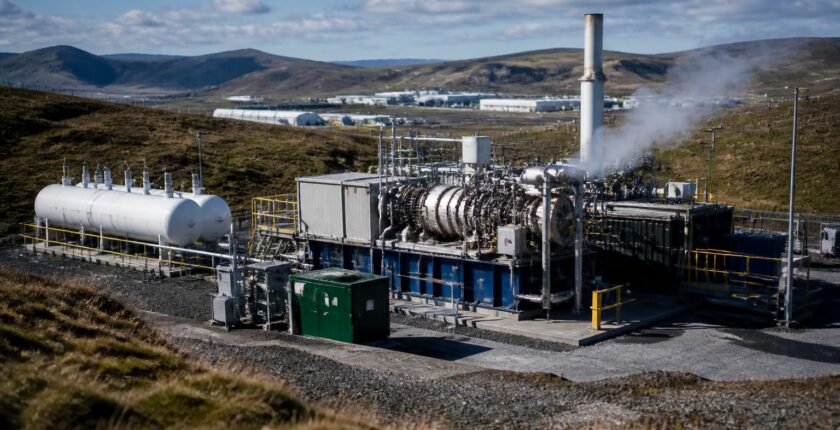
The Karlsruhe Institute of Technology team operated a hydrogen gas turbine without a mechanical compressor for 303 continuous seconds in February 2026 and measured power output under load. The experiment used pressure‑gain combustion — a detonation wave that increases chamber pressure fast enough to take over the compressor’s role — and a shaped transition section that smooths the exhaust so turbine blades survive. KIT presents the 303‑second run as the first time a detonation‑based, compressor‑free turbine has run continuously while producing electricity.
We are the first to successfully operate such a turbine and generate electricity with it,
the institute’s director of thermal energy technology
Key takeaways
- Runtime and power: KIT operated a hydrogen gas turbine without a mechanical compressor for 303 continuous seconds and confirmed it delivered electricity under load.
- Field context: The 303‑second run surpassed a previous 250‑second record set by a US space agency program and followed a 90‑second test reported nine months earlier.
- Efficiency potential: Conventional gas turbines use roughly 50 percent of their output to drive compressors; the detonation design replaces that compression step and could free that energy for electricity.
- Design payoff: KIT notes that removing the compressor eliminates a component that makes up about one‑third of a turbine’s mass, cutting mechanical complexity and lowering maintenance demands.
Table of contents
How pressure‑gain combustion replaces the compressor
Most gas turbines devote a large share of their shaft output to compress incoming air before combustion. In the tests KIT describes, that step is replaced by pressure‑gain combustion: a detonative burning mode in which a supersonic combustion wave raises chamber pressure faster than the gas can expand. That raised pressure is available to the turbine rather than being consumed internally to spin a compressor.
Detonation is inherently violent. The combustion front travels faster than sound within the combustion loop and produces repeated, large pressure pulses and intense heat flux. The Karlsruhe rig combined an extremely compact combustor with active thermal management and a tailored transition section that cushions the pulses before the flow reaches conventional turbine blades. That transition is the mechanical interface that converts a detonative exhaust into something the rotor can accept.
The practical effect is simpler mechanical architecture: taking out the compressor removes its parasitic load — about 50 percent of output on a conventional machine — and removes the compressor itself, which KIT says makes up roughly one‑third of a turbine’s mass. Those changes explain why a working design without a mechanical compressor matters beyond laboratory demonstration.
What the Karlsruhe test achieved and how it compares
On a test stand in Karlsruhe in February 2026, the KIT team operated a hydrogen gas turbine lacking a mechanical compressor for 303 continuous seconds and recorded electrical output under load. KIT describes the run as both a runtime milestone and the first demonstration of electricity generation from this machine architecture.
The 303‑second figure surpasses an earlier 250‑second mark set by a US space agency program; KIT itself presented a conference paper the previous September documenting a 90‑second run and a demonstration of throttling. Together, those steps show the program advanced incrementally from tens of seconds toward sustained operation measured in minutes.
Beyond raw time, the claim that the shaft turned and the testbed produced measurable electrical output is the important technical pivot: it demonstrates that a detonation combustor can be mated to a turbine and generator and sustain power delivery long enough to test thermal and mechanical durability under repeated pulses.
Remaining engineering and deployment gaps
Five minutes of continuous operation is a step, not a finished product. KIT identifies materials and lifetime testing as the central hurdles. A blade material durable enough to absorb millions of detonation pulses across tens of thousands of cycles at production scale does not yet exist, and that absence prevents direct translation from a five‑minute test to commercial service intervals measured in thousands of hours.
Separately, scaling a hydrogen‑fired detonation turbine into a grid‑connected plant depends on a hydrogen supply chain sized for continuous generation; that remains a separate challenge from the combustor itself. The detonation approach shifts where the hard problems sit — from compressor aeromechanics toward high‑temperature structural alloys, coatings and cooling systems able to withstand intense, rapid thermal cycling.
KIT’s director of thermal energy technology framed the runtime record as “an important step toward highly efficient and flexible hydrogen energy for a fossil free energy system,” underscoring that the milestone narrows a gap but does not resolve the durability, materials and fuel‑supply work that follows.
| Metric | Conventional gas turbine | Compressorless detonation turbine (KIT test) |
|---|---|---|
| Parasitic compression loss | Roughly 50 percent of output used to compress air | Compression step removed; detonation raises chamber pressure |
| Compressor present | Yes | No |
| Weight contribution | Compressor accounts for roughly a third of turbine weight | That component omitted in KIT’s design |
| Recorded continuous runtime | Tested machines varied; prior experimental comparable runs reached 250 seconds | 303 seconds with electricity measured under load |
Case for and against near‑term deployment
The case for
- Removing the compressor frees energy that currently powers compression (roughly 50 percent of output) and reduces mechanical complexity by eliminating a component KIT says is roughly a third of turbine weight.
- KIT’s demonstration of continuous operation and measurable electricity under load shows the combustor, transition section and turbine assembly can run long enough to evaluate durability and thermal management in situ.
The case against
- No production‑scale blade material has yet been shown to absorb repeated detonation pulses over the thousands of hours between major overhauls required by power plants.
- Commercial deployment also depends on a hydrogen fuel supply chain scaled to continuous generation; that systems‑level constraint sits outside the combustor improvements.
What to be careful about
- Thermal fatigue and rapid pressure cycling could induce microcracking in turbine blades and chamber walls before suitable production‑scale metallurgy or coatings are available.
- Scaling from five minutes to commercial runtimes may reveal failure mechanisms not apparent in short tests, requiring long, costly qualification campaigns.
- Dependence on low‑carbon hydrogen availability at scale would limit where and when compressorless hydrogen turbines can be deployed.
The bottom line
The Karlsruhe test shifts a long‑standing laboratory curiosity into a demonstrable power‑generation result: a compressorless hydrogen turbine ran for 303 seconds and put electricity onto instruments. That proves the combustor, transition section and rotor can be mated and run continuously long enough to test durability, but it does not close the production gaps. Materials that survive millions of detonation cycles, comprehensive fatigue data and supply‑chain scale for hydrogen generation remain the gating items before utilities could consider commercial deployment.
What to watch
- Watch for a KIT technical report or dataset that publishes the electrical output (kilowatts or megawatts), generator load details and test protocols; no date has been set.
- Watch for published materials‑fatigue test results and cycle‑life projections from Karlsruhe Institute of Technology or partner labs; no date has been set.
Frequently asked questions
How does a compressorless hydrogen turbine generate pressure without a compressor?
It uses pressure‑gain combustion: a detonative combustion wave travels faster than sound and raises chamber pressure before the gas can expand, replacing the mechanical compression stage. The approach is what allowed KIT’s rig to avoid the parasitic compression load that consumes roughly 50 percent of output on conventional turbines.
What exactly did the Karlsruhe test demonstrate?
In February 2026 KIT operated a hydrogen gas turbine that omits a mechanical compressor for 303 continuous seconds and recorded electricity delivery under load. That runtime exceeded an earlier 250‑second mark set by a US space agency program and followed a 90‑second test reported nine months earlier.
What obstacles remain before this can enter a power plant?
Key obstacles are materials and lifetime qualification — a production‑scale durable blade material able to absorb millions of detonation pulses does not yet exist — and the need for a hydrogen supply chain large enough to fuel continuous commercial generators.
Related reading