
Blog
Himalayan hydropower boom meets rising insurance strain
Estimated reading time: 3 minutes · Last updated:
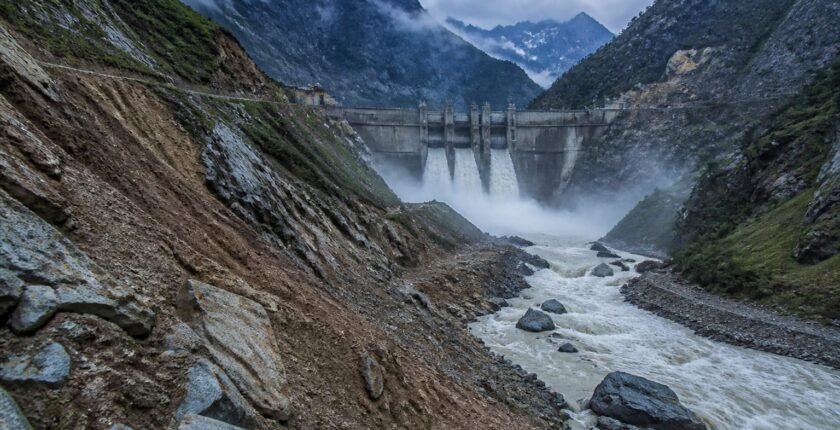
Charu Bahri reports that hydropower developers across the Hindu Kush Himalaya have been incurring sustained, elevated damage-related losses as icy zones at high elevations destabilise, increasing the likelihood of floods and avalanches. That combination is tightening insurance conditions for projects built in steep mountain valleys and along glacier-fed rivers. The pressure on underwriters and project finances was underscored by recent flash flooding in Nepal: damage was documented in Nuwakot district along the Trishuli River on 31 August 2026, after sudden floods affected the area on 26 August 2026. This draws on Charu Bahri’s 1 October 2026 work for Nikkei Asia.
Key takeaways
- Regional trend: Charu Bahri reports the hydropower industry in the Hindu Kush Himalaya is experiencing persistently high damage-related losses linked to destabilising high-altitude icy zones.
- Recent damage example: Photographs show damage in Nepal’s Nuwakot district along the Trishuli River on Aug. 31, following flash floods that struck on Aug. 26.
- Risk type: The reporting links the losses to greater flood and avalanche risk caused by human-induced climate change in high-altitude areas.
- Insurer exposure: Bahri flags mounting insurance pressures on Himalayan hydropower projects as climate-driven hazards persist.
Table of contents
Why insurers are under strain in the Himalaya
Charu Bahri’s reporting identifies a clear mechanism: warming at high elevations is making icy zones less stable, and that instability translates into more frequent and severe floods and avalanches that hit dams, intake structures and transmission corridors. Insurers writing policies for Himalayan projects face an altered loss profile because events that once were rare are occurring with higher frequency.
Project owners and underwriters operating around glacier-fed catchments now confront larger model uncertainty about the timing and size of extreme runoff and debris flows. The material cited by Bahri does not provide underwriting figures or premium changes, but it frames the exposure as persistent rather than episodic, implying insurers must either tighten terms, raise prices, or limit cover in parts of the Hindu Kush Himalaya.
On-the-ground incidents and what they signal
The piece uses recent events in Nepal to illustrate the hazard profile: images and reporting document damage in Nuwakot district along the Trishuli River on Aug. 31 after flash floods on Aug. 26. Those dated examples show the near-term impacts operators face when floods breach defences or carry heavy sediment loads into installed equipment.
Bahri’s coverage links those incidents to a broader regional pattern across the Hindu Kush Himalaya, where human-induced climate change is changing the seasonality and intensity of runoff. The reporting stops short of quantifying total insured losses or naming specific insurers, but the examples serve as practical signals to lenders, developers and governments that existing risk-transfer arrangements may no longer match exposure.
The case for and against market adjustment
The case for
- If insurers adapt pricing, exclusions or conditional cover to reflect new hazard maps, underwriting capacity could remain available for developers who invest in risk reduction.
- Governments and financiers could respond to the documented losses — for example in Nepal’s Nuwakot district — by offering targeted support that preserves project bankability while hazard mitigation is implemented.
The case against
- If insurers withdraw cover or impose steep premium rises, some Himalayan projects may struggle to secure finance or operate within viable cost structures.
- Persistent, unquantified increases in flood and avalanche frequency could leave assets exposed to repeated damage, amplifying losses for both owners and insurers.
What to be careful about
- Rising frequency of floods and avalanches in glacier-fed catchments increases the probability of physical damage to dams and intakes.
- Tighter insurance terms or higher premiums could strain project economics and complicate financing for existing and planned hydropower schemes.
- Lack of published, project-level loss figures in the reporting leaves uncertainty over the scale of current insurer exposure.
The bottom line
Charu Bahri frames Himalayan hydropower’s challenge as a structural one: destabilising high-altitude icy zones are producing more frequent floods and avalanches that translate into persistent damage-related losses. Bahri provides dated examples from Nepal to show the effects on the ground but does not quantify insurer payouts or market responses. That gap matters because decisions by insurers, financiers and governments will determine whether the region’s hydropower expansion can be sustained under a changed hazard regime.
What to watch
- watch for formal statements or policy changes from major insurers covering Himalayan hydropower; no date has been set.
- watch for government or multilateral announcements of support or new hazard-mitigation programmes for glacier-fed catchments; no date has been set.
Frequently asked questions
What is destabilising high-altitude icy zones in the Hindu Kush Himalaya?
Charu Bahri’s reporting links the destabilisation to human-induced climate change, which alters melt and precipitation patterns in glacier-fed catchments across the Hindu Kush Himalaya and raises flood and avalanche risk.
Where was recent damage documented in Nepal?
Photographs and Bahri's reporting document damage in Nuwakot district along the Trishuli River on 31 August 2026, following flash flooding that affected the area on 26 August 2026.
Does the source list insurer losses or premium changes?
No; Bahri highlights mounting insurance pressures but does not provide insurer loss totals or explicit premium adjustments.
Related reading