
Blog
Maryland’s 20-Year Jade Meadow III Solar Deal to Save $300M
Estimated reading time: 5 minutes · Last updated: 2026-08-24
Maryland has approved a 20-year power purchase agreement with REV Renewables for the 300-megawatt Jade Meadow III Solar Project that the state says will cut energy costs. Financial projections place the contract’s 20-year savings between $298 million and $515 million, and the state will buy roughly half of the project’s output. The purchase is structured as a long-term supply contract to deliver approximately 250,000 megawatt-hours a year beginning in 2028, which the state estimates will provide nearly 15 percent of its electricity portfolio and the equivalent annual use of more than 20,000 homes. Governor Wes Moore and the Maryland Department of General Services approved the deal through the Maryland Board of Public Works.
Key takeaways
- The 20-year power purchase agreement is with REV Renewables for the 300-megawatt Jade Meadow III Solar Project.
- Maryland will buy roughly half of the project's output, about 250,000 megawatt-hours of renewable electricity per year starting in 2028.
- Financial projections place the 20-year savings from the agreement at between $298 million and $515 million.
- The purchased solar power is expected to supply nearly 15 percent of Maryland’s electricity portfolio and serve more than 20,000 homes annually.
Table of contents
How the contract is structured and the scale of supply
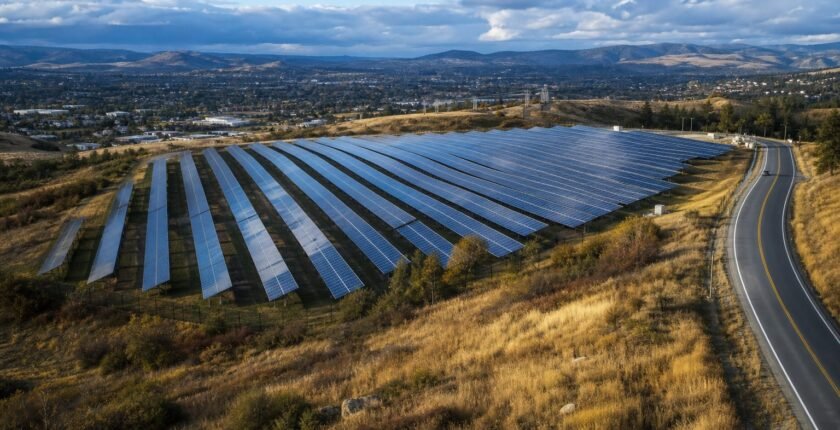
The state signed a 20-year power purchase agreement that ties Maryland’s state energy accounts to output from the Jade Meadow III Solar Project. The site is a 300-megawatt solar development in Western Maryland, located primarily in Garrett County, and the state will buy roughly half of its output under the contract.
Beginning in 2028, Maryland will take around 250,000 megawatt-hours a year from the project; that annual volume is the contracted supply the state has budgeted into its energy accounts. That sum is equivalent to the electricity consumption of more than 20,000 homes and represents a material, scheduled addition to the state’s renewable supply.
The procurement is a long-term fixed-supply mechanism rather than an equity stake in the plant: REV Renewables will provide the electricity and Maryland’s payment obligations run over two decades, which is why the state focuses on multi-year budget effects rather than one-off capital flows.
Projected savings and what affects them
State financial projections place the 20-year savings from this purchase between $298 million and $515 million. That range reflects the contract’s exposure to future wholesale electricity prices: if market prices rise, the avoided cost increases; if prices fall, the avoided cost narrows.
The $300 million figure cited in public announcements is a rounded midpoint of that projection range and is being used to summarise expected budgetary benefit. The exact realised savings will be visible only after deliveries begin in 2028 and as market conditions evolve across multiple years.
Because the deal is a price-hedging instrument for state accounts, the near-term budget impact is limited to scheduled contract payments and any administrative costs tied to integrating the new supply into the state’s procurement framework.
Site choice, local benefit and policy context
Jade Meadow III is being developed largely on a reclaimed coal mine, which the state highlights as an example of repurposing brownfield land for renewable generation. Using a former industrial site reduces new land take and fits Maryland’s stated policy goal of expanding locally generated clean energy.
Governor Wes Moore and the Maryland Department of General Services framed the purchase as both a cost-saving and environmental action, and the Maryland Board of Public Works approved the agreement. The state also notes this purchase will roughly double the amount of renewable energy it buys through long-term power agreements and, starting in 2028, will supply nearly 15 percent of the state’s electricity portfolio.
The agreement builds on existing state solar and wind procurements and on in-house solar at government facilities; those prior contracts set a precedent for long-term off-take arrangements and administrative processes that REV Renewables and the state will now operationalise for Jade Meadow III.
What could move this either way
The case for
- The PPA hedges a portion of the state's future energy spend by locking long-term access to solar output, which can reduce exposure to volatile wholesale prices.
- Repurposing a reclaimed coal mine lowers new land-use impacts and can streamline permitting and community acceptance compared with greenfield sites.
- Adding roughly 250,000 megawatt-hours a year strengthens Maryland’s renewable supply and supports state goals to expand locally generated clean energy.
The case against
- Realised fiscal savings depend on future wholesale electricity prices; if prices fall below the contract reference, the avoided-cost benefit will be smaller.
- Construction or grid-connection delays could push commercial deliveries past the 2028 start, deferring any budgetary benefit and complicating integration with existing procurement schedules.
- If project output is curtailed due to transmission constraints or extreme weather, the state may receive less energy than contracted while still owing payments under the PPA.
What to be careful about
- Wholesale electricity price movements could shrink the projected $298–$515 million savings over the 20-year contract.
- Construction, permitting or interconnection delays at the Jade Meadow III site could postpone the expected 2028 start of deliveries.
- Operational risks such as curtailment at the site or unexpected site remediation issues on the reclaimed coal mine could reduce available generation.
The bottom line
The Jade Meadow III agreement is a large, long-duration purchase that shifts a material chunk of Maryland’s renewable sourcing onto a 20-year schedule. By contracting roughly 250,000 megawatt-hours per year from a 300-megawatt facility beginning in 2028, the state aims to secure nearly 15 percent of its electricity portfolio and to hedge future price exposure, producing projected savings in the $298 million–$515 million band. Those outcomes depend on timely construction, steady output from the reclaimed-mine site and the path of wholesale power prices; monitoring project milestones and initial delivery performance will determine whether the procurement delivers the budgetary and policy benefits Maryland expects.
What to watch
- Watch for the start of commercial deliveries from Jade Meadow III, scheduled to begin in 2028; no exact date has been set.
- Watch for announced construction or interconnection milestones for the Jade Meadow III site; no date has been set.
Frequently asked questions
How much energy will Maryland buy from Jade Meadow III?
Maryland will purchase roughly half of the 300-megawatt Jade Meadow III project, amounting to approximately 250,000 megawatt-hours of renewable electricity each year beginning in 2028.
What are the projected budget savings from the agreement?
Financial projections place the contract’s 20-year savings between $298 million and $515 million, with the commonly cited $300 million figure representing a rounded midpoint of that range.
Where is the project located and why was that site chosen?
Jade Meadow III is located primarily in Garrett County in Western Maryland and is being developed largely on a reclaimed coal mine, a choice the state highlights as repurposing brownfield land for renewable generation.
Related reading