
Blog
Mazama Raises $135M to Scale Superhot Geothermal
Estimated reading time: 5 minutes · Last updated:
Mazama Energy has raised $135 million to accelerate commercial development of superhot geothermal at the Newberry site in Oregon, targeting rock at about 750°F (400°C) and power generation in 2027. As first reported by Interesting Engineering, the financing will support Project Athena and the U.S. Department of Energy-supported Project Ceres, which targets 15 MW of electrical capacity per well. Mazama says wells that reach 750°F could produce up to 10 times the power of a conventional 390°F (200°C) geothermal well while using less water and fewer wells, and the company is extending a recently drilled borehole roughly one mile deeper in pursuit of that temperature.
“The breakthrough in superhot geothermal is turning extreme heat into a repeatable, economic power system,”
Sriram Vasantharajan, CEO of Mazama Energy
Key takeaways
- Fundraising: Mazama Energy raised $135 million in a Series B round led by Centaurus Capital and Doerr Capital with participation from ConocoPhillips, Shell Ventures, Khosla Ventures and Gates Frontier.
- Temperature target: The company is drilling toward rock at about 750°F (400°C), where water becomes supercritical and energy density rises sharply.
- Demonstration timeline: Project Ceres is targeting demonstration of electricity generation in 2027 and 15 MW of electrical capacity per well.
- Record performance: Mazama built the hottest engineered geothermal system to date at Newberry, reaching 629°F (331°C) in 2025.
- Efficiency claims: Mazama says its approach could use 75 percent less water and require 80 percent fewer wells than conventional geothermal developments.
Table of contents
What Mazama proved at Newberry
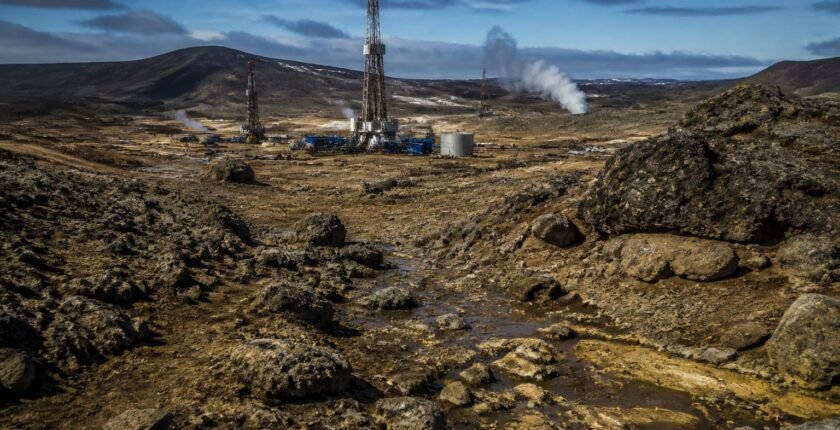
Mazama’s field work at Newberry has combined extreme-temperature drilling, reservoir creation and heat recovery into an integrated test. In 2025 the company created an engineered system that reached 629°F (331°C), demonstrating underground connectivity and the ability to recover heat at temperatures higher than conventional projects.
That demonstration differs from conventional geothermal projects because it does not rely on a natural hydrothermal reservoir. Instead, Mazama creates pathways through hot rock so circulating fluid can carry heat to the surface. The firm describes this package of techniques as the set of capabilities that must be repeated reliably to commercialise what it calls superhot geothermal.
How the recent wells moved faster
In September, a second borehole tied to Project Athena reached 10,350 feet in 15 days, which Mazama reports was around 80 percent faster than its 2025 well. The company is extending that hole approximately one mile deeper in pursuit of the 750°F target, a pace it says reduces time-to-resource compared with its earlier program.
Why 750°F matters for power per well
At roughly 750°F (400°C) water enters a supercritical regime with much higher energy density than at conventional geothermal temperatures, and Mazama contends that, combined with higher reservoir productivity, a superhot well could deliver up to 10 times the power of a 390°F (200°C) well. That multiplier is the core mechanism behind claims of smaller surface footprints and fewer wells per megawatt.
The company also says its method could cut water use by about 75 percent and reduce well counts by about 80 percent compared with typical geothermal developments. Those percentages are presented as company estimates tied to the higher heat content per unit of fluid and the improved yield from engineered reservoirs.
Funding, partners and the 10 GW aim
The $135 million Series B will underwrite Project Athena and Project Ceres and push horizontal well development in superhot rock. The round was led by Centaurus Capital and Doerr Capital, with participation from ConocoPhillips, Shell Ventures, Khosla Ventures and Gates Frontier, among others.
Mazama says it is seeking independent certification of more than 10 gigawatts of geothermal resource potential at Newberry and is evaluating additional U.S. and international locations for multi-gigawatt developments designed to support electricity affordability and security. That certification process, the company adds, is a step toward proving resource scale to utilities and investors.
What still needs to be demonstrated before scale-up
Mazama has spent years tackling three technical challenges it identifies as essential: drilling at extreme temperatures without equipment failure, creating productive reservoirs where none naturally exist, and extracting heat quickly enough to sustain continuous electricity generation. Each remains a demonstrable risk to commercial rollout despite the Newberry tests.
The company’s 2027 target for power generation is the next concrete milestone. Independent validation of reservoir longevity, equipment lifetimes at superhot temperatures and the economics of horizontal well arrays will be required before utilities or project financiers can commit to multi-gigawatt builds.
| Project | Recent milestone | Target temperature or output | Near-term timeline |
|---|---|---|---|
| Newberry demonstrator | Reached 629°F (331°C) in 2025 | Record hot engineered reservoir | Ongoing testing |
| Project Athena | Second well drilled to 10,350 ft in 15 days | Pursuing 750°F by extending ~1 mile deeper | extension underway |
| Project Ceres | Advancing horizontal wells | Targeting 15 MW per well | Power generation planned in 2027 |
How Mazama’s case for scale stacks up
The case for
- Higher reservoir temperatures can raise energy density and, if sustained, let each well produce many times the power of a conventional 390°F (200°C) well, lowering surface footprint and drilling needs.
- The Series B backing, led by Centaurus Capital and Doerr Capital with strategic investors such as ConocoPhillips and Shell Ventures, provides investor capital and industry connections to support horizontal drilling and certification work.
The case against
- Scaling from single-well demonstrations to multi-gigawatt projects depends on proving reservoir longevity, equipment survivability at superhot conditions and the consistent delivery of sustained heat over project lifetimes.
- Independent certification of the claimed more-than-10 GW potential at Newberry and verification of the company’s water-use and well-count savings are outstanding steps before commercial offtake agreements become likely.
What to be careful about
- Equipment and materials failure when operating at 750°F (400°C) remain a practical engineering risk tied to drilling and long-term production.
- Reservoir longevity and sustained heat extraction have not yet been demonstrated at commercial timescales; project economics depend on those outcomes.
- Certification processes and permitting could delay deployment of the more-than-10 gigawatts of resource potential Mazama is seeking to validate.
The bottom line
Mazama Energy has translated a sequence of high‑temperature field tests into a defined commercial push: $135 million in Series B funding, drilled wells hitting record temperatures and targets that include 15 MW per well and a 2027 generation demonstration. The technical proposition rests on the physics of supercritical water at about 750°F (400°C) and the claim that that heat can meaningfully cut water use and the number of wells needed per megawatt. The next year will be decisive: demonstration of sustained electricity output, third‑party certification of resource potential and proof that drilling and completion systems can survive and perform at those extreme temperatures before multi‑gigawatt deployment is credible.
What to watch
- Watch for Project Ceres' planned electricity-generation demonstration in 2027.
- Watch progress on the Athena borehole extension as Mazama pushes approximately one mile deeper toward 750°F; no specific completion date has been set.
- Watch for the independent certification process for more than 10 gigawatts of resource potential at Newberry; no date has been announced.
Frequently asked questions
What is superhot geothermal and why is 750°F important?
Superhot geothermal targets rock temperatures around 750°F (400°C), where water becomes supercritical and carries much more energy per unit; Mazama says that higher energy density is why a superhot well could produce up to 10 times the power of a conventional 390°F (200°C) well.
When will Mazama demonstrate electricity generation?
Mazama has said Project Ceres is expected to demonstrate power generation in 2027, with a target of 15 MW of electrical capacity per well.
How much money did Mazama raise and who led the round?
Mazama raised $135 million in a Series B round led by Centaurus Capital and Doerr Capital, with participation from ConocoPhillips, Shell Ventures, Khosla Ventures and Gates Frontier.
Related reading