
Blog
NEGF pushes to expedite Mambila hydropower completion
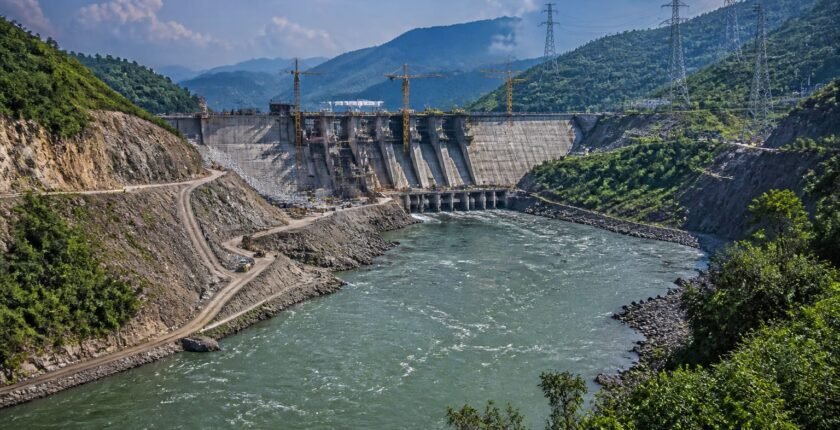
Estimated reading time: 5 minutes · Last updated:
At its 13th meeting in Maiduguri, the Northeast Governors’ Forum (NEGF) set a regional energy agenda and urged the Federal Government to act on Mambila hydropower. The governors issued an eleven-point communique that calls for using a recent arbitration ruling to remove legal barriers and accelerate completion of the Mambila hydropower plant in Taraba State. The Forum also pushed a combined solar and mini-grid programme tied to the sub-region’s 12-hour daily sunshine and noted that the Dadinkowa hydropower plant in Gombe State is already feeding the national grid. The communique was signed by Forum chairman Professor Babagana Umara Zulum and read by Vice Chairman Alhaji Ahmodu Umoru Fintiri.
Key takeaways
- The Northeast Governors’ Forum issued an eleven-point communique at its 13th meeting in Maiduguri.
- NEGF urged the Federal Government to use a recent arbitration ruling to speed completion of the Mambila hydropower plant in Taraba State.
- The Forum recommended exploiting the region’s 12-hour daily sunshine to expand combined solar and mini-grid technologies.
- The governors thanked the Federal Government through the North East Development Commission, which supplied a fleet made up of 10,000 electric tricycles, 300 electric taxis and 10 electric buses.
Table of contents
How the Forum reframed power as a regional agenda
The governors treated electricity as a cross-border challenge rather than a state-by-state issue, and set concrete objectives in an eleven-point communique issued at the meeting. The Forum asked member states to leverage the new electricity law while using local solar resources—explicitly referencing 12 hours of daily sunshine—to expand combined solar and mini-grid deployments that can supply dispersed communities. The communique named Dadinkowa in Gombe State as already contributing to the national grid, which the governors presented as an example of regional cooperation yielding tangible power supply.
NEGF also agreed to partner with a private firm, Green Ville Energy, to add gas refuelling infrastructure across the sub-region, proposing both CNG and LNG stations to cut transport costs. That recommendation ties power planning to transport fuel choices, a practical move intended to lower operating costs for freight and passenger services and to link generation projects with local demand.
The push to complete Mambila and its limits
The Forum reiterated long-standing concern about what it described as neglect of the Mambila hydropower plant in Taraba State and urged the Federal Government to act now that an arbitration ruling has cleared legal encumbrances. The governors framed the ruling as the immediate mechanism the Federal Government should use to speed the plant’s completion and “take-off.” The communique does not publish technical details for Mambila—capacity, contractors or interconnection milestones were not provided—so the instruction to accelerate work rests on the legal clearance rather than a published construction timetable.
By naming Mambila specifically, the governors shifted the issue from regional policy into a single-project priority. That creates a clear task for federal agencies: resolve procurement, financing and construction sequencing so the project can move from legal clearance to physical completion and grid integration.
Transport, infrastructure and the practical follow-ups
The Forum welcomed a consignment of electric vehicles coordinated by the North East Development Commission — comprising 10,000 electric tricycles, 300 electric taxis and 10 electric buses — which the governors said are scheduled for launch later this month. The communique also proposed a North-East regional air shuttle to speed passenger and goods movements and commended federal attention to the PortHarcourt–Jos–Bauchi–Gombe–Maiduguri rail corridor and the Akwanga–Jos–Bauchi–Gombe–Biu–Maiduguri highway.
On hydrocarbons, the governors asked the Federal Government to revisit stalled oil exploration in Magumeri and Gubio Local Government Areas of Borno State. Security achievements against insurgency were acknowledged as enabling factors for infrastructure work, and the Forum said it will partner with the Forestry Research Institute to address deforestation through training and capacity building.
Case for and against progress
The case for
- The arbitration ruling removes a named legal barrier and gives the Federal Government a clear justification to restart Mambila’s completion process.
- Regional coordination and the example of Dadinkowa feeding the national grid create a template for linking local generation to wider demand, aiding project economics.
- Promotion of solar and mini-grids aligns with the region’s stated 12-hour daily sunshine and could accelerate distributed supply if financing and technical plans follow.
The case against
- The communique supplies no technical or financing details for Mambila, leaving timing and capacity uncertain.
- Delivery dates and operating plans for the 10,000 tricycles, 10 buses and 300 taxis were not published, making near-term transport gains hard to verify.
- Stalled oil exploration sites and unresolved procurement matters could divert attention or resources from hydropower completion.
What to be careful about
- Mambila completion may stall again if federal agencies do not translate the arbitration ruling into procurement and financing actions.
- The absence of published MW or MWh figures for Mambila and Dadinkowa prevents proper grid planning and investment decisions.
- Timing and contractor details for the electric vehicle fleet were not provided, risking delays between delivery and operational launch.
The bottom line
The NEGF communique shifts the North-East from fragmented, state-level power planning to a coordinated regional agenda and places Mambila at the centre of that shift by naming the arbitration ruling as the immediate lever for action. The forum paired long-term supply measures—solar and mini-grids exploiting 12 hours of sunshine—with immediate infrastructure steps, including a large electric vehicle allocation and proposals for gas refuelling stations. The next practical tests will be federal steps to convert legal clearance into contracts and funding for Mambila, and the public launch and operational rollout of the vehicles the governors thanked the NEDC for supplying.
What to watch
- Watch for the Forum’s 14th meeting, scheduled for 18 and 19 December 2027 in Gombe.
- Watch for the public launch of the 10,000 electric tricycles, 10 electric buses and 300 electric taxis; no date has been set.
Frequently asked questions
What did NEGF ask the Federal Government to do about Mambila hydropower?
The Forum urged the Federal Government to use a recent arbitration ruling to remove legal encumbrances and speed the completion and take-off of the Mambila hydropower plant in Taraba State.
What steps did the Forum recommend for power supply in the region?
NEGF recommended expanding combined solar and mini-grid technologies tied to the region’s stated 12-hour daily sunshine and encouraged states to use the new electricity law to enable those deployments.
What transport interventions did the governors highlight?
The governors thanked the Federal Government and the North East Development Commission for delivering 10,000 electric tricycles, 300 electric taxis and 10 electric buses, and said the vehicles are due to be launched later this month.
Related reading