
Blog
Sheep Now Graze 68,000 Acres of Texas Solar Farms
Estimated reading time: 6 minutes · Last updated: 2026-08-23
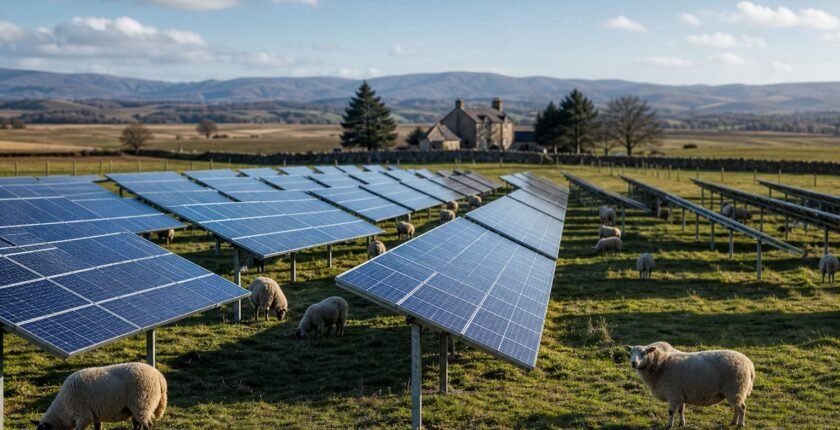
Sheep are now the vegetation crew on roughly 68,000 acres of solar farms in Texas, taking care of under-panel grass that otherwise reduces output or raises fire risk. Nationwide, solar grazing spans more than 130,000 acres across 30 states, and Texas accounts for roughly half of that area. Ranchers supply flocks to sites owned by developers and operators; at one large project in Milam County, about 3,000 sheep tend 4,000 acres. The practice turns a mowing expense into grazing income for ranchers and cuts diesel and noise from mechanical mowing, as first reported by ScienceBlog.com.
Key takeaways
- Texas concentration: About 68,000 acres of solar panels in Texas are grazed by sheep, roughly half of the more than 130,000 acres nationwide.
- Large-scale operations: Texas Solar Sheep operates more than 6,000 sheep across a dozen or so sites, and some projects run thousands of animals on thousands of acres.
- Workload share: Operators report livestock now perform 70 to 80 percent of vegetation work at some sites, with mowers used mainly for touch-ups.
- Animal suitability: Penn State extension guidance and a North Carolina extension specialist describe goats as climbers and chewers and cattle as too tall, leaving sheep as the fitting grazer for standard panel rows.
- Land-use effect: Solar grazing is presented as a way to keep agriculture active on land amid a solar boom that coincided with Texas losing more than 2 million acres of grazing land in a five-year span between agricultural censuses.
Table of contents
How sheep-scale grazing works on Texas solar projects
Solar farms are fields that need regular vegetation control to avoid shading the bottom edge of panels and to reduce the risk that dry grass will create a fire hazard. On large sites, mechanical mowing means crews, diesel use and machinery squeezing through narrow rows and tight corners. Ranchers and operators in Texas have turned to sheep as an alternative on utility-scale arrays, contracting flocks to graze under the modules and cut grass where mowers struggle to reach.
The shift is already substantial. Across the United States, solar grazing covers more than 130,000 acres in 30 states; roughly 68,000 of those acres are in Texas. Companies that field livestock services now run operations at ranch scale: one family business that began with a couple of hundred animals reports it runs more than 6,000 sheep across a dozen or so sites. At SB Energy’s Milam County project — a 900-megawatt development — about 3,000 sheep handle roughly 4,000 acres, showing the practice scales up to multi-thousand-acre deployments.
Site operators say livestock now handle most routine vegetation work. On some projects, sheep do 70 to 80 percent of the cutting, with mowers reserved for touch-ups along fence lines or at equipment pads. The economics are reported to favour grazing: lower direct mowing costs, reduced diesel use and less noise for neighbouring residents, while ranchers earn fees for grazing and can sell lambs from animals working the sites.
Why sheep, not goats or cattle, become the maintenance flock
The choice of animal emerged by elimination. Goats, though famous for eating rough forage, create problems at solar arrays: they climb tilted rows and can damage panels with their hooves, and they chew for entertainment — a serious risk where wiring is exposed across large sites. A Penn State extension guide explicitly advises that goats are not recommended for solar arrays because of reported climbing and chewing damage.
Cattle present a different set of constraints. A North Carolina extension note cited in reporting says cows are often too tall and too heavy for standard panel rows; they cannot reach the ground beneath low arrays and may bend mounts or equipment if they lean against panels. Accommodating cattle requires higher pedestal mounts and different structural design, which must be planned and paid for up front.
Sheep meet the technical requirements of existing, low-mounted arrays. They fit under the lowest rows, graze calmly without climbing, and browse in crevices a mower cannot reach. Universities and extension programmes are now studying which breeds, stocking rates and forage mixes suit life under glass, because matching flock size and breed to array geometry and site vegetation determines both effectiveness and animal welfare.
Land-use and economic trade-offs: a 'truce' between panels and pastures
Solar development has crept into grazing country in Texas at the same time the state recorded sharp pasture losses; reporting notes Texas lost more than 2 million acres of grazing land in the five years between the last two agricultural censuses. For ranchers who feared solar leases meant the end of productive land, grazing agreements offer a different outcome: the same acres provide electricity above and pasture below.
Advocates such as American Farmland Trust frame solar grazing as a way to preserve working landscapes by keeping agricultural activity on leased sites. Field days at Texas solar farms now draw ranchers, energy staff and environmental groups to watch flocks work the rows and to discuss practical questions — not least which breeds or stocking densities provide steady vegetation control without harming the animals.
The money side is mixed but concrete in the reporting. Ranchers receive grazing fees for access to land they do not own, and they may add lamb sales on top of service payments. Solar companies report lower mowing bills and reduced diesel use where sheep perform most of the routine cutting. That alignment of incentives — revenue to the rancher, lower operations cost to the developer, and vegetation control for the site — is why proponents describe the arrangement as a practical truce between solar deployment and agricultural use.
| Animal | Behaviour under panels | Damage risk | Suitability for standard low-mounted arrays |
|---|---|---|---|
| Sheep | Graze calmly; reach low growth and crevices | Low — eat grass rather than infrastructure | High |
| Goats | Climb tilted rows; browse varied vegetation | High — climbing and chewing reported by extensions | Low |
| Cattle | Too tall to reach ground beneath low arrays | Medium — can bend mounts or equipment if they lean | Low unless arrays designed with higher pedestals |
Where solar grazing could head next
The case for
- Operators report lower mowing costs and reduced diesel use where sheep perform 70–80 percent of the vegetation work, improving operational budgets and community impacts.
- Ranchers can earn grazing fees and sell lambs while using pasture they do not own, creating new rural revenue streams tied to solar deployment.
- Because Texas leads the nation in solar construction and already accounts for roughly 68,000 grazed acres, the model has room to scale across similarly configured projects.
The case against
- Goats remain unsuitable because of climbing and chewing risks identified by Penn State extension guidance, so herd composition must be managed carefully.
- Cattle require different array designs — higher mounts at added cost — which limits the use of bovine grazing on existing low-mounted projects.
- If grazing is not properly managed, vegetation can still reach heights that shade panels or increase fire risk, returning cost and safety pressures to operators.
What to be careful about
- Unmanaged grass can create a fire hazard under arrays if it dries out, a core reason sites need routine control.
- Goats are reported to climb panels and chew exposed wiring, posing direct damage and outage risk.
- Using cattle without array redesign can bend mounts or equipment, creating repair costs and potential downtime.
- Overstocking or inappropriate breed selection could harm animal welfare and reduce grazing effectiveness; site-specific stocking rates are required.
The bottom line
Solar grazing in Texas has moved from experiments to a business model at scale: thousands of sheep now work under panels across tens of thousands of acres, reducing the need for fuel, crews and noisy machinery while giving ranchers paid access to pasture they do not own. The model depends on matching flock size and breed to array geometry and on keeping grazing to levels that prevent shading or fire hazards. Where developers, ranchers and extension programmes coordinate on stocking rates and animal welfare, grazing can turn an industrial field into shared productive land — but managers must guard against the clear mechanical risks goats and cattle pose and verify that grazing truly replaces, rather than supplements, costly mowing contracts.
What to watch
- Watch for university results from programs studying which breeds, stocking rates and forage mixes perform best under panels; no date has been set.
- Watch for public field days at Texas solar sites demonstrating flock operations and management practices; no date has been set.
Frequently asked questions
How much of U.S. solar-grazing acreage is in Texas?
Reporting notes more than 130,000 acres of solar sites are grazed across 30 states, and roughly 68,000 of those acres are in Texas — about half the national total.
Which operators or projects run the biggest sheep flocks?
Texas Solar Sheep says it runs more than 6,000 sheep across a dozen or so sites, and SB Energy’s Milam County project, a 900-megawatt development, uses about 3,000 sheep to graze roughly 4,000 acres.
Why not use goats or cattle instead of sheep?
Extension guidance cited in the reporting explains goats climb and chew, which can damage panels and wiring, while cattle are too tall and heavy for standard low-mounted rows and can bend mounts unless arrays are designed with higher pedestals.
Related reading