
Blog
Yara Opens Europe’s Largest Carbon Capture Plant
Estimated reading time: 4 minutes · Last updated:
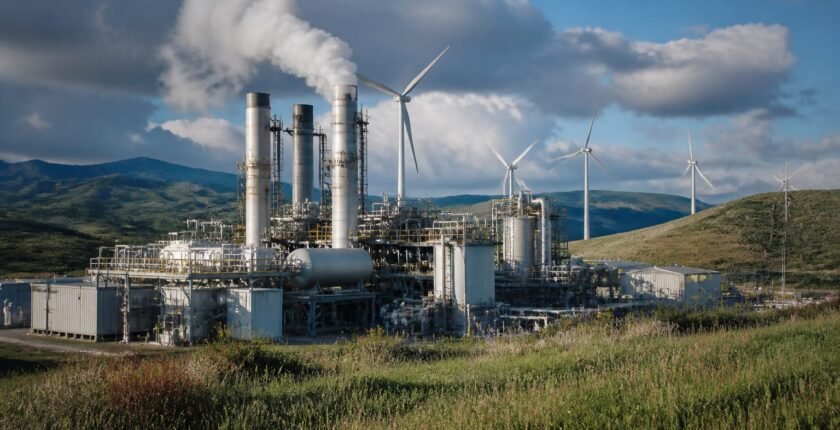
On 8 September 2026 Yara inaugurated a carbon capture unit at its Yara Sluiskil ammonia and fertilizer plant in the Netherlands. The installation can capture and liquefy up to 800,000 tons of CO2 per year; the collected CO2 will be compressed, shipped to Norway and stored beneath the seabed. Yara says the project establishes a full cross‑border chain linking capture, transport and permanent storage, using the Northern Lights transport and storage service and connecting to Norway’s Longship initiative. Yara says the installation will support lower‑carbon fertilizers, ammonia and fuels for shipping.
“The carbon capture facility in Sluiskil proves that large-scale industrial decarbonization is possible today. As global competition intensifies, Europe must find ways to cut emissions while keeping industry, jobs and critical value chains in Europe. That is exactly what this project is about.”
Svein Tore Holsether, President and CEO of Yara International
Key takeaways
- Launch and location: Yara opened a carbon capture facility at the Yara Sluiskil ammonia and fertilizer plant in the Netherlands on 8 September 2026.
- Capture capacity: At full operation, Sluiskil can process up to 800,000 tons of CO2 per year into liquid form.
- Cross‑border storage: Captured CO2 will be sent to Northern Lights and stored roughly 2,600 meters under the seabed in the Norwegian North Sea.
- 15‑year programme: Under a 2023 agreement with Northern Lights, the project is expected to capture and store about 12 million tons of CO2 over 15 years.
Table of contents
How the Sluiskil unit works and its scale
Yara’s new unit is located within the company’s Sluiskil ammonia and fertilizer complex and treats CO2 from ammonia production streams. The process captures CO2, compresses it and converts it to liquid on site for export. Yara says the plant can remove as much as 800,000 tons of CO2 a year, a scale the company describes as the largest single industrial capture plant in Europe. The unit therefore targets emissions tied to chemical manufacture rather than power generation, and it is designed around liquefaction and export rather than local sequestration.
Operational detail beyond the liquefaction and export steps is limited in Yara’s announcement: the company did not publish a ramp schedule, round‑the‑clock operating profile, or project capital cost in the materials released with the inauguration. Those items determine dispatch, outages and unit availability and are material to assessing how close annual capture will stay to nameplate capacity.
The cross‑border chain with Northern Lights and Longship
Yara signed a commercial cross‑border transport and storage agreement in 2023 with Northern Lights, the joint venture led by Equinor with Shell and TotalEnergies, to handle Sluiskil’s CO2. Under the arrangement, CO2 captured and liquefied in the Netherlands will be shipped and injected for permanent storage under the Norwegian North Sea. The storage sits at depth and will take the CO2 via the Northern Lights facilities that form the transport and storage leg of Norway’s Longship project.
Yara’s announcement states the end point will be subsea storage around 2,600 meters down. Tim Heijn, Managing Director of Northern Lights, described the start of operations as the commercialisation of the 2023 deal and said the partnership demonstrates the feasibility of cross‑border capture, transport and storage for industry. His remarks in the announcement were presented as a confirmation that the transport and storage chain is now operational.
What the project supplies to industry and agriculture
Yara frames the facility as an industrial decarbonisation step that preserves regional production and value chains while lowering the carbon intensity of fertilizer and ammonia. The company says captured CO2 and the lower‑carbon feedstocks it enables will support agriculture, industrial applications, energy and maritime fuel markets. For example, Yara will be able to claim reduced product emissions for fertilizers and sell lower‑carbon ammonia for industrial or shipping uses.
Beyond product claims, Yara positions the plant as a template for large‑scale capture on industrial sites. The announcement links the Sluiskil capture capacity to downstream uses and to building a wider carbon management market in Europe, but it does not specify contractual volumes for customers of low‑carbon product or precise product emissions factors tied to the captured CO2.
| Item | Role | Key figures |
|---|---|---|
| Yara Sluiskil facility | Capture and liquefaction at plant | Capture capacity: 800,000 tons CO2/year |
| Northern Lights (Equinor, Shell, TotalEnergies JV) | Transport and permanent storage provider | Storage depth: ~2,600 meters under seabed |
| Longship (Norwegian Government initiative) | Programme supporting full‑scale CCS infrastructure | Launched September 2020 |
Case for and against near‑term expansion
The case for
- The Sluiskil unit proves an industrial site can pair capture and export at large scale and establishes a replicable cross‑border chain with an existing storage provider.
- A commercial contract with Northern Lights and ties to Longship lower a barrier to deployment by giving an off‑take route for liquefied CO2 and a confirmed storage end point.
The case against
- Scaling this model depends on available capacity in offshore storage and on cross‑border permits and export logistics, which can vary by jurisdiction.
- The economics for other producers will depend on project costs, carbon pricing or subsidies not published in Yara’s announcement, limiting immediate replication.
What to be careful about
- Cross‑border transport and storage require ongoing regulatory clearances in both sending and receiving states, which can cause delays.
- Long‑term liability allocation for stored CO2 and contract performance over decades is politically and legally sensitive.
- Operational shortfalls at the capture unit or in the liquefaction chain could reduce annual volumes below the 800,000 tons nameplate.
- Availability of storage capacity in Norway and competing demand from other projects could constrain exports.
The bottom line
Yara’s Sluiskil facility is a landmark industrial CCS installation in Europe by scale and by linking capture in the Netherlands to offshore storage in Norway. The unit’s 800,000 tons/year capacity and the 2023 contract with Northern Lights create a functioning cross‑border chain that, if it performs to plan, will demonstrate a commercial route for industrial decarbonisation. Critical next steps for assessing impact are published operational data, the timing of first shipments and the commercial terms that define long‑term storage liability; those details will determine whether Sluiskil is a blueprint for wider rollout.
What to watch
- Watch for the announced start date for CO2 shipments from Sluiskil to Northern Lights; no date has been set in Yara's announcement.
- Watch for published operational ramp and annual capture reports from Yara that confirm how close yearly capture tracks the 800,000 tons nameplate; no date has been set.
Frequently asked questions
How much CO2 can the Sluiskil facility capture each year?
Yara says the Sluiskil unit can capture and liquefy up to 800,000 tons of CO2 annually.
Where will the captured CO2 be stored?
Under a commercial deal signed in 2023, CO2 from Sluiskil will be transported to Northern Lights and injected for permanent storage beneath the Norwegian North Sea at about 2,600 meters depth.
How much CO2 will the programme handle over its initial term?
Under its agreement with Northern Lights, Yara expects the project to capture and put into permanent storage roughly 12 million tons of CO2 over a 15‑year period.
Related reading