
Blog
Germany’s 1,197 ft wind turbine reaches full height
Estimated reading time: 5 minutes · Last updated:
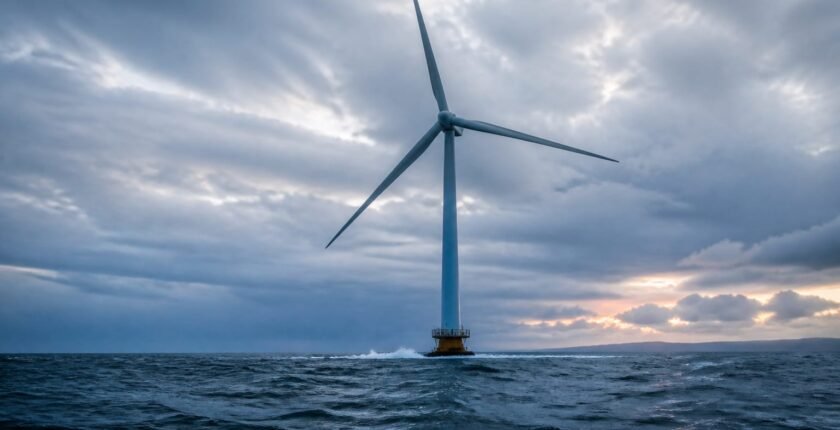
GICON has completed assembly of a high-altitude wind turbine that reaches 1,197 feet including blades at a pilot site in Schipkau, eastern Germany. As first reported by Interesting Engineering, the tower is a prototype developed for the Federal Agency for Disruptive Innovation (SPRIND) to test whether a much taller rotor plane produces substantially more electricity from the same footprint. The pilot carries a rated capacity of 3.8 megawatts while GICON expects future versions to exceed 7 megawatts. The company also projects the design could eventually generate roughly twice as much electricity over time as a conventional turbine with the same rotor diameter, a claim that still needs operational verification.
Key takeaways
- The Schipkau pilot reached 1,197 feet including blades, making it one of Germany’s tallest structures.
- The pilot turbine has a rated capacity of 3.8 megawatts; GICON expects future versions to exceed 7 megawatts.
- GICON says the design could eventually generate roughly twice as much electricity over time as a conventional turbine with the same rotor diameter.
- GICON built the structure using a telescoping tower design that raised an inner tower through a surrounding lattice before securing it.
Table of contents
Why higher altitude can change a turbine’s yield
The fundamental rationale for the Schipkau design is that wind speeds generally increase with altitude and flows tend to be steadier higher above ground. Faster, more consistent wind raises the amount of extractable energy per rotor sweep because available power scales with the cube of wind speed; that is why many developers push for larger rotors and taller towers.
GICON’s pilot examines whether moving the rotor plane hundreds of meters higher yields enough extra energy to justify greater structural complexity. The company frames the test as an efficiency play: capture more energy from the same land and grid connection rather than opening new sites.
How GICON assembled the 1,197-foot structure
Reaching 1,197 feet required a departure from standard crane-based erection methods. GICON used a telescoping tower design: a specialized lifting mechanism raised the inner tower through a surrounding lattice structure before the inner section was secured at final height.
Jochen Grosmann, GICON founder and CEO, described reaching 1,197 feet as a major milestone for a project that moved from concept to full-scale pilot. The construction method allowed the company to assemble the structure without a single conventional crane tall enough to place components at final elevation.
What the pilot will measure once it starts
Official commissioning is planned for November; once operational the turbine will provide the performance data needed to test GICON’s energy projections. The immediate metrics engineers will track are mean power output, capacity factor, and how output compares to nearby conventional machines with the same rotor diameter.
The pilot has a rated capacity of 3.8 megawatts and GICON says the design could eventually generate roughly twice as much electricity over time as a conventional turbine with the same rotor diameter. That claim refers to energy produced over time rather than peak rated power and will hinge on measured wind-speed profiles and long-run availability at the higher rotor plane.
Scaling the concept inside existing wind farms
GICON and SPRIND propose adding taller machines as a second tier above conventional turbines so existing farms can produce more from the same footprint and grid connection. The current assessment cited by the developer suggests Germany could potentially accommodate as many as 4,000 high-altitude turbines within existing wind farms.
If that technical and commercial case holds up, the approach would allow additional generation without clearing new land or rerouting transmission. That potential hinges on spacing, wake interactions between tall and conventional rotors, planning rules, and whether the higher machines prove cost-effective in practice.
| Item | Detail |
|---|---|
| Location | Schipkau, eastern Germany |
| Height (including blades) | 1,197 feet |
| Pilot rated capacity | 3.8 megawatts |
| Expected future capacity | Expected to exceed 7 megawatts |
How the case for and against the concept shapes up
The case for
- Higher and steadier winds at rotor height could raise energy capture enough to lower levelised cost of energy when measured per unit of land and grid slot.
- If the pilot shows production gains near GICON’s projection, developers could add a second turbine tier to existing farms and avoid new site permitting and grid extensions.
The case against
- Added structural and assembly complexity — including taller towers and specialised erection — could raise capital and maintenance costs that offset higher energy yield.
- Wake effects and vibration at the higher rotor plane, plus planning or aviation constraints, may limit where the approach is practical, reducing the 4,000-unit potential.
What to be careful about
- Operational performance might fall short of GICON’s projection that the design could generate roughly twice as much electricity, because that claim is currently unproven in the field.
- The specialised telescoping assembly and maintenance at 1,197 feet could increase capital expenditure and operating costs compared with conventional towers.
- Interactions between the new high-altitude rotors and existing turbines in the same farm could reduce expected gains if wakes are larger or more unpredictable than models anticipate.
- Permitting, aviation safety reviews, or local objections could restrict deployment even if technical performance is favourable.
The bottom line
The Schipkau pilot formalises an engineering bet: capture steadier, faster winds hundreds of meters higher to raise long-run energy production without expanding land take. The structure’s 1,197-foot height and the 3.8 megawatt pilot rating provide a clear testbed for that idea, but the central economic and technical questions remain operational. Commissioning scheduled for November will begin the work of comparing measured output, availability and costs against conventional machines; until those data arrive, GICON’s projection that the design could roughly double energy over time is an ambitious but unproven hypothesis.
What to watch
- Watch for the turbine’s official commissioning in November; no year was given in the reporting.
- Watch for the first operational performance data released after commissioning that assesses whether the design produces roughly twice as much electricity; no date has been set.
Frequently asked questions
How tall is the Schipkau turbine and how is that measured?
The Schipkau pilot reaches 1,197 feet including its blades; that measurement covers the full tip height when a blade is vertical. The project team presents that figure as the completed structure’s final assembled height.
What is the turbine’s capacity and what does GICON claim about output?
The pilot has a rated capacity of 3.8 megawatts and GICON says future versions are expected to exceed 7 megawatts. The company also projects the design could eventually generate roughly twice as much electricity over time as a conventional turbine with the same rotor diameter, a claim to be tested in operation.
Can taller turbines be added to existing wind farms?
GICON and SPRIND propose installing the taller machines as a second tier above conventional turbines so existing farms produce more within the same footprint. The current assessment cited by the developer suggests Germany could potentially accommodate as many as 4,000 high-altitude turbines within existing wind farms.
Related reading