
Blog
Lexington Solar Farms Move Closer as Council Advances Rules
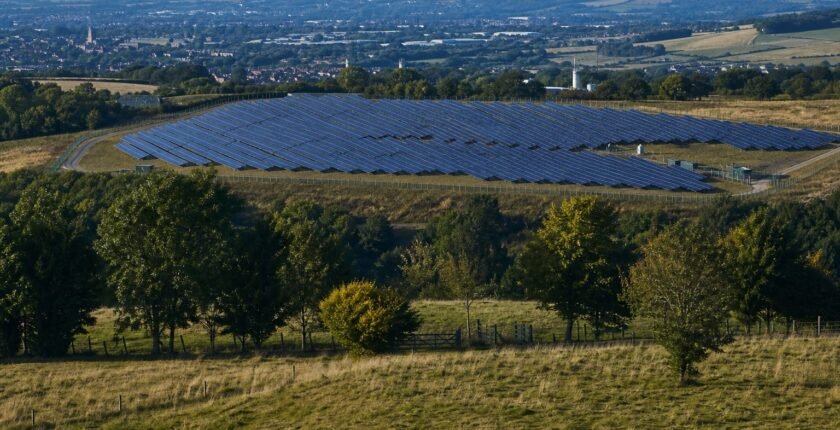
Estimated reading time: 6 minutes · Last updated: 2026-08-19
As first reported by the Lexington Herald-Leader, Lexington’s Urban County Council voted 8-7 to advance new rules that would permit large-scale solar farms on rural land under strict conditions. The package would allow ground-mounted solar installations larger than five acres with a conditional use permit, require 85% vegetative ground cover and agricultural co-location, and cap rural solar at 1% of Fayette County’s land size (about 1,880 acres). The council must adopt the regulations at a final vote on Sept. 10, 2026 before the changes take effect.
I support preservation of our ag spaces, and I would not support solar without concurrent protections for our land. The proposal we brought forward for solar that requires co-location with (agricultural) production does both.
Liz Sheehan, 5th District Council member
Key takeaways
- Council action: The Urban County Council advanced the rural-solar regulations on an 8-7 vote and will hold a final vote on Sept. 10, 2026.
- Permits and protections: Solar farms larger than five acres would require a conditional use permit, 85% vegetative ground cover and a soil and water quality protection plan.
- Acreage cap: The rules cap rural land used for solar at 1% of Fayette County’s land, about 1,880 acres.
- Pipeline and remaining capacity: East Kentucky Power’s 384-acre project and Edelen Renewables’ 357-acre Haley Pike project total 741 acres, leaving about 1,139 acres available to private developers under the cap.
Table of contents
- Key takeaways
- What the council advanced and the conditions attached
- Where the current projects sit in the pipeline
- Arguments for and against the change, and who said what
- Process ahead and practical effects for developers
- How the rules could speed projects — and what could slow them
- What to be careful about
- Frequently asked questions
What the council advanced and the conditions attached
The council vote cleared a package that changes Lexington’s earlier ban on large ground-mounted arrays on rural land. Under the proposed rules, any solar installation larger than five acres would need a conditional use permit from the Board of Adjustment and must meet several requirements before construction can proceed.
Key conditions in the draft include requiring 85% of the ground beneath panels to be covered with vegetation, mandatory agricultural production on the same property as the panels (co-location), a stormwater management plan and a soil and water quality protection plan. The rules also preserve rooftop and parking-lot solar as allowed uses across the county.
The regulations include an explicit limit on how much rural land can be converted to industrial-scale solar: the package caps use at 1% of Fayette County’s land size, or about 1,880 acres. That cap is central to supporters’ argument that the rules balance renewable development with farmland preservation.
Where the current projects sit in the pipeline
Two large projects already in motion account for a substantial share of the cap. East Kentucky Power is pursuing a 384-acre installation in eastern Fayette County, and Edelen Renewables has started construction on a 357-acre solar farm at the former Haley Pike landfill site. The article states those two projects total 741 acres.
Because East Kentucky Power is a public utility and the Haley Pike site is city-owned, both projects have proceeded outside Lexington’s zoning process and therefore do not count against private developers’ access to permits under the council’s rules. The council’s advance of the regulations matters most to private firms such as the Nashville-based Silicon Ranch, which previously sought permission to build a 797-acre project in eastern Fayette County.
If the Silicon Ranch proposal moves forward and the rules are adopted as written, the material calculates the remaining private-developer capacity under the 1% ceiling would be roughly 342 acres; absent that project, private developers have about 1,139 acres available.
Arguments for and against the change, and who said what
Supporters presented the change as a necessary step to expand renewables and help meet Lexington’s 2050 carbon-neutrality goal. Council member Liz Sheehan, who led the push to allow rural solar under conditions, framed the package as a compromise that preserves agricultural activity while permitting green infrastructure.
Opponents, including Fayette Alliance and the Kentucky Farm Bureau, warned that industrial-scale panels on prime farmland could harm the county’s highly valued soils and set a precedent for future expansion. Aaron Mikel, marketing and communications director for Fayette Alliance, told the council that allowing any industrial solar on agricultural land would likely create pressure on later councils to raise the cap above 1%.
Other council members said rooftop and brownfield solar remain priorities but argued those options alone are too small to meet the scale of the net-zero goal. The record vote was split: Amy Beasley, Emma Curtis, Shayla Lynch, Joseph Hale, Tyler Morton, Liz Sheehan, Dave Sevigny and Vice Mayor Dan Wu voted for the regulations; Whitney Baxter, Hil Boone, James Brown, Tom Eblen, Chuck Ellinger, Lisa Higgins-Hord and Jennifer Reynolds voted against them.
Process ahead and practical effects for developers
The council must adopt the regulations at a final meeting scheduled for Sept. 10, 2026; until that vote the package is not law. If the council adopts the rules, private developers seeking large ground-mounted projects will apply to the Board of Adjustment for conditional use permits and must submit the required vegetation, stormwater and soil-protection plans for review.
Because two large projects are already moving forward outside city zoning, private developers face a smaller remaining pool of rural acreage under the 1% cap. That scarcity may shape the pipeline of applications and increase competition for sites that meet the co-location and environmental protections spelled out in the regulations.
The council and planning commission earlier debated variants of these rules in 2024 and 2025; the planning commission removed allowances in early July 2026 before the council reversed that removal and advanced the new package.
| Project / developer | Acres | Status | Zoning applicability |
|---|---|---|---|
| Silicon Ranch (proposed) | 797 | Proposed (seeking rule change previously) | Private project — would be subject to Lexington zoning if proposed |
| East Kentucky Power | 384 | Pursuing | Public utility — not subject to Lexington zoning laws |
| Edelen Renewables (Haley Pike landfill site) | 357 | Under construction | City-owned site — not subject to Lexington zoning laws |
How the rules could speed projects — and what could slow them
The case for
- If adopted, the rules create a clear permitting route for private developers to propose projects via conditional use permits and could unlock up to 1,139 acres for private projects given the two public/city projects already accounted for.
- The co-location and soil protections required by the draft reduce a major opposition point and may make local stakeholders more willing to accept some rural solar development.
The case against
- Local preservation groups such as Fayette Alliance argue the change sets a precedent that will pressure future councils to expand the 1% cap; Aaron Mikel warned that the ceiling could rise over time.
- The narrow 8-7 vote and vocal opposition from farm-preservation stakeholders mean legal challenges, appeals at the Board of Adjustment or political reversals remain possible before projects start.
What to be careful about
- Precedent risk: Fayette Alliance’s Aaron Mikel warned that allowing any industrial solar on agricultural land could create political pressure to raise the 1% cap in future council terms.
- Soil and habitat risk: opponents say converting prime farmland to ground-mounted arrays could damage soil quality, a concern the rules try to address through co-location and soil-and-water plans but do not eliminate.
- Capacity mismatch: two projects accounting for 741 acres proceed outside zoning, reducing the acreage available to private developers under the 1% limit and potentially concentrating demand on remaining sites.
The bottom line
The council’s 8-7 advance of the rural-solar package puts Lexington closer to permitting large ground-mounted arrays while embedding explicit protections for soils and agricultural activity. The 1% cap (about 1,880 acres) sets a hard ceiling intended to protect farmland, but two large projects already underway outside zoning account for 741 acres and reduce private developers’ available acreage. The final council vote on Sept. 10, 2026 will determine whether the rules become law and whether conditional-use permitting opens a predictable path for future rural solar proposals.
What to watch
- Watch for the Urban County Council’s final vote on the regulations at the Sept. 10, 2026 meeting.
- Watch for conditional use permit filings to the Board of Adjustment from private developers; no date has been set for those filings in the material.
- Watch whether Silicon Ranch files a formal application to build its previously proposed 797-acre project; no date has been set.
Frequently asked questions
What does the 1% cap mean in acres?
The rules cap rural land used for solar at 1% of Fayette County’s land size, which the material states is about 1,880 acres.
Which projects already count against that cap?
The article names two projects totaling 741 acres: East Kentucky Power’s 384-acre installation and Edelen Renewables’ 357-acre Haley Pike site; because those are a public utility project and a city-owned site, they have proceeded without Lexington zoning.
What protections must a new solar farm include?
A private developer would need a conditional use permit from the Board of Adjustment, 85% vegetative ground cover under panels, agricultural co-location on the property, and a stormwater and a soil-and-water quality protection plan.
Related reading