
Blog
Stralis shutters after hydrogen taxi trials
Estimated reading time: 4 minutes · Last updated: 2026-08-19
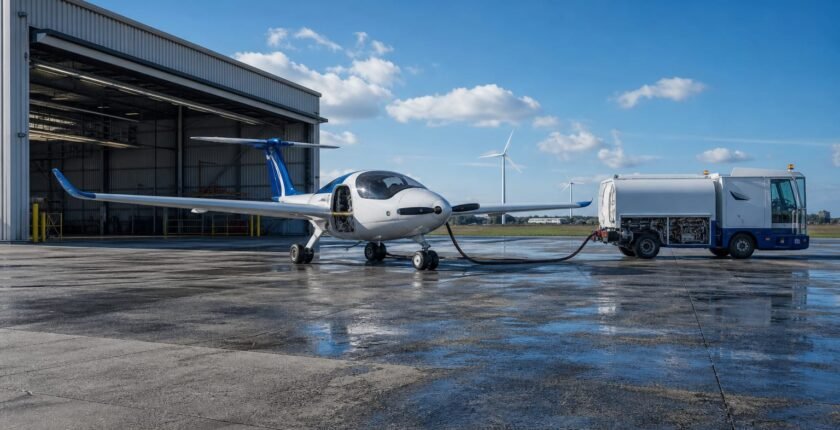
Stralis has ceased operations after running taxi trials in Australia, saying weak commercial demand for hydrogen-powered flight and difficulty raising capital left the project unviable. The trials took place at Brisbane International airport and the company framed slow progress across the hydrogen ecosystem as the principal barrier to scaling, with a direct effect on its ability to secure funding. Dominic Perry reported the development on 19 August 2026, as first reported by FlightGlobal. The closure removes one demonstrator from the small cohort of companies attempting to build hydrogen propulsion for aircraft and underlines the funding challenge facing early-stage zero-emission flight projects.
Key takeaways
- Stralis announced it is shutting down, with the report dated 19 August 2026.
- Taxi trials for Stralis took place at Brisbane International airport.
- Stralis said slow build-out of the hydrogen ecosystem has reduced commercial demand and made capital raising harder.
- Dominic Perry of FlightGlobal reported the closure and trial activity.
Table of contents
What the taxi trials at Brisbane covered and the immediate outcome
Stralis carried out taxi trials at Brisbane International airport before announcing it would cease operations. The company tested ground handling and propulsion systems on the runway surface rather than performing full flights, using the trials to validate technical integration and ground procedures.
Following the trials, Stralis said that limited commercial interest and increasing difficulty in raising growth capital made continuing the programme unsustainable. That explanation, provided by the developer, links the outcome directly to a market signal rather than to a single technical failure or regulatory denial.
Why Stralis frames ecosystem development as the constraint on demand
Stralis described the wider hydrogen ecosystem — refuelling infrastructure, supply chains and operator readiness — as advancing slower than needed to generate commercial orders. The company said this slow build-out narrowed the pool of potential customers and reduced investor appetite for further rounds of funding.
By tying its capital-raising difficulties to market readiness, Stralis drew a line between demonstrator progress and the commercial runway required for larger-scale manufacturing. That linkage was stated by the developer as the reason it could not continue deploying staff or seek further investment for the next project phase.
What the shutdown means for hydrogen aviation projects
The closure removes one active demonstrator from the small set of companies pursuing hydrogen propulsion for aircraft, reducing the number of near-term test programmes. Stralis' exit highlights that technical demonstrations alone do not guarantee commercial uptake when the surrounding services and buyers are not yet in place.
Project closures of this kind tend to re-focus investor attention on where policy, airport infrastructure and engine OEM commitments are concrete. Stralis framed its decision as financial and market-driven rather than a judgement on the technical viability of hydrogen propulsion itself.
Outlook
The case for
- If airports and fuel suppliers accelerate hydrogen refuelling infrastructure, commercial demand for demonstrators could recover and attract fresh investment.
- Clear, targeted government procurement or airline letters of intent could create a demand signal sufficient for developers to restart funding rounds.
The case against
- If the wider hydrogen ecosystem remains slow to develop, other demonstrator projects may face similar capital constraints and stall.
- Investor hesitation could persist while operators delay fleet-level commitments until multiple infrastructure and regulatory pieces are in place.
What to be careful about
- A narrow pool of commercial buyers for hydrogen aircraft that delays firm orders and weakens funding prospects, as Stralis stated.
- Dependent infrastructure risk: airports and fuel suppliers must deliver refuelling capacity or demonstrators cannot scale into revenue-generating service.
- Reputational risk for hydrogen aviation if visible projects close before demonstrating commercial potential, reducing investor confidence.
The bottom line
Stralis' shutdown after taxi trials at Brisbane International airport underscores a central challenge for hydrogen aviation: demonstrator progress must coincide with a functioning ecosystem and patient capital. The developer explicitly tied its decision to weak commercial demand and difficulties raising funds, and FlightGlobal's Dominic Perry reported the closure on 19 August 2026. For the sector, the immediate effect is one fewer demonstrator in the field; the broader lesson is that technical milestones on their own may not unlock commercial deployment until airports, fuel supply and operator commitments align.
What to watch
- watch for any formal wind-down statement from Stralis; no date has been set.
- watch for announcements from airports or fuel suppliers about new hydrogen refuelling demonstrations that could change commercial demand; no date has been set.
Frequently asked questions
Why did Stralis say it was shutting down?
Stralis said the slow build-out of the hydrogen ecosystem reduced commercial demand and made raising further capital impractical; Dominic Perry reported this development on 19 August 2026 for FlightGlobal.
What did the taxi trials at Brisbane show?
Stralis conducted taxi trials at Brisbane International airport to validate ground operations and propulsion integration; the company used the results to assess next steps but concluded market conditions and fundraising prospects were insufficient to continue.
Does this closure mean hydrogen propulsion is not viable?
Stralis framed its decision as driven by market and funding constraints rather than a verdict on technical viability; the company pointed to ecosystem and commercial barriers that prevented scaling.
Related reading