
Blog
China’s Green Hydrogen Moves to Large Scale Commercialization
Estimated reading time: 6 minutes · Last updated: 2026-08-20
China's green hydrogen industry is now shifting from demonstration projects to commercial deployment, led by plants such as the Sinopec Xinjiang Kuqa Green Hydrogen Pilot Project, which has an annual capacity of 10,000 tonnes and began production on June 30, 2023. As first reported by People's Daily, the Kuqa facility sends solar power more than 20 kilometres to an electrolyser and, if run at full capacity, "can cut carbon dioxide emissions by about 485,000 tonnes a year," Li Ruixia of Sinopec Star New Energy said. National statistics cited by the report put annual green hydrogen production capacity at about 250,000 tonnes and note a policy target of producing 2 million tonnes from renewable sources during the 15th Five-Year Plan (2026-2030).
"If the project runs at full capacity, it can cut carbon dioxide emissions by about 485,000 tonnes a year,"
Li Ruixia, manager of the hydrogen energy management department at Sinopec Star New Energy Co., Ltd.
Key takeaways
- Pilot-to-commercial shift: The Sinopec Xinjiang Kuqa project has 10,000 tonnes/year capacity, began producing on June 30, 2023, and has operated for more than three years.
- National scale: By the end of 2025 China reported about 250,000 tonnes/year of green hydrogen capacity and a policy target of 2 million tonnes from renewables under the 15th Five-Year Plan (2026-2030).
- Transport and refuelling: China has built 574 hydrogen refuelling stations with a combined daily refuelling capacity of more than 360 tonnes and nearly 40,000 cumulative fuel cell vehicle sales by end-2025.
- Industrial pilots: A pure hydrogen shaft furnace in Linyi has run stably for more than 8,000 hours and achieved a metallization rate above 96 percent.
Table of contents
How projects are scaling hardware and supply
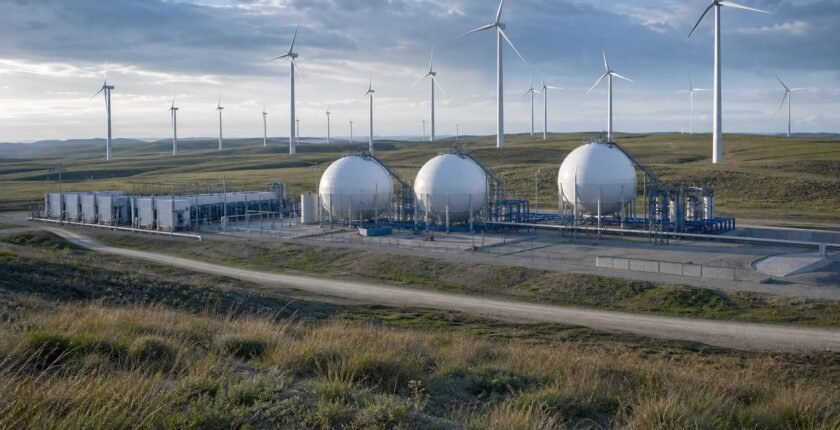
Commercialisation in China is emerging where generation, electrolysis and offtake are vertically paired. The Sinopec Xinjiang Kuqa Green Hydrogen Pilot Project couples photovoltaic arrays in the Gobi desert with an electrolyser that produces 10,000 tonnes of green hydrogen a year and pipes it to Tahe Refining & Chemical Company for use in refining. The installation began producing hydrogen on June 30, 2023 and, according to Sinopec Star New Energy, has operated safely and steadily for more than three years.
That closed loop—renewable power sent more than 20 kilometres to an electrolyser, then hydrogen piped to an industrial offtaker—demonstrates a repeatable model for scaling. Li Ruixia, manager of the hydrogen energy management department at Sinopec Star New Energy Co., Ltd., says the Kuqa project can cut about 485,000 tonnes of carbon dioxide a year if run at full capacity; the company presents that figure as proof the model can displace grey hydrogen in refinery feedstocks.
Industrial applications beyond refining
Green hydrogen is moving into steelmaking, chemicals and other heavy industry through targeted pilots. In Linyi, a pure hydrogen shaft furnace run by China Iron & Steel Research Institute Group Co., Ltd. has produced direct reduced iron with a metallization rate above 96 percent and completed batch trials of 3N-grade (99.9 percent) high-purity iron. The demonstration has run stably for more than 8,000 hours, including single continuous runs exceeding 2,000 hours, signalling technical readiness for prolonged operation.
When hydrogen replaces carbon-intensive reductants in metallurgy the byproduct is water vapour rather than CO2, so the Linyi line illustrates the pathway to deep decarbonisation in steel. The report links these industrial pilots to the larger argument that substituting green hydrogen for grey or blue hydrogen in refining and coal-chemical processes can open new demand and accelerate commercial scale-up across the value chain.
Transport, stations and early commercial fleets
Transport provides a visible commercial application. During the Beijing 2022 Winter Olympic Games SPIC Hydrogen Energy under State Power Investment Corporation deployed 200 hydrogen-powered buses that covered more than 880,000 kilometres and, the account says, reduced carbon dioxide emissions by more than 620 tonnes while recording zero accidents and zero operational errors. By the end of 2025 cumulative sales of hydrogen fuel cell vehicles in China had reached nearly 40,000 units.
Supporting vehicles is a nascent fuelling network: the country had built 574 hydrogen refuelling stations with a combined daily refuelling capacity of more than 360 tonnes by end-2025. Those station and fleet numbers are the infrastructure baseline companies point to when moving from pilot demonstrations to repeatable commercial offerings in transit, logistics and trunk-line freight.
Cost, policy and the remaining barriers to scale
Despite these technical and deployment advances, the industry still faces material commercial barriers. The report lists high production costs, limited economic viability and incomplete market and pricing mechanisms as the chief bottlenecks that continue to hinder widespread commercial rollout of green hydrogen. Those constraints affect electrolyser utilisation rates, merchant offtake pricing and the business case for dedicated renewable-to-hydrogen projects.
Policy is presented as the lever that could unlock scale: the 15th Five-Year Plan (2026-2030) and the plan for building a new energy system include hydrogen as a strategic priority, and they set a target of producing 2 million tonnes of hydrogen from renewable energy sources during the plan period. That target frames private investment decisions, but the piece makes clear that reductions in solar and wind costs, and continued improvements in electrolyzer and fuel cell performance, will be needed to reach it.
| Project | Location | Start/status | Key figure |
|---|---|---|---|
| Sinopec Xinjiang Kuqa Green Hydrogen Pilot Project | Kuqa, Xinjiang | Producing since June 30, 2023 | 10,000 tonnes/year; saves ~485,000 tonnes CO2/year (claimed) |
| Pure hydrogen shaft furnace (Linyi) | Linyi, Shandong | Demonstration operating | Metallization above 96%; >8,000 hours run |
| Beijing 2022 hydrogen buses | Beijing | Deployed for Winter Olympics | 200 buses; >880,000 km; >620 tonnes CO2 saved |
| National (end-2025) | China | Aggregate status | ≈250,000 tonnes/year green H2; 574 stations; ~40,000 fuel cell vehicles |
How commercial momentum could unfold
The case for
- Declining costs for solar and wind combined with larger electrolyser deployments could cut production costs and raise utilisation, making green hydrogen economically competitive in refining and steel by the end of the 15th Five-Year Plan.
- Integrated projects that secure a guaranteed industrial offtake—renewable power to electrolyser to refinery or shaft furnace—reduce merchant-price exposure and create bankable revenue streams for developers.
The case against
- If electrolyser supply chains and manufacturing do not scale quickly, equipment bottlenecks will keep capital costs high and delay planned capacity additions toward the 2 million-tonne target.
- Without clearer market pricing or subsidies, industrial offtakers may prefer cheaper grey or blue hydrogen, slowing demand growth and leaving refuelling-station networks underutilised.
What to be careful about
- High current production costs for green hydrogen that undercut commercial viability without continued renewable-price declines or policy support.
- Incomplete market and pricing mechanisms that leave electrolyser projects exposed to energy-price and merchant-hydrogen-price volatility.
- Potential supply-chain constraints for large-scale electrolyser and fuel cell manufacturing, affecting project timelines.
- Concentration of large projects in resource-rich regions (for example Kuqa) may create regional imbalances in supply and offtake logistics.
The bottom line
The People's Daily account shows China moving green hydrogen from isolated demonstrations toward integrated commercial projects that pair renewables, electrolysis and industrial offtake. Technical milestones—Kuqa's 10,000 t/year hub, Linyi's shaft furnace with metallization above 96 percent, and a national fuelling base of 574 stations—establish capability. The transition still depends on cost reductions, clearer market and pricing mechanisms, and scaled electrolyser supply. The 15th Five-Year Plan (2026-2030) target of 2 million tonnes from renewables frames the next phase: meeting interim milestones and policy detail will determine whether pilots become a commercially sustainable industry.
What to watch
- Progress toward the 15th Five-Year Plan hydrogen target: whether annual renewable hydrogen production rises from about 250,000 tonnes toward the 2 million-tonne target by 2030.
- Government implementation steps under the 15th Five-Year Plan (2026-2030) that set deployment schedules or subsidies for electrolyzers, refuelling stations and industrial offtake between 2026 and 2030.
Frequently asked questions
How large are China's current green hydrogen capacities?
The piece reports that by the end of 2025 China had about 250,000 tonnes per year of green hydrogen production capacity, against a policy target of producing 2 million tonnes from renewable sources during the 15th Five-Year Plan (2026-2030).
Where is green hydrogen already replacing fossil-derived hydrogen?
Sinopec's Kuqa project supplies green hydrogen directly from photovoltaic power to Tahe Refining & Chemical Company, replacing natural-gas-derived hydrogen in refining; the Kuqa facility has a 10,000 tonnes/year capacity and began production on June 30, 2023.
What infrastructure exists for hydrogen transport and refuelling?
By end-2025 China had built 574 hydrogen refuelling stations with a combined daily refuelling capacity of more than 360 tonnes, and cumulative sales of hydrogen fuel cell vehicles had reached nearly 40,000 units.
Related reading