
Blog
Asia’s hydrogen trains and early commercial markets
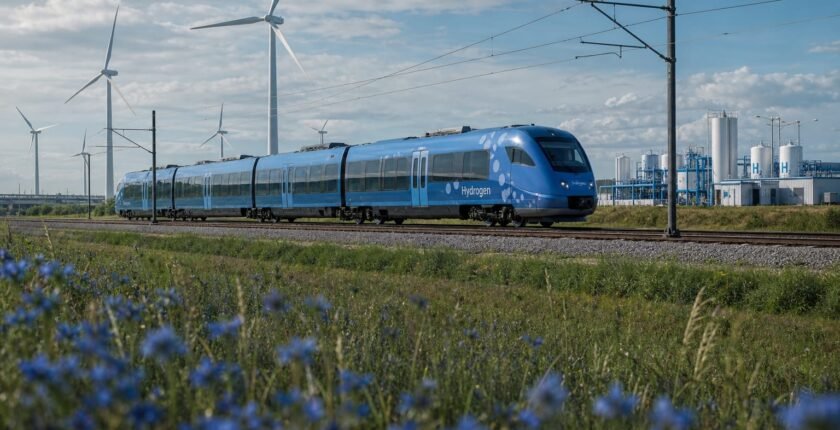
Estimated reading time: 5 minutes · Last updated: 2026-08-20
Hydrogen trains are being tested across Asia as governments try to build demand for a wider green-hydrogen ecosystem, with pilots and refuelling points forming the first commercial steps. Countries including India, Japan, South Korea and China have announced trials or demonstrations while governments and industry plan supporting refuelling and production infrastructure; one projection cited in the coverage puts the global hydrogen train market at $26.4 billion by 2035. Analysts in the story say the technology is still at the demonstration stage and will scale commercially only in limited corridors through the 2030s and 2040s.
Key takeaways
- India launched its first hydrogen-powered train on July 17, 2026, and in July announced 12 pilot projects deploying 70 hydrogen vehicles alongside 16 refuelling stations across 21 routes.
- South Korea is funding a hydrogen train demonstration with 32.1 billion won committed through 2027, and the city of Daejeon plans to deploy 34 hydrogen-powered trams by 2028.
- Rystad Energy senior analyst Rajeev Pandey says the hydrogen economy should become commercially feasible at scale only in 'defined lanes' on a 2030s and 2040s timeline.
- The Asian Development Bank estimates India could see around $34 billion invested in green hydrogen and green ammonia capacity by 2030 under current plans.
Table of contents
- Key takeaways
- Where Asia's hydrogen train pilots stand today
- Why rail is being used as a demand anchor
- How soon could hydrogen trains be commercially viable?
- Execution gaps: infrastructure, costs and industrial strategy
- Outlook — the case for and against scaling hydrogen rail
- What to be careful about
- Frequently asked questions
Where Asia's hydrogen train pilots stand today
Governments and manufacturers across Asia have moved from concept to on‑the‑ground demonstrations. India staged a public launch on July 17, 2026, and in July announced 12 pilot projects that together will deploy 70 hydrogen vehicles—27 buses and 43 trucks—and set up 16 refuelling stations across 21 routes. Indian Railways previously outlined plans to operate 35 hydrogen trains on heritage and hill routes in a 2023 statement.
Outside India, manufacturers and city authorities are running parallel trials. CRRC Changchun unveiled a hydrogen tourism train in the previous year, while East Japan Railway has a hydrogen‑hybrid model, HYBARI, scheduled for service by the end of fiscal 2027. The city of Daejeon intends to field 34 hydrogen trams by 2028, signalling municipal interest alongside national programmes.
Why rail is being used as a demand anchor
Policy makers see rail as a way to create predictable, visible demand that can justify the upfront cost of production, storage and refuelling infrastructure. Frost & Sullivan Asia Pacific managing director Ravi Krishnaswamy frames hydrogen rail as a niche decarbonisation tool that can function as an 'anchor‑demand' for the wider hydrogen value chain rather than replacing electrified corridors directly.
That strategic role helps explain why investments combine national missions and local pilots. South Korea has committed 32.1 billion won to a demonstration project through 2027, and India’s National Green Hydrogen Mission links early transport pilots to broader goals for production and export. Seen this way, trains and trams are a policy lever intended to reduce the perceived risk of building hydrogen supply chains.
How soon could hydrogen trains be commercially viable?
Analysts in the coverage caution that the technology remains at demonstration scale and that commercial rollouts will be limited at first. Rajeev Pandey of Rystad Energy says the long‑term potential is 'real but narrower than the hype,' and he expects feasibility at scale only in 'defined lanes' across the 2030s and 2040s. He identifies India and South Korea as the most likely markets to see meaningful commercial adoption within the next decade, with Japan a candidate for smaller rollouts.
Industry voices underline the same caution. Vivek Lohia, managing director at Jupiter Wagons, describes the recent train as a technology demonstration suited to niche, hilly routes and says a broader shift toward hydrogen traction could take more than two decades. Those commercial timelines sit alongside market projections: the material cites an expectation of a global hydrogen train market reaching $26.4 billion by 2035.
Execution gaps: infrastructure, costs and industrial strategy
The coverage emphasises that execution—not technical feasibility—is the central barrier. Governments will need to align subsidies, refuelling networks and industrial policy to bring down production costs and deliver predictable demand. That coordination shapes whether early projects remain isolated demonstrations or become the foundation for larger supply chains.
Strategic industry considerations also matter. Analysts note energy security and industrial competitiveness are drivers: Japan and South Korea seek to maintain technological leads in fuel cells and hydrogen value chains, while China is building supply capability that can support exports. How each country sequences investment in production, storage and refuelling will determine whether hydrogen traction moves beyond niche routes.
| Country / City | Pilot status | Notable figures |
|---|---|---|
| India | First hydrogen train launched July 17, 2026; 12 pilot projects announced in July | 70 hydrogen vehicles (27 buses, 43 trucks); 16 refuelling stations across 21 routes; 35 trains envisaged in 2023 plan |
| South Korea / Daejeon | Demonstration projects and municipal tram plans | 32.1 billion won committed through 2027; Daejeon plans 34 hydrogen trams by 2028 |
| Japan | Operator tests and planned service | East Japan Railway plans HYBARI into service by end of fiscal 2027 |
| China | Manufacturer demonstrations | CRRC Changchun unveiled a hydrogen tourism train in the previous year |
Outlook — the case for and against scaling hydrogen rail
The case for
- Visible pilots and refuelling sites reduce investor risk and can anchor early demand for production and storage.
- National missions and industrial policy in India, Japan and South Korea provide coordinated funding that can support supply‑chain development.
The case against
- High upfront costs for electrolysers, fuel cells and refuelling infrastructure mean rail projects will remain dependent on subsidies unless production costs fall.
- Timelines for commercial adoption are long: analysts expect feasible, corridor‑level deployments only through the 2030s and 2040s, limiting near‑term market size.
What to be careful about
- Projects remaining demonstrators rather than moving to revenue service if subsidy or policy support is withdrawn.
- Insufficient refuelling infrastructure leaving trains unable to run at commercial frequencies.
- Industrial competition where domestic makers fail to capture manufacturing scale, ceding export markets.
The bottom line
Hydrogen traction in Asia is shifting from pilots to policy‑backed demonstrations designed to create early demand for production and refuelling infrastructure. India, South Korea, Japan and China each have programs that together fund vehicles, stations and trials; those steps are necessary but not sufficient for wide commercial rollout. Analysts say the technology will likely become commercially viable only in selected corridors across the 2030s and 2040s, so the coming years will be about whether demonstrations yield the cost reductions and infrastructure scale policy makers expect.
What to watch
- Watch for East Japan Railway to put HYBARI into service by the end of fiscal 2027.
- Watch for Daejeon to begin deploying its planned 34 hydrogen trams; the target year given is 2028.
- Watch for updates on South Korea's demonstration project funded through 2027, including published results from the trial runs.
Frequently asked questions
Are hydrogen trains commercially viable now?
Not at scale. Rystad Energy senior analyst Rajeev Pandey says the hydrogen economy should become commercially feasible at scale only in 'defined lanes' across the 2030s and 2040s; current projects cited in the coverage are demonstrations and pilot deployments.
How much investment is planned for green hydrogen in India?
The Asian Development Bank is cited as estimating India could see around $34 billion invested in green hydrogen and green ammonia capacity by 2030 under current plans.
What market size is expected for hydrogen trains?
The material refers to a government expectation that the global hydrogen train market could reach $26.4 billion by 2035, with annual growth above 25% cited in that projection.
Related reading