
Blog
Hydrogen from plastic waste using sunlight and seawater
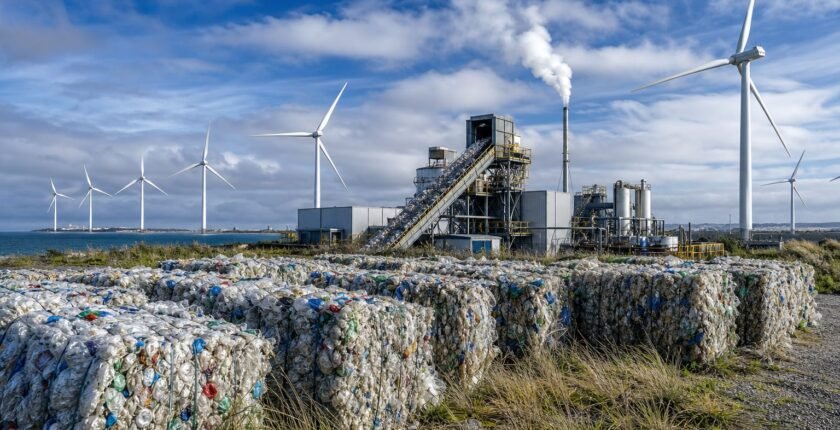
Estimated reading time: 5 minutes · Last updated:
Dr Yunqing Kang is developing nanomaterials that use sunlight, seawater and molecules derived from discarded plastics to produce hydrogen, a concept he outlined on 26 August 2026 as first reported by the Australian Institute for Bioengineering and Nanotechnology. Kang's approach lowers the energy required for electrolysis by substituting the oxygen-producing half of water splitting with oxidation of plastic-derived molecules. The project is supported by an ARC Discovery Early Career Researcher Award (DECRA) and, less than a year into the work, Kang has published two research papers that target the catalyst and sensor problems at the heart of the idea. The primary goal is cheaper hydrogen made from abundant seawater and waste plastic.
Ultimately, I want to use sunlight to power a system that converts plastic waste and water into hydrogen and other valuable products.
Dr Yunqing Kang
Key takeaways
- Who and funding: Dr Yunqing Kang has an ARC Discovery Early Career Researcher Award (DECRA) to develop materials that make hydrogen from plastic waste and seawater.
- Research outputs: Less than a year into the project Kang has published two papers addressing catalysts and detection, including methods linked at doi:10.1038/s41467-026-75955-0 and doi:10.1038/s41467-026-75365-2.
- Seawater focus: Kang highlights that 97 per cent of the world’s water is seawater and is targeting catalysts that work in seawater’s corrosive, salty environment.
- Energy-saving mechanism: The project aims to lower the energy for hydrogen production by replacing the energy-intensive oxygen evolution reaction with oxidation of plastic-derived molecules.
Table of contents
- Key takeaways
- How plastic oxidation is used to lower electrolysis energy
- Catalysts built for seawater and non-precious metals
- Detecting and using plastic-derived molecules
- Scaling, limits and the path to a prototype
- Why this could work — and what could stop it
- What to be careful about
- Frequently asked questions
How plastic oxidation is used to lower electrolysis energy
Producing hydrogen by splitting water requires two half-reactions: one that yields hydrogen and one that yields oxygen. Kang emphasises that the oxygen-generating reaction—the oxygen evolution reaction—is the most energy-intensive step in conventional electrolysis. His strategy is to supply plastic-derived molecules that undergo oxidation in place of water oxidation, so the cell’s overall energy input falls. That substitution does not eliminate the hydrogen-producing half-reaction; it replaces the partner reaction with a chemically easier oxidation that can proceed at lower potential, in principle reducing electricity consumption for each kilogram of hydrogen produced.
The approach requires two linked abilities: first, to extract or derive suitably reactive molecules from plastic waste; second, to design electrodes and catalysts that catalyse those oxidation reactions selectively while still producing hydrogen at the cathode. Kang describes the work as fundamentally materials-driven: success depends on creating surfaces that bind the plastic-derived reagents and steer their chemistry away from unwanted by-products.
Catalysts built for seawater and non-precious metals
A core technical barrier is using seawater rather than purified water. Kang points out that 97 per cent of the world’s water is seawater, which makes it abundant and cheap, but its salts and impurities are corrosive and can poison catalysts. To address that he is designing corrosion-resistant catalysts from abundant metals—iron, nickel and cobalt—rather than relying on precious metals.
One of Kang’s papers describes a new manufacturing method for extremely thin, porous metal-alloy coatings on conductive surfaces (doi:10.1038/s41467-026-75955-0). These coatings can be tuned for activity and durability in simulated seawater splitting tests. The reported materials are presented as low-cost and corrosion-resistant candidates for the harsh seawater environment, but Kang and collaborators note that scaling the manufacturing and long-duration stability remain open engineering challenges.
Detecting and using plastic-derived molecules
Turning plastic waste into feedstock requires sensing and separating the target molecules in complex water or waste streams. Kang has published a second paper that presents a semiconductor nanomaterial able to detect trace pollutants and plastic-derived chemicals by their molecular fingerprints (doi:10.1038/s41467-026-75365-2). The work focuses on making tiny concentrations easier to spot so that a catalytic system can be supplied with the correct reactants.
The sensor work is aimed at two tasks: identifying useful oxidation targets in mixed waste streams and allowing process control so the catalyst and reactor see the chemistry they were designed for. Kang stresses that molecular recognition—making the target molecule interact strongly with the material—is the practical hurdle for sensors operating in real seawater and polluted samples.
Scaling, limits and the path to a prototype
Kang acknowledges that the nanomaterials he develops are currently expensive and that scaling manufacturing to industrial volumes will be challenging. His stated aspiration is to combine solar energy, seawater and plastic-processing modules into small, scalable devices that simultaneously break down plastic and split water to yield hydrogen and value-added chemicals.
Practical deployment will need pilot demonstrations, supply chains for suitable plastic feedstocks and durability tests in real seawater conditions. Kang frames the timeline as exploratory: he is using DECRA funding to solve the material-design problems first, with scale-up to follow only after the underlying catalysts and sensors prove robust in extended tests.
| Component | Purpose | Status | Source |
|---|---|---|---|
| Porous metal-alloy coating | Seawater-stable electrocatalyst | Demonstrated in simulated seawater | doi:10.1038/s41467-026-75955-0 |
| Semiconductor nanomaterial sensor | Detect plastic-derived molecules | Published laboratory detection | doi:10.1038/s41467-026-75365-2 |
| Integrated solar-powered device | Plastic oxidation + hydrogen production | Concept / future prototype | Kang's DECRA project |
Why this could work — and what could stop it
The case for
- Replacing the oxygen evolution reaction with plastic oxidation could reduce cell voltage and lower electricity costs per unit of hydrogen.
- Seawater is abundant—97 per cent of the planet’s water—and using it removes large desalination costs from hydrogen production.
- The designs use abundant metals such as iron, nickel and cobalt rather than precious metals, which could cut material cost if durability is achieved.
The case against
- Seawater’s salts and impurities risk corroding catalysts and creating competing reactions that reduce efficiency and lifetime.
- Scaling nanomaterial manufacturing from lab samples to industrial quantities remains expensive and technically difficult.
- The system depends on suitable plastic-derived feedstocks; variability in waste streams could complicate consistent operation.
What to be careful about
- Catalyst degradation and fouling from seawater impurities reducing performance over time.
- Unknowns about the environmental and chemical by-products produced when plastics are oxidised in an electrochemical cell.
- High cost and supply-chain constraints for scaling advanced nanomaterial synthesis to industrial quantities.
- Difficulty sourcing and preprocessing plastic waste streams with consistent chemistry for continuous operation.
The bottom line
Kang’s work puts materials design at the centre of a pragmatic route to hydrogen made from plastic waste and seawater. The two published studies address the two core technical risks—durable, seawater-stable catalysts and sensors that identify usable plastic-derived molecules—while DECRA funding buys time to move from lab demonstrations to pilot testing. Significant unknowns remain: long-term catalyst durability in seawater, the costs of scaling nanomaterial production and the environmental impacts of oxidising real plastic waste. Those are the barriers that must be cleared before the concept becomes a fielded, solar-powered system.
What to watch
- Watch for Kang or collaborators to publish pilot-scale seawater electrolysis tests; no date has been set.
- Watch for demonstration of an integrated solar-powered prototype that combines plastic oxidation with hydrogen production; no date has been set.
- Watch for follow-up papers reporting long-duration stability tests of the porous metal-alloy coatings; no date has been set.
Frequently asked questions
How does using plastic reduce the energy needed to make hydrogen?
Kang explains that conventional electrolysis splits water into hydrogen and oxygen and that the oxygen-evolution half-reaction is the most energy-intensive. By providing plastic-derived molecules that undergo oxidation in place of water oxidation, the cell can operate at a lower overall potential and so use less electricity per kilogram of hydrogen.
Can seawater really be used instead of purified water?
Kang points out that 97 per cent of the world’s water is seawater and is therefore an attractive feedstock, but seawater’s salts and impurities are corrosive. His work focuses on corrosion-resistant catalysts made from iron, nickel and cobalt designed to tolerate simulated seawater, though extended real-world testing is still required.
What has Kang achieved so far and where is the work published?
Less than a year into the DECRA-funded project Kang has published two papers: one on a manufacturing method for porous metal-alloy coatings (doi:10.1038/s41467-026-75955-0) and one on a semiconductor nanomaterial for ultrasensitive detection of trace pollutants and plastic-derived molecules (doi:10.1038/s41467-026-75365-2).
Related reading