
Blog
VVTA and RTA launch hydrogen buses and fueling
Estimated reading time: 5 minutes · Last updated:
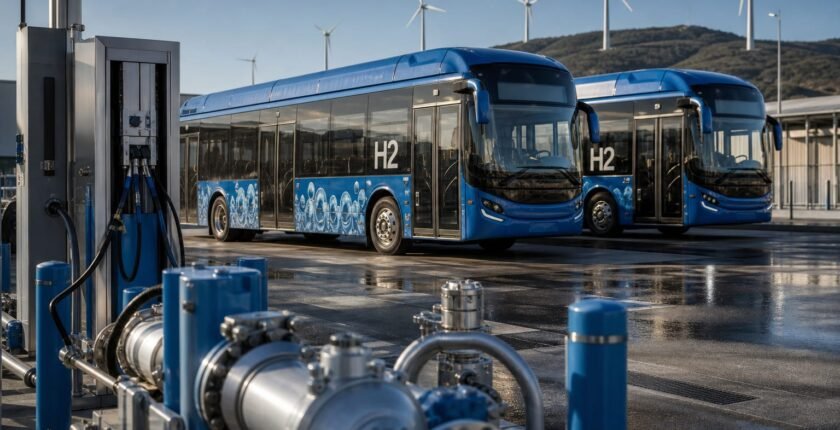
Victor Valley Transit Authority (VVTA) and Riverside Transit Agency (RTA) have moved from planning to operations on hydrogen transit. VVTA has phased 13 hydrogen fuel cell buses into revenue service across its network, including Route 15, while RTA has unveiled a Clean Energy hydrogen fueling station and purchased five hydrogen buses with $4.89 million in FTA 5339 Low or No Emission funds. Brandon Lewis reported these developments in Mass Transit on 2 September 2026, and both agencies say they will collect operational data and run acceptance testing as the vehicles enter daily service.
This is an exciting moment for VVTA because our investment in hydrogen technology is no longer something we're simply planning for; it's here, and our passengers are starting to benefit from this today,
Rod Goldman, VVTA CEO
Key takeaways
- VVTA deployment: Victor Valley Transit Authority has introduced 13 hydrogen fuel cell buses into revenue service, including service on Route 15.
- RTA fueling and purchases: Riverside Transit Agency opened a hydrogen fueling station built by Clean Energy and purchased five hydrogen buses using $4.89 million in 5339 Low or No Emission funds.
- Operational testing: Both agencies are collecting operational data and are performing further tests while the buses run in regular passenger service, as first reported by Mass Transit.
- Fleet strategy: VVTA positions hydrogen as a range-capable zero-emission option to complement its earlier battery-electric investments begun in 2019.
Table of contents
VVTA puts hydrogen buses on long and varied routes
Victor Valley Transit Authority began a phased rollout of 13 hydrogen fuel cell buses into daily revenue service across its High Desert network. The agency selected routes that demand longer range and operational flexibility; one named corridor is Route 15, which links the Victor Valley Transportation Center with San Bernardino, Fontana and California State University, San Bernardino. VVTA says the hydrogen vehicles suit its mixture of urban, rural and commuter runs because they can travel farther between refuels than many battery-electric alternatives.
VVTA staff framed the rollout as both a service improvement and a testbed for wider fleet planning. The agency is using the introduction period to gather real-world performance metrics, train technicians and refine scheduling and maintenance procedures. Chief Maintenance Officer Dustin Strandberg said the live runs produce data that will shape how hydrogen is integrated at scale, while Board Chair and Victorville Mayor Liz Becerra presented the program as an investment in regional connectivity and sustainability.
RTA opens station, ties purchases to federal 5339 funding
Riverside Transit Agency unveiled a new hydrogen fueling station at its Riverside headquarters and displayed its first hydrogen zero-emission buses. The station was built by Clean Energy, and RTA says the vehicle purchases were enabled by a funding package that included $4.89 million awarded through the Federal Transit Administration's 5339 Low or No Emission program.
RTA CEO Kristin Warsinski highlighted the workforce and operational investments required to shift from compressed natural gas to zero-emission propulsion. The agency framed the station and buses as the start of a broader transition toward a fully zero-emission fleet. Board Chair Jim Steiner emphasized that the project combined federal, state and local funds, and RTA will use commissioning and acceptance tests at the new station to validate fueling operations before expanding deployments.
What operational rollout means for maintenance, training and procurement
Both agencies stress that vehicle delivery was only the start: integrating hydrogen requires new fueling protocols, technician certification and supply coordination. VVTA described months of planning that covered vehicle procurement, fueling infrastructure, staff training and partnership coordination; RTA has likewise paired the station build with workforce readiness measures. These preparatory steps aim to prevent downtime and to ensure safety as the buses enter routine service.
Agencies collecting operational data will be able to compare fuel-cycle logistics, range performance and total cost of ownership against battery-electric buses the agencies already operate. VVTA points to its 2019 battery-electric introductions as prior experience to draw on, but it has chosen hydrogen where route length or duty cycles make battery ranges harder to match. The agencies did not publish vehicle range figures or hydrogen production sources, so those technical and lifecycle details remain to be disclosed in follow-up reporting.
| Agency | Buses deployed | Funding noted | Fueling infrastructure |
|---|---|---|---|
| VVTA | 13 | Not specified in report | Using existing/planned fueling coordination (details pending) |
| RTA | 5 (first purchase) | $4.89 million in 5339 Low or No Emission funds | New station built by Clean Energy |
Near-term case for and against faster hydrogen adoption
The case for
- Hydrogen buses offer longer range and faster refuelling for long rural and commuter routes, addressing operational gaps battery-electric buses can struggle with.
- Federal grants such as the FTA 5339 program lower the upfront vehicle cost barrier, enabling agencies like RTA to begin fleet transitions.
The case against
- Unspecified details on hydrogen supply, production pathway and station capacity leave open questions about lifecycle emissions and operating costs.
- Maintenance, training and fueling reliability risks could slow scaling if on-the-road data show higher-than-expected downtime or logistical constraints.
What to be careful about
- Hydrogen feedstock source is not disclosed; without renewable or low-carbon production, lifecycle emissions could be higher than anticipated.
- Station throughput and refuelling reliability have not been published and could become operational bottlenecks during peak service.
- Unknown vehicle-range figures and real-world fuel consumption mean total cost of ownership comparisons with battery-electric buses remain incomplete.
The bottom line
VVTA and RTA have moved hydrogen transit from procurement into practical operations: 13 buses are now in service at VVTA and RTA has a new Clean Energy station supporting its initial five hydrogen vehicles funded in part by $4.89 million in 5339 grants. Both agencies emphasise data collection, testing and workforce readiness during the rollout. The programmes illustrate how federal grants can unlock early deployments, but unanswered technical questions about hydrogen sourcing, station capacity and vehicle range will determine whether hydrogen becomes a long-term backbone for these fleets.
What to watch
- Watch for VVTA’s published operational and testing summaries for the 13 hydrogen buses; no date has been set for those reports.
- Watch for RTA’s commissioning results from the Clean Energy fueling station and its early performance data for the five hydrogen buses; no date has been set.
- Watch for board briefings from VVTA and RTA that will present lessons learned and next steps for scaling zero-emission buses; no date has been set.
Frequently asked questions
How many hydrogen buses did VVTA and RTA add to service?
VVTA introduced 13 hydrogen fuel cell buses into revenue service, and RTA purchased its first five hydrogen buses, funded in part by $4.89 million in FTA 5339 Low or No Emission funds.
Which routes will the VVTA hydrogen buses serve?
VVTA deployed the hydrogen buses across its service area, specifically noting Route 15, which connects the Victor Valley Transportation Center with San Bernardino, Fontana and California State University, San Bernardino.
Who built RTA’s fueling station and how was it funded?
The fueling station at RTA’s Riverside headquarters was built by Clean Energy and the vehicle purchases were partly paid for with $4.89 million from the Federal Transit Administration’s 5339 Low or No Emission program, alongside state and local contributions.
Related reading