
Blog
Also TM-B e-bike review: Rivian’s software-first ride
Estimated reading time: 5 minutes · Last updated:
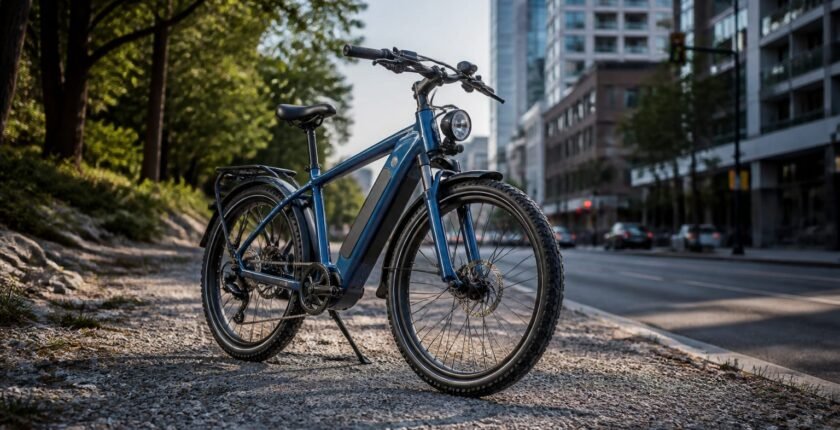
Also’s TM-B is a Class 3, software-defined e-bike from the Rivian spinout Also that pairs a pedal-by-wire drivetrain with a 48V removable battery and a hard-coded 28 mph top speed. On a Seattle test loop the bike delivered instant off-the-line acceleration from a 180 Nm rear-wheel motor and usable regenerative braking, and changing the bike’s function is physical and digital: a three-second eject for swappable top frames and firmware-enforced limits. The TM-B starts at $3,500 and is offered in a $4,500 performance trim; Also is running a test pop-up in Seattle and is present in 10 initial launch markets.
It’s kind of like Mario Kart real life hitting a mushroom, which is pretty great.
Amy Hattemer, Also’s Seattle market manager
Key takeaways
- Price and trims: The TM-B starts at $3,500 for the standard model and $4,500 for the performance package.
- Power and limits: A rear motor delivers 180 Nm of torque and the vehicle’s firmware enforces a 28 mph Class 3 top speed.
- Battery and range: A removable 48V battery uses Rivian-grade cells and Also quotes up to 60 miles on standard models and up to 100 miles on performance models.
- Modularity and weight: The TM-B weighs 80 lbs, and removing the top frame plus battery sheds about 25 lbs to ease transport.
Table of contents
- Key takeaways
- How Rivian's EV heritage translates to a two-wheeler
- A pedal-by-wire drivetrain and what it means on the road
- Security, modular frames and practical city use
- Who the TM-B suits and the limits to expect
- How the TM-B could play out on city streets
- What to be careful about
- Frequently asked questions
How Rivian's EV heritage translates to a two-wheeler
Also spun out of Rivian and carried an early valuation cited at $1 billion; the company is based in Palo Alto and has opened a Seattle office and retail outpost. That background shows up not as borrowed branding but in product choices: Rivian-grade cells in the removable 48V battery, an emphasis on software-first controls, and a digital security stack that mirrors connected-vehicle thinking.
Also is running a public test pop-up at Evo’s flagship store in Wallingford, Seattle, where the company is booking demo rides through the end of the year. The launch plan covers 10 initial markets nationwide and positions the TM-B as a commuter and utility vehicle that expects both retail sales and short-form urban demos to shape customer feedback.
A pedal-by-wire drivetrain and what it means on the road
The TM-B uses a pedal-by-wire system rather than a mechanical chain: pedaling becomes an electrical input to the motor controller and the bike generates synthetic resistance underfoot. That architecture lets Also tune assistance modes and implement safety features in software, including a firmware-enforced 28 mph limit and future over-the-air updates for parental controls.
Performance in traffic is immediate. With 180 Nm of rear-wheel torque and a zero-maintenance belt drive rated for 10,000 miles, the bike accelerates strongly from a standstill and can clear intersections using the thumb throttle, which boosts to 20 mph. Regenerative braking is integrated into the hydraulic discs, returning energy to the battery and helping manage downhill speed.
Security, modular frames and practical city use
Security is a clear area where EV thinking carries over: the TM-B can be electronically locked to disable the motor, battery release and top-frame eject, and the company plans an app with hands-free unlock, PINs, NFC, GPS tracking and tamper alerts. Those features aim to convert a typical bike theft scenario into a bricked, trackable device.
Physical modularity is equally pragmatic. A set of swappable top frames — solo, bench or utility cargo — eject in about three seconds so a single chassis can serve different riders or tasks. Removing the top frame and the battery reduces weight by roughly 25 lbs from an 80 lb baseline, a meaningful reduction when lifting the machine onto a car rack or stairwell.
Who the TM-B suits and the limits to expect
The TM-B is aimed at commuters and urban users who value speed, torque and a connected experience more than ultralight portability. It is a Class 3 machine, capable of 28 mph with pedal assist, and Also points out the rear motor’s 180 Nm is roughly double the pulling power of top-tier cargo bikes, which makes hill climbs and quick intersection moves straightforward.
That capability and the price points — $3,500 and $4,500 — place the TM-B above basic commuter scooters but below many high-end cargo platforms. City buyers will want to weigh the trade-offs: the bike’s software locks and OTA features add convenience and security, while the 80 lb curb weight and the need to charge a 48V pack are practical considerations for everyday ownership.
| Feature | TM-B standard | TM-B performance |
|---|---|---|
| Starting price | $3,500 | $4,500 |
| Quoted range | Up to 60 miles | Up to 100 miles |
| Top assisted speed | 28 mph (firmware) | 28 mph (firmware) |
| Motor torque | 180 Nm | 180 Nm |
How the TM-B could play out on city streets
The case for
- Software-enforced limits and OTA updates could reduce tampering and let owners tailor performance, widening the bike’s household use cases.
- Integrated digital locking and GPS tracking make the TM-B less attractive to opportunistic thieves and more recoverable if stolen.
The case against
- An 80 lb curb weight will discourage riders who need to lift or frequently stow the bike, limiting adoption among some urban commuters.
- Regulatory regimes for Class 3 e-bikes vary by jurisdiction; firmware enforcement does not remove the need to comply with local rules on where 28 mph bikes can operate.
What to be careful about
- High curb weight (80 lbs) complicates transport, storage and use for smaller riders despite the 25 lb removable components.
- Local rules for Class 3 e-bikes may restrict where the TM-B can be ridden at full speed, affecting its utility.
- The TM-B’s security features rely on connectivity and an app; if the app launch or OTA systems are delayed, owners may lack promised controls at purchase.
- Quoted ranges (up to 60 or 100 miles) depend on unspecified test conditions and rider behavior, creating a gap between quoted and real-world mileage.
The bottom line
The TM-B brings an automotive software mindset to the e-bike category: firmware-enforced speed limits, OTA updates, a removable 48V battery and integrated digital locking. Those choices yield immediate benefits — strong hill-climbing from 180 Nm of torque, a modular platform for multiple use cases, and theft-mitigation tools — while also introducing trade-offs, chiefly an 80 lb curb weight and dependence on an app and connected services. Buyers should weigh those trade-offs against the quoted ranges, the $3,500–$4,500 price points and local rules for Class 3 bikes before committing.
What to watch
- Try the TM-B at Also's Evo Wallingford pop-up; test rides run through the end of 2026.
- Watch for Also's mobile app launch, which will enable hands-free unlocking and digital family keys; no date has been set.
- Look for the company's planned over-the-air updates that will add parental-control speed caps; Also has announced those updates but not given a timetable.
Frequently asked questions
What top speed and motor torque does the TM-B deliver?
The TM-B is a Class 3 e-bike with a firmware-enforced 28 mph top assisted speed and a rear motor that delivers 180 Nm of torque.
How long will the battery last between charges?
Also quotes up to 60 miles of range for standard models and up to 100 miles for performance packages using a removable 48V battery made with Rivian-grade cells.
How much does the TM-B cost and where can I try one?
The TM-B starts at $3,500 for the standard model and $4,500 for performance; Also is running a test pop-up at Evo’s Wallingford store with rides available through the end of 2026.
Related reading