
Blog
Trump Backs Batteries, Shuns Wind Power
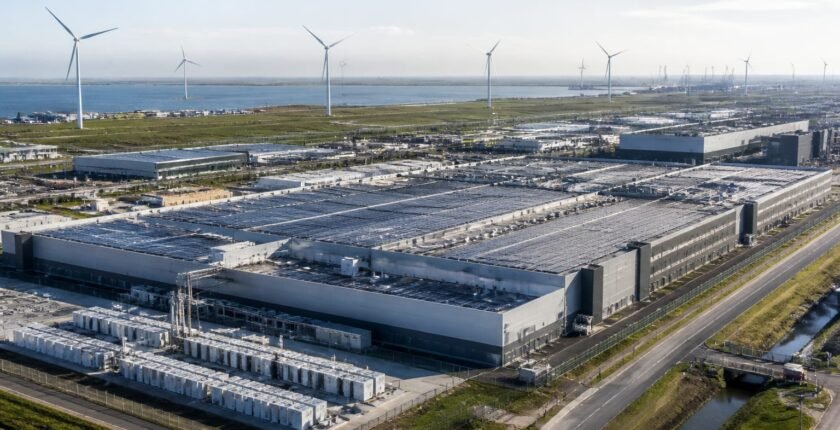
Estimated reading time: 5 minutes · Last updated:
President Donald Trump has narrowed his public support for electric vehicles and wind power while directing federal money into large lithium‑ion batteries that serve defense, data centers and grid needs. His administration approved a $500 million Energy Department award to domestic battery suppliers and the Pentagon provided a $1.4 billion loan to Sila Nanotechnologies, part of a package that the White House said totals more than $2 billion for mining and related battery efforts. Reporting here builds on coverage by Brad Plumer, as first reported by the New York Times.
There has been a growing appreciation for just how important batteries are for so many things. It’s not just EVs, it’s automation, robotics, data centers, drones for defense. And there’s a real move to making sure China doesn’t have a choke point here.
Tom Moerenhout, Columbia University’s Center on Global Energy Policy
Key takeaways
- Federal awards: Seven U.S. firms received a total of $500 million from the Energy Department to support work ranging from producing battery components to processing critical minerals.
- Pentagon loan: The Pentagon announced a $1.4 billion loan to Sila Nanotechnologies to expand battery material production in Washington state.
- Mining funding: The White House announced more than $2 billion in measures to revitalise domestic mining for battery materials.
- Market constraint: Sila’s Moses Lake factory currently makes material for tens of thousands of batteries a year, which the company says is still less than 0.1% of the global market.
Table of contents
- Key takeaways
- Why the administration backs batteries despite opposing wind and EV subsidies
- What the federal funding so far actually covers
- Supply‑chain reality: China’s edge and the limit of defence demand
- Industry response and the practical constraints on rapid scaling
- How this policy could play out
- What to be careful about
- Frequently asked questions
Why the administration backs batteries despite opposing wind and EV subsidies
The Trump administration frames batteries not primarily as a climate tool but as critical infrastructure for national security and industrial priorities. Officials cite uses that range beyond cars — backup power for artificial intelligence data centers, portable power for military drones, and components for automation and robotics — and they treat domestic battery capacity as strategically important even while reducing support for wind farms and consumer EV tax credits.
That strategic calculation is reflected in job‑and‑security language used by Energy Secretary Chris Wright when announcing awards and by Pentagon funding choices that address supply‑chain weak points. The shift separates battery manufacturing from the administration’s broader stance on clean‑energy subsidies: batteries are being promoted for their utility across defense and industry, not only for decarbonisation.
What the federal funding so far actually covers
Two concrete federal steps are central. In August the Energy Department awarded $500 million to seven U.S. companies that either make battery components or process critical minerals such as cobalt and graphite. Separately, the Pentagon’s Office of Strategic Capital committed a $1.4 billion loan to Sila Nanotechnologies for a factory in Moses Lake, Washington, where Sila produces silicon‑based materials intended to substitute for some Chinese graphite inputs.
The White House also announced more than $2 billion in measures aimed at reviving domestic mining for battery materials. The White House said the measures are intended to shorten supply chains and reduce dependence on foreign producers. Energy Secretary Chris Wright framed the awards as a response to a strategic vulnerability in materials that “underpin our economy, energy security, and national security.”
Supply‑chain reality: China’s edge and the limit of defence demand
China remains the dominant force across the battery supply chain, from refined lithium and graphite to cathode and anode manufacturing. It sells roughly the same number of electric vehicles each year as the rest of the world combined; the country has also become preeminent in lithium iron phosphate, or LFP, cells that are widely used in vehicles and stationary storage.
That dominance constrains how quickly the United States can onshore a full supply chain. Experts quoted in the reporting note that defence and industrial demand alone are too small to support the scale needed to dislodge China; consumer EVs are by far the largest single source of demand for lithium‑ion batteries. The repeal last year of a $7,500 consumer tax credit tied to U.S. components removed a major incentive that had been helping to create a domestic EV market that could absorb new battery output.
Industry response and the practical constraints on rapid scaling
Battery start‑ups and established firms welcomed the money but cautioned that scaling takes time and policy consistency. Gene Berdichevsky, Sila’s CEO, said investors need confidence in supportive policies to justify large, long‑dated factory builds. Sila has spent nearly 15 years developing silicon‑based materials; its existing Moses Lake line can produce material for tens of thousands of batteries a year, which the company describes as still under 0.1% of global capacity.
That math underpins the central dilemma: federal grants and Pentagon loans reduce some investment risk, but without a larger domestic EV market — or persistent procurement commitments from industry and federal buyers — many new factories could still struggle to compete with lower‑cost Chinese supply and with the scale those producers already hold.
| Recipient | Amount | Purpose | Source |
|---|---|---|---|
| Seven U.S. companies | $500 million | Battery components and critical mineral processing | Energy Department award |
| Sila Nanotechnologies | $1.4 billion | Factory for silicon‑based battery materials (Moses Lake, WA) | Pentagon loan (Office of Strategic Capital) |
| Domestic mining industry | more than $2 billion | Revitalise mining for battery materials | White House announcement |
How this policy could play out
The case for
- Federal awards and Pentagon loans could lower early financing risk and attract private capital to factories for anode, cathode and refining capacity.
- Direct funding for mining and processing may expand domestic inputs for batteries, reducing the chance of acute short‑term export restrictions from dominant producers.
The case against
- Without a revived domestic EV market or durable procurement commitments, new U.S. capacity may remain uneconomic against established Chinese suppliers.
- Pushback from Democrats and investigations into some mining financing creates political uncertainty that could delay projects and deter investors.
What to be careful about
- China’s entrenched lead in refining and component production means U.S. factories face intense price competition even with federal support.
- The repeal of the $7,500 EV tax credit tied to U.S. components removed a major demand signal that had helped justify domestic battery capacity.
- Political scrutiny of mining investments raises the prospect that some financing deals will be delayed, scaled back, or investigated.
The bottom line
The Trump administration’s pivot to heavy federal support for batteries reflects a strategic judgment: lithium‑ion storage is central to defence, data centres and industrial automation, separate from the climate arguments surrounding wind and EVs. Concrete steps — a $500 million DOE award, a $1.4 billion Pentagon loan to Sila, and more than $2 billion for mining — lower some hurdles for domestic capacity but do not erase structural limits. China’s scale in refining and component manufacturing and the absence of a revived consumer EV incentive mean onshoring a full supply chain will remain a multi‑year, capital‑intensive endeavour.
What to watch
- Watch for Sila Nanotechnologies' production expansion timetable; no date has been set.
- Watch for the Energy Department’s follow‑up awards or implementation schedules for the seven companies; no date has been set.
Frequently asked questions
What federal actions has the administration taken to boost batteries?
The administration allowed many Biden‑era battery grants to proceed and the Energy Department awarded $500 million to seven U.S. companies; the Pentagon also provided a $1.4 billion loan to Sila Nanotechnologies.
Why are batteries being prioritised even as wind and EV support is scaled back?
Officials view batteries as strategic for defence and industrial resilience — uses cited include AI data‑center backup and drone power — and not only for reducing emissions, which explains the separate treatment.
Can U.S. policy quickly displace China’s role in the battery supply chain?
Not in the short term: the reporting notes China dominates refining, components and EV production; Sila’s current Moses Lake output still supplies under 0.1% of the global market, underscoring the scale gap.
Related reading