
Blog
HiTHIUM’s 4MWh sodium-ion system aims for 30-year life
Estimated reading time: 5 minutes · Last updated:
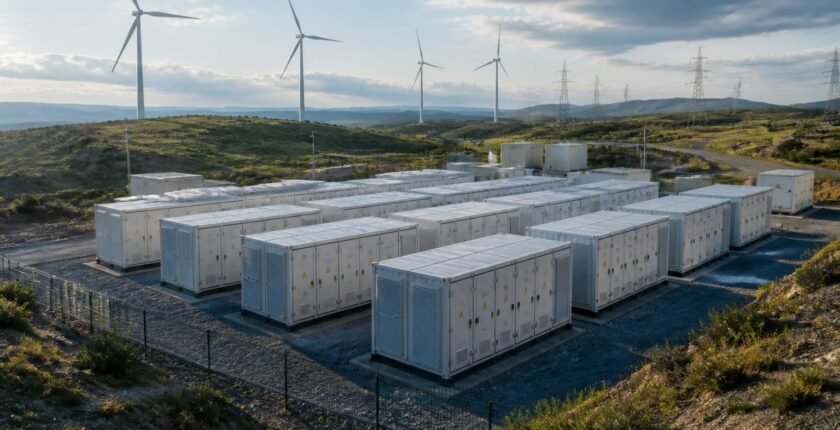
HiTHIUM has unveiled the ∞Power N4.0MWh, a containerised 4MWh sodium‑ion battery system it says is designed for a 30‑year service life and utility-scale grid use. The company introduced the system on 16 September 2026 alongside its ∞Cell N785Ah cell and plans to begin full‑scale production and deliveries in 2027, as first reported by Interesting Engineering. HiTHIUM frames the design around long calendar life, a stacked‑cell architecture and a dedicated battery management system that it says will deliver high state‑of‑charge accuracy while cutting footprint and auxiliary power needs.
Energy storage technologies must overcome two barriers to achieve large-scale deployment: affordability and availability,
Dr. Nazar Yi, Chief Technology Officer of HiTHIUM
Key takeaways
- System and life target: HiTHIUM introduced the ∞Power N4.0MWh sodium‑ion system and says it is designed for a 30‑year service life (10,950 days).
- Cell specs: The ∞Cell N785Ah is claimed to support about 20,000 cycles and storage durations of two to eight hours.
- Production timeline: HiTHIUM plans to begin full‑scale production and deliveries of the N4.0MWh system in 2027.
- Efficiency and cost targets: The company reports a 24‑hour comprehensive efficiency above 88% and is targeting a levelized cost of storage of RMB 0.1 per kWh.
Table of contents
How the N4.0MWh system is built for long life
HiTHIUM describes the N4.0MWh as a stacked‑cell system with a dedicated battery management system intended to extend calendar life and reduce operational overhead. The vendor says its design reduces the system footprint by 30% and that a combined air‑and‑liquid cooling arrangement uses automated thermal controls plus integrated weather monitoring to switch cooling modes and cut auxiliary power consumption. Those changes are presented as part of the company’s case that an electrochemical system can meet infrastructure service‑life expectations.
The company reports a 24‑hour comprehensive efficiency that exceeds 88% and cites a state‑of‑charge estimation accuracy of 2.5% or better for the system’s management software. HiTHIUM also gives the system a service‑life target of 30 years, which it equates to 10,950 days of validation. Those are company performance claims rather than independently published test results; they imply a combination of cell longevity, conservative thermal management and precise state estimation.
Cell chemistry, performance claims and manufacturing fit
The ∞Cell N785Ah is a sodium‑ion cell HiTHIUM built specifically for energy‑storage durations it says range from two to eight hours. The company claims the cell has a service life of 20,000 cycles, a figure that, if met in real deployments, would place it in a bracket suitable for daily cycling applications and multi‑hour shifting.
HiTHIUM also says the sodium‑ion cells will run on its existing 1,000 Ah lithium‑ion manufacturing platform, including cell and system integration lines. That compatibility is the company’s route to scale: adapting established production tooling and integration processes rather than building wholly separate manufacturing facilities. The claim ties the technology’s commercial case to execution risk in adapting processes and qualifying cells at scale.
Performance claims that need field proof
Several of HiTHIUM’s technical metrics are stated as company measurements and require third‑party validation in grid conditions. The firm reports that its state‑of‑charge estimation has an accuracy of 2.5% or better, that power‑conversion‑system utilization is more than 20% higher than its prior sodium system, and that auxiliary and standby consumption fall by 30% and 50% respectively under the new thermal controls.
Those improvements, if reproduced in independent tests, would materially lower operating expenditures and improve usable energy throughput. The company has launched an ∞Edge Pioneer Program to test cells and systems in extreme environments and says it will disclose progress over the next three years; such program results will be the primary evidence to confirm cycle life, calendar degradation and real‑world efficiency claims.
Market fit, resource case and application targets
HiTHIUM positions sodium‑ion on resource grounds: sodium is more abundant and widely distributed than lithium, which the company and its CTO, Dr. Nazar Yi, cite as an availability advantage for scaling grid storage. The vendor is targeting utility‑scale projects while also aiming to push systems into commercial and industrial storage, residential uses and energy‑access projects.
Commercial ambition is accompanied by a price target: HiTHIUM says it wants to move energy storage toward a levelized cost of storage of RMB 0.1 per kWh. The company plans full‑scale production and deliveries in 2027 and to introduce technology packages for extreme environments as it gathers field data. Whether those price and application targets translate into competitive procurements will depend on deployment scale, local grid requirements and how the sodium cells compare with incumbent lithium‑ion systems on total lifecycle cost.
| Item | Claim / spec | Source |
|---|---|---|
| ∞Power N4.0MWh | 4MWh system, stacked‑cell architecture, 30‑year service life target, >88% 24‑hour efficiency | HiTHIUM |
| ∞Cell N785Ah | Cell built for energy storage; ~20,000 cycles; 2–8 hour durations | HiTHIUM |
| Manufacturing platform | Compatible with existing 1,000 Ah lithium‑ion lines | HiTHIUM |
| Operational claims | SOC accuracy ≤2.5%; PCS rated 800–1,500 V; auxiliary −30%, standby −50% | HiTHIUM |
Case for and against commercial adoption
The case for
- If independent field trials confirm the 20,000‑cycle figure and the 30‑year calendar target, sodium‑ion could offer lower resource risk than lithium and support long‑lived grid assets.
- Compatibility with an existing 1,000 Ah manufacturing platform would reduce initial capital requirements and accelerate production ramp if process adaptation succeeds.
The case against
- Company metrics are currently claims; without third‑party ageing and safety data, buyers face uncertainty on true calendar life and capacity retention.
- Achieving an LCoS of RMB 0.1 per kWh depends on local equipment, financing and installation costs; the target is not a guaranteed market price.
What to be careful about
- The 30‑year service‑life target and the 20,000‑cycle claim are vendor assertions that require independent cycle and calendar ageing tests in grid conditions.
- Scaling sodium‑ion production on adapted lithium‑ion lines could reveal process or quality issues that delay deliveries despite platform compatibility.
- Thermal‑management complexity (air + liquid plus weather‑based mode changes) may introduce maintenance or control failure modes in some climates.
- The stated levelized cost of storage of RMB 0.1 per kWh depends on unlisted assumptions about capital cost, operating expenses and deployment scale.
The bottom line
HiTHIUM’s ∞Power N4.0MWh and ∞Cell N785Ah set out a familiar commercial playbook for alternative chemistries: claim competitive cycle life and efficiency, tie the new cell to existing production tooling, and use field testing to prove durability. The company’s timelines—production in 2027 and multi‑year field trials through the ∞Edge Pioneer Program—give procurement teams specific milestones to watch. The technical metrics reported (20,000 cycles, SOC accuracy ≤2.5%, >88% 24‑hour efficiency) are measurable; converting those company claims into procurement confidence will require published test data and deployed performance in real grid environments.
What to watch
- Watch for HiTHIUM to begin full‑scale production and deliveries of the ∞Power N4.0MWh system in 2027.
- Watch for progress disclosures from the ∞Edge Pioneer Program during 2027–2029; HiTHIUM has said it will disclose progress over the next three years.
- Watch for HiTHIUM to introduce technology packages for extreme environments; no date has been set for those product introductions.
Frequently asked questions
What is HiTHIUM’s ∞Power N4.0MWh system?
The ∞Power N4.0MWh is a containerised 4MWh sodium‑ion energy storage system HiTHIUM introduced on 16 September 2026 and designed for grid applications; the company says it pairs a stacked‑cell architecture with a dedicated battery management system.
How long does HiTHIUM claim the system will last?
HiTHIUM states a 30‑year service life for the system, which it equates to 10,950 days of validation; that is a company target rather than an independently verified lifetime figure.
When will HiTHIUM produce and deliver the systems?
HiTHIUM plans to begin full‑scale production and deliveries in 2027, according to the company’s announcement.
Related reading