
Blog
Why Norwegians Still Buy Chinese EVs Despite Scepticism
Estimated reading time: 5 minutes · Last updated:
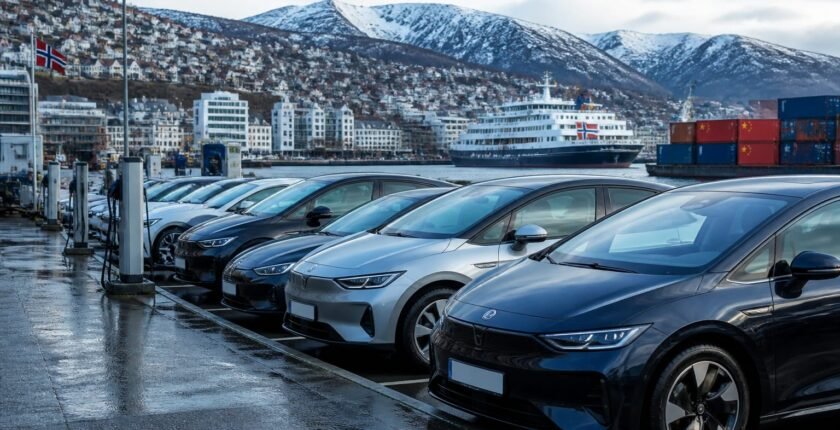
Norwegians keep buying Chinese EVs because price, technology and model availability are outweighing political and security worries. Chinese or Chinese-owned brands accounted for about 25% of new electric-vehicle registrations in the first half of 2026, while electric cars made up more than 95% of new registrations overall. At the same time, a Norwegian Electric Vehicle Association survey of nearly 15,000 owners found 31% would avoid Chinese brands for political reasons, up from 23% a year earlier. That split between consumer concern and purchasing behaviour explains why market share rises even as scepticism grows.
New cars are, in practice, computers on wheels,
Christina Bu, Norwegian Electric Vehicle Association secretary general
Key takeaways
- About 25% of Norway’s new EV registrations in the first half of 2026 were from fully or partly Chinese-owned brands.
- According to OFV figures, electric vehicles accounted for 97.8% of new-car registrations in Norway from January through August 2026.
- A Norwegian Electric Vehicle Association survey of nearly 15,000 owners found 31% would avoid Chinese brands for political reasons, up from 23% a year earlier.
- Registrations of cars from five Chinese-brand groups in the EU rose about 71% year-on-year in August, lifting their combined share from 6.6% to 10.8%, per ACEA.
Table of contents
- Key takeaways
- Why buying outpaced worry: price, features and choice
- Security and politics: rising scepticism, concrete incidents
- Market numbers: Norway’s anomaly and the EU context
- What the shift means for makers, regulators and drivers
- Case for and against continued Chinese gains
- What to be careful about
- Frequently asked questions
Why buying outpaced worry: price, features and choice
Norwegian buyers weigh multiple factors when they choose a car, and commercial advantages have pushed Chinese-origin models into broad consideration. Competitive pricing, aggressive feature sets—especially battery range and in-car software—and a growing dealer and service network all lower the barrier to purchase for many households.
Over the past two years, manufacturers such as BYD and brands under Chinese ownership, including Volvo and Polestar, have broadened trim options and strengthened local distribution. Those changes helped Chinese-origin marques capture about 25% of Norway's newly registered electric vehicles in January-June 2026, even as EV market penetration remained very high.
The Norwegian Electric Vehicle Association framed the behaviour as trade-offs: while a rising share of owners say politics and data security matter, other buyers prioritise cost of ownership, charging performance and the vehicle’s feature set when they sign the purchase contract.
Security and politics: rising scepticism, concrete incidents
Concern about data handling and national security is mounting. The Norwegian Electric Vehicle Association’s survey found 31% of respondents would avoid Chinese brands for political reasons; a year earlier the share was 23%. That shift shows growing unease even among a sample that still buys broadly across origins.
Norwegian researchers previously reported tests that found a NIO vehicle transmitting data to China, and separate work on a Yutong bus showed the maker could access control systems and, in theory, disable the vehicle remotely. Those tests are part of the background raising consumer awareness about how connected vehicles transmit and store data.
Christina Bu, the association’s secretary general, put it plainly: "New cars are, in practice, computers on wheels," highlighting why buyers now factor data security into their choices alongside price and range.
Market numbers: Norway’s anomaly and the EU context
Because Norway's EV adoption is so high, electric cars represented 97.8% of new registrations between January and August 2026, the Norwegian Road Federation (OFV) reports. That market saturation means changes in brand mix are reflected quickly in registration numbers.
Across the EU, Chinese-brand groups are also gaining share. The European Automobile Manufacturers’ Association (ACEA) reported that registrations across five groups with Chinese brands jumped about 71% in August year-on-year, increasing their combined share from 6.6% to 10.8%. Individual makers showed rapid growth: Leapmotor up 211%, Chery up 201%, BYD up 129% and Geely Group up 24% in the same comparison; Tesla’s registrations in the EU rose 53% year-on-year in August.
Those EU gains underline that Norway’s move toward Chinese-origin cars is part of a wider shift in model availability and pricing across Europe, even if Norway’s absolute EV penetration remains far higher than the EU average.
What the shift means for makers, regulators and drivers
For manufacturers, the lesson is straightforward: competitive product packages and local support convert sceptical markets. Chinese and Chinese-owned brands have combined lower entry prices with aggressive technology packages to win early buyers and build share quickly.
For regulators and policymakers, the rise brings two immediate tasks: first, clarify rules on vehicle cybersecurity and data access; second, ensure transparency about where and how vehicle data are stored and who can access it. Absent clear standards, political and reputational questions will continue to shadow sales.
For consumers the trade-off is tangible: political or security concerns lead a growing minority to avoid certain brands, yet many buyers remain persuaded by cost and capability. A labelled, enforceable standard for vehicle data handling would reduce that trade-off by giving shoppers a rule-of-thumb they can trust when comparing models.
| Brand | YoY growth (Aug) | Note |
|---|---|---|
| Leapmotor | 211% | Among fastest-growing in ACEA data |
| Chery | 201% | Rapid expansion in EU markets |
| BYD | 129% | Large-volume Chinese OEM |
| Geely Group | 24% | Includes Volvo and other European brands |
| Tesla | 53% | US brand, still growing in EU |
Case for and against continued Chinese gains
The case for
- Expanded model ranges, lower prices and improved local sales networks will continue to attract price-sensitive buyers in 2027.
- If manufacturers keep improving software and range-for-cost metrics, Chinese-origin brands can convert more of Norway’s late-adopter buyers.
The case against
- Stronger regulation or certification on vehicle data storage and access could slow purchases of brands that cannot or will not meet new standards.
- Rising political scrutiny and negative publicity from security tests could shift undecided buyers away from specific Chinese-origin models.
What to be careful about
- A reputational hit if further technical tests show intrusive data flows or remote-control vulnerabilities.
- Policy backlash: new certification or restrictions could raise compliance costs for manufacturers and slow sales.
- Supply-concentration risk if a rapid share shift leaves the market dependent on a narrower set of suppliers for components or service.
The bottom line
Norway’s rapid EV adoption creates a market where new entrants can gain share quickly if they combine competitive pricing, strong range and appealing software. The same conditions that boost sales also expose concerns about data handling and geopolitical optics: survey evidence shows these worries are growing even while purchases keep rising. Policy responses that clarify cybersecurity and data rules would reduce uncertainty and could narrow the gap between stated consumer preferences and actual buying decisions. Whether Chinese-origin brands consolidate their gains will depend as much on regulatory answers and transparency as on continued product competitiveness in 2027.
What to watch
- Watch whether Chinese-origin brands overtake European brands in Norway during 2027, a scenario highlighted by the Norwegian Electric Vehicle Association.
- Watch ACEA and national registration tallies for 2027 to see if the EU-wide shift that lifted combined share to 10.8% in August continues through 2027.
Frequently asked questions
How big is the Chinese-origin share of Norway’s new EV market?
In Norway, roughly one in four newly registered electric vehicles during January-June 2026 were from Chinese or Chinese-owned marques, the Norwegian Road Federation's data show.
Are Norwegians avoiding Chinese cars for political reasons?
A survey by the Norwegian Electric Vehicle Association of nearly 15,000 owners found 31% said they would avoid Chinese brands for political reasons, up from 23% a year earlier, showing rising scepticism among some buyers.
Could Chinese brands become dominant in Norway?
A report the Norwegian Road Federation referenced earlier projected that Chinese-origin marques could surpass European brands in registrations by 2027 if present trends persist; realizing that would require sustained pricing advantages, sufficient model supply and supportive regulation.
Related reading