
Blog
Mount Fox wind farm sparks local net-zero fight
Estimated reading time: 5 minutes · Last updated:
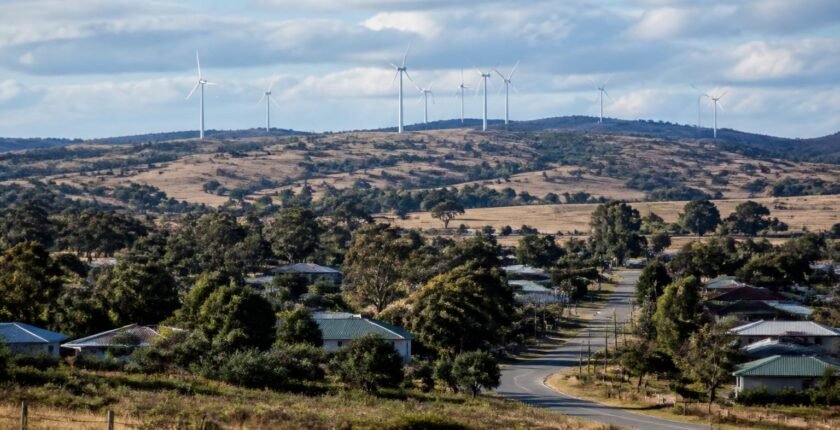
Gawara Baya, a wind project that includes 68 turbines and a 100-megawatt battery, is due to begin construction near Mount Fox in north Queensland after Copenhagen Infrastructure Partners bought the development from WindLab. As first reported by the Australian Broadcasting Corporation, the buyer said funding was in place and construction would begin "imminently." The site covers 148 hectares close to the Wet Tropics; the closest turbine will sit about 5 kilometres from the world‑heritage border. Local residents, about 84 in Mount Fox, say the 140-metre turbines and a proposed 35-year lifespan pose biodiversity, health and end‑of‑life concerns.
If I have to lie down in front of a bulldozer, you know. We're serious. It can't happen. It's wrong for this place.
Kim Armstrong
Key takeaways
- Gawara Baya includes 68 turbines and a 100-megawatt battery across 148 hectares near Mount Fox.
- Copenhagen Infrastructure Partners acquired the project from WindLab and announced construction would start "imminently."
- Mount Fox near Ingham has about 84 residents and community group Keep Mount Fox Wild represents roughly half the town.
- Project CEO Mark Branson said construction would create about 500 jobs, and Alison Reeve of the Grattan Institute described it as a breakthrough under the Capacity Investment Scheme aimed at 82 per cent renewables by 2030.
Table of contents
- Key takeaways
- What Gawara Baya will be and who is funding it
- Why some Mount Fox residents oppose the project
- The federal policy context that enabled this project
- Local economic arguments and political reactions
- How this could help—and where it could stall
- What to be careful about
- Frequently asked questions
What Gawara Baya will be and who is funding it
Gawara Baya is a utility-scale wind farm planned on 148 hectares near the dormant Mount Fox volcano, comprising 68 turbines and a 100-megawatt battery. Copenhagen Infrastructure Partners (CIP) bought the development from WindLab and said funding was ready; CIP told local media construction would begin "imminently."
Project CEO Mark Branson said the build would employ about 500 people, most accommodated in an onsite village. The company presents the development as part of a wave of projects seeking grid capacity under the federal government's Capacity Investment Scheme, which guarantees a floor price for electricity to lower investor risk.
Why some Mount Fox residents oppose the project
Mount Fox near Ingham has about 84 residents, and opposition is organised through Keep Mount Fox Wild, which founder Kim Armstrong says includes about half the town. Armstrong and other locals cite worries about the 140-metre turbines' impact on biodiversity, runoff toward the Great Barrier Reef and what happens after an expected 35-year life cycle.
Armstrong framed the conflict as local people bearing the costs of a national net-zero drive decided in Canberra, and she has not ruled out direct action to stop construction. That opposition coexists with residents who welcome the jobs and investment the build could bring, leaving the community divided.
The federal policy context that enabled this project
The Capacity Investment Scheme is designed to help reach the government's 82 per cent renewables target by 2030 by reducing revenue risk for new generators. Grattan Institute climate and energy program director Alison Reeve said Gawara Baya is the first wind farm to move to construction under that scheme and that the project breaking financial close could unlock more east-coast builds.
The scheme works by guaranteeing a price for electricity: when wholesale prices fall below a set level the government subsidises the difference, and when prices rise above that level the government shares profits. Gawara Baya also reduced investor risk by securing agreements for electricity purchases with two companies instead of the typical single buyer, a structural detail the industry views as significant.
Local economic arguments and political reactions
Hinchinbrook Shire Council deputy mayor Mary Brown said community meetings were well attended and that the project offers a chance to diversify an economy where, she notes, one in three jobs in Ingham are in the sugar industry. Brown pointed to benefits seen during the Powerlink transmission‑line build, where local accommodation, hospitality and services gained work from a major construction phase.
Canegrowers and local businesses may gain from supply and service contracts, but opponents counter that tourism and local amenity risk long-term harm. The split in local views underscores that economic gains during construction do not resolve the environmental and lifecycle questions residents raise.
How this could help—and where it could stall
The case for
- The Capacity Investment Scheme's price guarantees and two offtake agreements reduce revenue risk, making financiers likelier to back large wind projects and helping progress toward the government's 82 per cent renewables by 2030 goal.
- Construction would create about 500 jobs and short-term demand for local suppliers and accommodation, mirroring benefits the community saw during the Powerlink transmission project.
The case against
- Sustained community opposition led by Keep Mount Fox Wild and Kim Armstrong could cause regulatory challenges, protests or legal actions that delay work and increase costs.
- Environmental concerns—proximity to the Wet Tropics, potential runoff toward the Great Barrier Reef and unresolved end‑of‑life turbine disposal—could attract separate reviews or conditions that complicate delivery.
What to be careful about
- Continued local protest and direct action led by Kim Armstrong and Keep Mount Fox Wild could delay construction or prompt injunctions.
- Environmental opposition focused on the Wet Tropics boundary and reef runoff could trigger additional assessments or mitigation requirements.
- If project economics rely on government guarantees and two offtakers, any change to those agreements or to the Capacity Investment Scheme could raise financing risk for this and follow-on projects.
The bottom line
Gawara Baya is both a practical step under federal policy and a flashpoint for how net-zero infrastructure sits in small communities. The project bundles large technical numbers—68 turbines, a 100-megawatt battery, 148 hectares and a claimed 500 construction jobs—with policy support from the Capacity Investment Scheme that backs the government's 82 per cent renewables aim by 2030. At the same time, local organisers such as Kim Armstrong and Keep Mount Fox Wild have framed biodiversity, reef runoff and lifecycle disposal as unresolved issues that could delay or reshape the build. How those risks are managed will determine whether Gawara Baya becomes a template for further east-coast projects or a cautionary example of local resistance.
What to watch
- Watch for Copenhagen Infrastructure Partners to confirm a firm construction start date; no date has been set.
- Watch for any legal filings or injunctions from Keep Mount Fox Wild or local residents after construction crews mobilise; no date has been set.
- Watch for the first delivery of turbine components or public notices about the onsite accommodation village; no date has been set.
Frequently asked questions
What is Gawara Baya and who owns it?
Gawara Baya is a wind farm project that includes 68 turbines and a 100-megawatt battery on 148 hectares near Mount Fox. Copenhagen Infrastructure Partners acquired the project from WindLab and said funding was ready before construction.
How close is the wind farm to the Wet Tropics and the local town?
The closest turbine will be about 5 kilometres from the Wet Tropics border, and Mount Fox near Ingham has about 84 residents, many of whom say that proximity drives their environmental concerns.
What economic benefits and jobs will the project bring?
Project CEO Mark Branson said construction would create about 500 jobs, with most workers housed in an onsite village. Hinchinbrook Shire deputy mayor Mary Brown highlighted potential local investment and supply opportunities, noting one in three jobs in Ingham are in the sugar industry.
Related reading