
Blog
USDA cuts REAP support for farm solar
Estimated reading time: 7 minutes · Last updated:
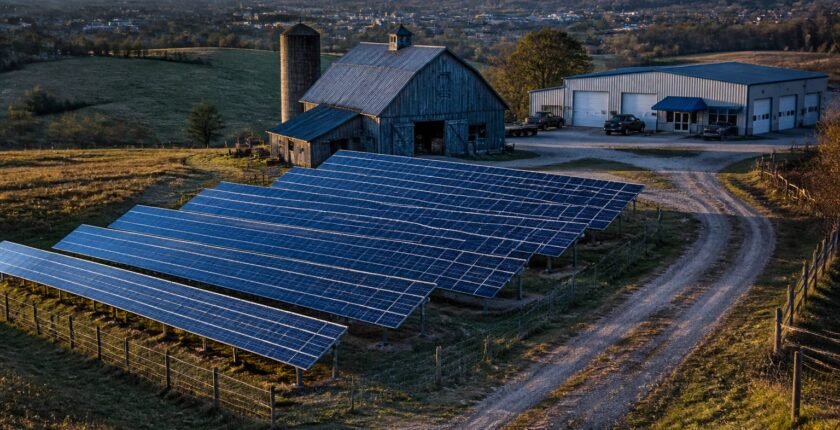
The U.S. Department of Agriculture has rewritten eligibility for its Rural Energy for America Program (REAP) in ways that, plaintiffs say, will make most ground-mounted farm solar projects ineligible. The agency’s changes cut eligibility for ground-mounted solar on certified cropland and for systems that generate more than 50 kilowatts, and they require projects to be fully built, paid for and operating for at least a year before a farmer can apply. Nearly 70% of REAP awards from 2011 through the first quarter of 2025 were used for solar, a share the Environmental Law & Policy Center says the new rules would undo. The Environmental Law & Policy Center and Earthjustice have sued the USDA, as first reported by Iowa Public Radio.
They build these systems, and then suddenly they're being told by USDA, ‘Oh sorry, just kidding. You’re [going to] be denied because you didn't follow rules that did not exist when you applied,’
Chad Hughes, attorney with the Environmental Law & Policy Center
Key takeaways
- Solar share of REAP awards: Nearly 70% of REAP awards from 2011 through Q1 2025 were used for solar projects, according to USDA data obtained by the Environmental Law & Policy Center.
- Iowa REAP funding: Iowa received $74.6 million in REAP grants between 2014 and 2025, federal data show.
- Key eligibility cutoffs: The USDA’s new rule cuts eligibility for ground-mounted solar on certified cropland and for systems that generate more than 50 kilowatts.
- Final rule and timing: On Oct. 1, 2026 the USDA published a final REAP rule with a comment period and added a requirement that projects operate for at least one year before applying.
Table of contents
- Key takeaways
- What the USDA changed and how the new rules work
- Who is suing, and what they want the court to do
- How many farms and dollars the changes touch
- Supply-chain and technical criteria that make compliance difficult
- What this means for agrivoltaics and rural energy growth
- Case for and against reversal
- What to be careful about
- Frequently asked questions
What the USDA changed and how the new rules work
The USDA announced a package of policy changes to REAP beginning with Secretary Brooke Rollins’s August 2025 statement that taxpayer dollars would no longer fund solar on prime farmland and that panels from “designated foreign adversaries” would be barred. Among the specific regulatory moves the agency finalized on Oct. 1, 2026 are cuts to eligibility for ground-mounted solar on certified cropland and a rule excluding systems that generate more than 50 kilowatts. The final rule also requires applicants to have built, paid for and operated projects for at least a year before applying for REAP funds and lowers the cap on individual grants while changing the program’s priority point system.
These changes reshape how and when rural businesses and farmers can use REAP. The one-year-in-operation requirement shifts REAP from an up-front support program to a reimbursement-style mechanism, which plaintiffs say defeats REAP’s original purpose of helping finance new capacity. The final rule’s text was posted in the Federal Register on Oct. 1, 2026 with a comment period; the rule summary explicitly extends many of the eligibility changes to wind projects as well.
Who is suing, and what they want the court to do
The Environmental Law & Policy Center and Earthjustice filed a lawsuit challenging the rule changes and their retroactive application. The complaint, filed by the two groups, asks the court to invalidate the USDA’s new eligibility criteria and to order the agency to process pending REAP applications under the rules that existed when those applications were submitted. Chad Hughes, an attorney with the Environmental Law & Policy Center, said plaintiffs invested time and money under prior rules and that retroactive enforcement will leave program participants on the hook for tens of thousands of dollars or more.
Earthjustice and the Environmental Law & Policy Center represent a mix of trade associations, farmer groups and developers. The Environmental Law & Policy Center represents the Iowa Farmers Union, the Iowa Solar Energy Trade Association, RENEW Wisconsin and Solar United Neighbors. Earthjustice represents plaintiffs that include Book Farms, the New York Solar Energy Industries Association, Wolf River Electric and two New Mexico consultancies, Clean Power Consultants and David Loney Consulting. The complaint targets both the substance of the eligibility cutoffs and the USDA’s decision to apply those changes to previously filed applications.
How many farms and dollars the changes touch
Project counts and dollar totals the USDA and advocates cite show why the rule matters to rural energy development. The Environmental Law & Policy Center’s review of USDA data found that nearly 70% of REAP awards between 2011 and Q1 2025 supported solar projects. Federal data cited in coverage show Iowa has been a major REAP recipient, winning $74.6 million in grants between 2014 and 2025. Those figures underline plaintiffs’ contention that the program has been an important channel for on-farm solar investment.
USDA research cited by the agency complicates the narrative on land use: a 2024 USDA analysis said 43% of solar farms and 56% of wind turbines in rural areas were installed on land that had been cropland prior to development between 2012 and 2020, yet it also found that less than 0.05% of U.S. farmland is used for utility-scale solar and wind. The combination — a high share of projects sited on previously cropped land but a tiny share of total farmland affected — is central to the policy dispute over whether REAP support on cropland is an improper use of taxpayer dollars.
Supply-chain and technical criteria that make compliance difficult
The USDA added a prohibition on using components from “designated foreign adversaries,” a restriction that plaintiffs say makes solar use impractical for many applicants. Chad Hughes highlighted that China manufactures over 80% of global solar panels, citing International Energy Agency data, and said that the manufacturing footprint makes the agency’s restriction a practical barrier to on-farm solar. The combination of a foreign-sourcing exclusion, a 50-kilowatt performance threshold and the one-year operating requirement narrows the set of projects that can realistically meet REAP rules.
The rule’s technical thresholds — a performance cutoff at 50 kilowatts and the one-year-in-operation condition — are mechanical gates rather than case-by-case policy judgments. That makes compliance binary for many applicants: projects that exceed the 50-kilowatt mark or that rely on supply-chain components the USDA designates may be excluded outright. The USDA also changed grant priority points and lowered individual grant caps, further altering the calculus for developers and farmers considering system scale, procurement and financing.
What this means for agrivoltaics and rural energy growth
The policy shift has immediate implications for agrivoltaics research and projects that combine crops and solar arrays. Iowa State University researchers growing strawberry cultivars at the Alliant Energy Solar Farm illustrate one use case; those pilot projects depend on a regulatory environment that lets farmers experiment with co-located production. Plaintiffs and trade groups argue that the new REAP rules will chill that experimentation by removing the predictable grant support that helped finance early projects.
Beyond research sites, plaintiffs warn the policy could slow capacity additions at a time they say energy prices are rising. Chad Hughes said that cutting REAP’s support “at a time when energy prices are soaring” removes a program designed to add grid capacity. The USDA’s extension of many changes to wind projects means the effects will not be limited to solar developers; rural developers and small businesses that relied on REAP for both technologies will face the same new eligibility constraints.
| Project type | Change described | Notes / source |
|---|---|---|
| Ground-mounted solar | Cut eligibility on certified cropland; systems over 50 kilowatts excluded | USDA final rule (Oct. 1, 2026) |
| Wind projects | Many of the rule changes were expanded to wind | USDA final rule (Oct. 1, 2026) |
| Smaller or rooftop solar | Not singled out for the ground-mounted cropland cutoff in the rule text | Final rule describes a >50 kW threshold for disqualification |
Case for and against reversal
The case for
- The lawsuit asks courts to invalidate the new eligibility criteria and to require the USDA to process pending applications under the rules in effect when they were submitted; a favourable ruling would restore prior applicants’ access to REAP.
- The Federal Register posting of the Oct. 1, 2026 final rule includes a comment period; agency rules can change following substantive public comments, opening another route to soften or alter the new requirements.
The case against
- The USDA has already published a final rule that includes the one-year operation requirement, lowered grant caps and an expanded scope to wind, creating an administrative record the agency can defend in litigation.
- The foreign-sourcing restriction combined with the 50-kilowatt threshold and grant-cap reductions makes many projects structurally harder to qualify, which litigation or comments may not reverse quickly.
What to be careful about
- Retroactive application could leave participants liable for tens of thousands of dollars or more, as alleged in the lawsuit.
- The one-year-in-operation requirement shifts REAP toward reimbursement and may block projects that need upfront capital, reducing new capacity additions.
- Supply-chain exclusions tied to designated foreign adversaries are difficult to meet given that China manufactures over 80% of global panels, constraining procurement options.
- Lowered grant caps and priority-point changes reduce financial support available to smaller farms and community developers.
The bottom line
The USDA’s Oct. 1, 2026 rule changes rework REAP away from the program its supporters say Congress intended: an on-ramp for rural energy investment. By cutting eligibility for ground-mounted projects on certified cropland, setting a 50-kilowatt performance threshold, imposing a one-year-in-operation requirement and tightening sourcing rules, the agency has narrowed who can use REAP. Plaintiffs led by the Environmental Law & Policy Center and Earthjustice ask courts to invalidate those criteria and to require processing under prior rules; the legal fight and the USDA comment period are the immediate paths that could reverse or soften the agency’s changes.
What to watch
- Watch for a court ruling or a scheduled hearing in the Environmental Law & Policy Center and Earthjustice lawsuit; no court date has been set.
- Watch for the close of the USDA’s comment period on the Oct. 1, 2026 final REAP rule; the published rule includes a comment period but gives no deadline in the rule summary.
- Watch for any amendment to the lawsuit after the Oct. 1, 2026 final rule; plaintiffs have said the complaint may be amended given the latest changes.
Frequently asked questions
What specific REAP eligibility changes did the USDA make?
The Oct. 1, 2026 final rule cuts eligibility for ground-mounted solar on certified cropland, excludes systems that generate more than 50 kilowatts, requires projects to be built, paid for and operating for at least a year before applying, and lowered individual grant caps while changing priority points.
Who brought the lawsuit against the USDA over REAP?
The Environmental Law & Policy Center and Earthjustice filed suit; ELPC represents groups including the Iowa Farmers Union and the Iowa Solar Energy Trade Association, while Earthjustice represents plaintiffs such as Book Farms and Wolf River Electric.
How much REAP funding has Iowa received recently?
Federal data cited in coverage show Iowa received $74.6 million in REAP grants between 2014 and 2025.
Related reading
This article is information, not financial advice. Anyone acting on it should do their own checks.