
Blog
Green Therma seeks at least EUR 25m in new funding
Estimated reading time: 5 minutes · Last updated:
Green Therma, a Danish geothermal startup founded in 2023, has closed a Series A round and is planning a capital increase of at least EUR 25 million (DKK 185 million) in fall 2026 and spring 2027 to accelerate growth. The company says its technology proved successful at a demonstration project in Groß Schönebeck with research partner GFZ Helmholtz Centre for Geosciences and is moving from installation to operation. The fundraising follows government grants of DKK 84 million (EUR 11 million), about DKK 55 million (EUR 7.4 million) injected by shareholders across two rounds, and in April 2026 the firm secured a convertible loan facility capped at DKK 50 million (EUR 6.7 million), as first reported by KapitalWatch. Green Therma plans two side companies alongside its core technology business.
A capital increase of at least EUR 25m is planned for fall 2026 and spring 2027 to support the company’s future growth,
Green Therma management, 2025 annual report
Key takeaways
- Green Therma plans a capital increase of at least EUR 25m (DKK 185m) split between fall 2026 and spring 2027 to fund future growth.
- The company says a demonstration at Groß Schönebeck with GFZ Helmholtz Centre for Geosciences has moved the technology from installation to operation.
- Since its 2023 founding, Green Therma’s financing has included DKK 84 million (EUR 11 million) in state grants, close to DKK 55 million (EUR 7.4 million) contributed by shareholders, and a convertible loan arranged in April 2026 with a maximum value of DKK 50 million (EUR 6.7 million).
- Founders and investors Denis Viet-Jacobsen and Johan Cervin together hold a majority of shares; the board includes Jakob Stausholm and former prime minister Helle Thorning-Schmidt.
Table of contents
What the Groß Schönebeck demonstration shows
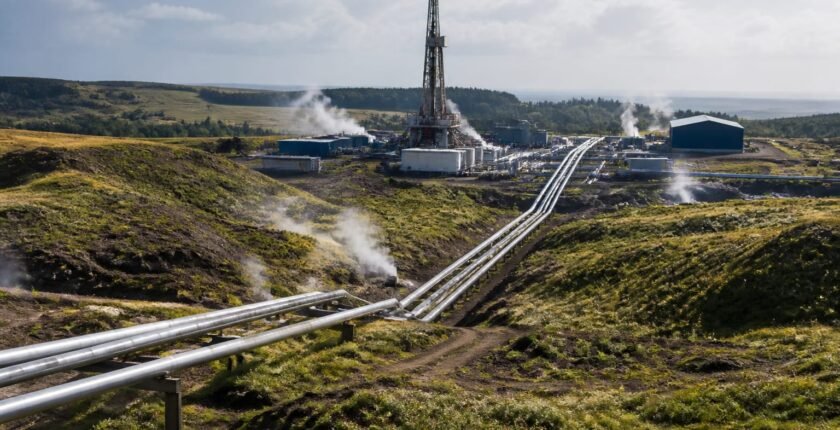
Green Therma says the Groß Schönebeck demonstration represents a transition from installing its system to operating it, and it is conducting the work as a research collaboration with the GFZ Helmholtz Centre for Geosciences. Rasmussen said the next ten months will focus on increasing production and refining installation in an existing 3‑kilometre‑deep well.
Green Therma’s technical approach adapts piping technology used in the oil industry; Rasmussen built his career in oil services and the company’s management includes drilling and well expertise. The company presents the demonstration as learning-oriented: measured operational results and performance data from Groß Schönebeck are the immediate priorities before larger commercial roll-out.
Funding to date and the planned EUR 25m raise
Green Therma’s 2025 annual report records DKK 84 million (EUR 11 million) in government support and nearly DKK 55 million (EUR 7.4 million) in shareholder contributions across two rounds, and it notes a convertible loan facility of up to DKK 50 million (EUR 6.7 million) granted in April 2026. Management writes in the annual report that a capital increase of at least EUR 25 million is planned for fall 2026 and spring 2027 to support the company’s future growth. The company also reports that initial investor talks began in mid‑2025 and that a new Series A round has closed in “the tens of millions” with existing shareholders and business angels.
Rasmussen said larger industrial investors will be necessary during the coming year, and that existing owners are likely to participate though they have not finalised commitments. The annual report and Rasmussen’s comments present the DKK 185 million (EUR 25 million) target as funding for the core technology company specifically, with separate financing expected for the planned ancillary activities.
Ownership, board experience and the plan for two side companies
Green Therma’s annual report shows control of the company is held by Denis Viet‑Jacobsen and Johan Cervin, who together own a majority through several companies outside Solix Group. The management team includes founder Jørgen Peter Rasmussen, head of Europe Angelika Zartl‑Klik and drilling lead Camille Hanna; the board lists Jakob Stausholm, Carl‑Emil Larsen, Richard Forrest and former Danish prime minister Helle Thorning‑Schmidt. Those names appear on the company’s website and in the annual report.
Alongside the technology company, Green Therma plans a drilling rig company and a financing company to support rollout. Rasmussen says a rig can drill five or six holes a year and that Europe will need several rigs to reach an ambition of 100 to 200 wells a year; the company aims to set up both side businesses within three years. The financing company is intended to pool wells so district heating companies can buy into projects with reduced early-stage risk, with typical capital coming from infrastructure investors.
| Source | Amount (DKK) | Amount (EUR) |
|---|---|---|
| State support (to 2025) | DKK 84m | EUR 11m |
| Shareholder contributions (to 2025) | nearly DKK 55m | EUR 7.4m |
| Convertible loan (provided April) | up to DKK 50m | EUR 6.7m |
| Planned capital increase | DKK 185m | EUR 25m |
How the plan could play out
The case for
- Demonstration work at Groß Schönebeck with GFZ Helmholtz Centre for Geosciences could validate installation and production processes, making larger investors more comfortable.
- Major shareholders and a board with industrial and utility experience, including Denis Viet-Jacobsen, Jakob Stausholm and Helle Thorning-Schmidt, may help open capital and partnership channels for scale-up.
The case against
- The company has reported only losses since its 2023 founding and will need the planned EUR 25m plus additional capital to support expansion beyond the core technology business.
- Delivering a fleet of purpose-built rigs and establishing a financing vehicle requires large, specialised investors; failure to secure those partners would slow roll-out.
What to be careful about
- Continued operating losses since 2023 mean Green Therma depends on successful closing of the planned capital increase and further investor support.
- Scaling to 100–200 wells a year demands multiple rigs; the company says one rig drills five or six holes a year, so supply and construction of rigs are a bottleneck risk.
- The financing company concept depends on attracting infrastructure investors to pool wells; district heating customers’ risk aversion could reduce demand for early projects.
The bottom line
Green Therma has progressed from installation to operation in a GFZ-backed demonstration and has closed a Series A while pursuing a larger capital increase of at least EUR 25m to fund expansion. The company’s near-term prospects hinge on translating the Groß Schönebeck learnings into repeatable production, securing industrial and infrastructure investors for both the core technology and the planned drilling rig and financing companies, and managing the operational and financing risks that come with scaling to dozens or hundreds of wells per year.
What to watch
- Watch for progress and closure details of the capital increase scheduled for spring 2027; the company lists fall 2026 and spring 2027 as the planned windows.
- Watch for announcements on the launch of the drilling rig and financing companies; Green Therma plans to set up both within three years, but no exact dates have been given.
Frequently asked questions
How much capital is Green Therma targeting?
The company’s 2025 annual report says a capital increase of at least EUR 25m (DKK 185m) is planned for fall 2026 and spring 2027.
Where has Green Therma demonstrated its technology?
Green Therma reports a demonstration in Groß Schönebeck carried out with the GFZ Helmholtz Centre for Geosciences that has moved the project from installation to operation.
Who controls Green Therma?
Denis Viet-Jacobsen and Johan Cervin together hold a majority of the shares through several companies outside Solix Group, while founder Jørgen Peter Rasmussen and chair Jakob Stausholm are among larger minority investors.
Related reading
This article is information, not financial advice. Anyone acting on it should do their own checks.