
Blog
Alaska geothermal training wins $150,000 GHP PATHs grant
Estimated reading time: 5 minutes · Last updated:
The Cold Climate Housing Research Center received $150,000 in second-phase funding from the U.S. Department of Energy’s GHP PATHs program to design an Alaska-specific training curriculum and run a pilot course for ground-source heat pump installers, as first reported by the Juneau Empire. The award, announced Oct. 2, will be developed in partnership with the Renewable Energy Alaska Project and aims to prepare workers to install and service systems that use underground piping and electrically powered heat pumps. The move responds to local maintenance challenges at Juneau International Airport and to broader interest in reducing heating-oil use across Alaska.
trained local professionals who can design, install, and maintain these systems in our challenging conditions
Paul Rasmussen, executive director, Cold Climate Housing Research Center
Key takeaways
- Federal award: The Cold Climate Housing Research Center received $150,000 in second-phase GHP PATHs funding from the U.S. Department of Energy.
- Program partners: The project will be developed with the Renewable Energy Alaska Project and aims to produce an Alaska-specific training curriculum and a pilot course.
- Existing Juneau installations: Juneau International Airport has 108 wells drilled approximately 360 feet deep; the Mendenhall Valley Public Library uses 18 vertical boreholes to heat and cool its 21,000-square-foot building.
- Maintenance issues: An April 2025 airport project reported sediment accumulation in the circulating fluid and that about 30 heat pumps installed in 2009 were reaching or past expected service lives.
Table of contents
What the GHP PATHs award will fund and why Alaska qualified
The U.S. Department of Energy selected eight teams in the second phase of GHP PATHs and awarded each team $150,000 to advance workforce development proposals; Alaska’s entry is titled “Heating Alaska from Below: A GHP Training Program.” The Cold Climate Housing Research Center will use its allocation to draft an Alaska-specific curriculum and stage a pilot course aimed at installers and maintenance technicians for ground-source heat pumps. The organization plans to pair classroom content with hands-on modules that reflect the state’s drilling depths, cold-climate hydraulics and mechanical systems.
Officials framed the work as vocational and technical training rather than academic research: course design will involve industry partners and educators to ensure graduates are prepared for field roles. The award covers curriculum development and an initial pilot; the Department of Energy’s second-phase grants move teams toward a final-stage selection, but the Juneau announcement does not set a timeline for that final stage or for broader rollout.
Juneau’s installations show what training must cover
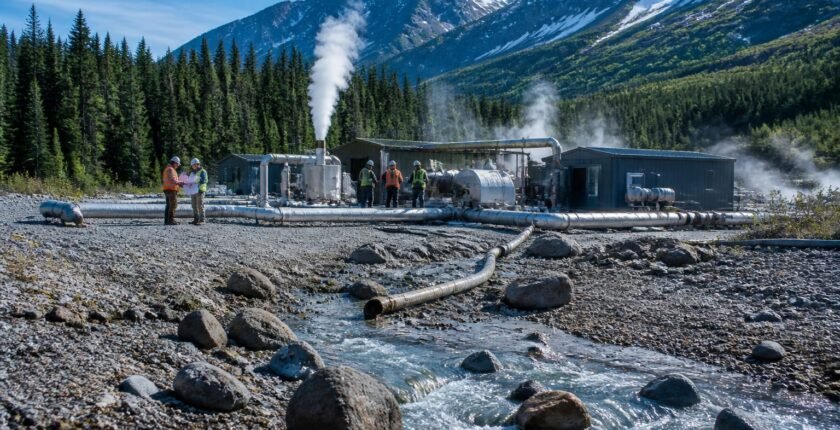
Juneau already hosts multiple ground-source systems that the training must address in practical terms. Construction at Juneau International Airport began in 2009 with crews drilling 108 wells approximately 360 feet deep and laying a network of underground piping to replace heating oil with electric heat-pump-driven distribution for the terminal. The airport’s field is a scaled example of the drilling, loop-tying and hydraulic balancing skills courses will need to teach.
The Mendenhall Valley Public Library provides a contrasting example: its 21,000-square-foot building is served by 18 vertical boreholes, illustrating how borefield sizing and building-load calculations differ by project. Program organizers emphasize that ground-source systems require specialized underground infrastructure, and they report that some Juneau installations date from 2009; roughly 30 heat pumps installed that year were nearing or past expected service lives, and an April 2025 project noted sediment accumulating in circulating fluid despite filters and other measures. Program organizers say training will therefore need to combine new-install techniques with diagnostic and maintenance procedures for aging systems.
Training pathways, equipment reuse and cost realities
Program organizers propose tapping Alaska’s existing oil-industry skill base: they hope to repurpose retired drilling machinery from the North Slope for geothermal installations and to give drill-experienced workers a pathway into smaller-scale heating projects. That approach leans on decades of local drilling practice and could shorten the learning curve for borehole crews, but it requires adaptation of large rig workflows to the precision and cost parameters of residential and municipal loop fields.
The announcement and reporting underline the economic trade-offs that make training necessary: ground-source systems typically cost more to install than air-source units because of drilling and underground piping, even though they can lower operating expenses over time. Municipal guidance in Juneau also notes some installations need a secondary heat source to meet winter design loads; proper sizing and commissioning therefore matter for a project’s lifetime cost and performance. The pilot curriculum aims to cover siting, drilling practices, hydraulic design and maintenance protocols so installers can preserve the financial case for customers.
| Facility | Installation year | Boreholes / wells | Building size / notes |
|---|---|---|---|
| Juneau International Airport | 2009 | 108 wells approximately 360 feet deep | Terminal heating; replaced heating oil |
| Mendenhall Valley Public Library | 18 vertical boreholes | 21,000-square-foot building | |
| Dimond Park swimming pool | Not specified | Identified in city renewable strategy | |
| Auke Bay School | Not specified | Identified in city renewable strategy |
How the program could succeed — and what might slow it
The case for
- Federal GHP PATHs funding provides focused, staged support for curriculum development and a pilot course, which can accelerate recruitment and certification of local technicians.
- Existing installations in Juneau create nearby, practical training sites where students can practice diagnostics on real systems and learn maintenance techniques.
- Repurposing retired North Slope drilling machinery could leverage local equipment familiarity and shorten the timeline for qualified bore crews.
The case against
- Sediment accumulation and aging heat pumps at the Juneau International Airport demonstrate ongoing maintenance liabilities that training alone may not immediately resolve.
- Higher upfront installation costs for ground-source systems mean homeowners and municipalities may still prefer air-source options unless incentives or financing are available.
- Uncertainty around the DOE final-stage timeline and the availability of retired drilling rigs could delay implementation of practical, hands-on modules.
What to be careful about
- Sediment accumulating in loop fluid — reported in an April 2025 airport project — can increase maintenance time and costs and may require specialized engineering to diagnose.
- Many local contractors on Alaska Heat Smart’s list focus on air-source systems; the actual number qualified to drill or maintain ground loops is not specified and could limit supplier capacity.
- Approximately 30 heat pumps installed in 2009 are reaching or past expected service lives, creating simultaneous maintenance demand that could compete with training rollout.
- Ground-source system installations have higher upfront costs and some require a secondary heat source to meet building standards, which can undermine the financial case if design or commissioning is poor.
The bottom line
The $150,000 GHP PATHs award gives Alaska a narrow but practical foothold to create an industry-focused training pipeline for ground-source heat pumps. Juneau’s installations — from a large airport field of 108 wells to the library’s 18 boreholes — lay out the range of skills students will need, from drilling and loop construction to diagnostics and sediment mitigation. Realising the program’s promise will depend on converting curriculum into hands-on experience, securing adapted equipment if rigs are to be repurposed, and expanding the local contractor base able to install and maintain systems to design standards. The pilot course will be the key next step; organizers have not yet announced dates.
What to watch
- Watch for Cold Climate Housing Research Center to announce pilot-course dates and locations; no date has been set.
- Watch for the U.S. Department of Energy to publish its timeline for final-stage GHP PATHs selections; no date has been set.
- Watch for formal plans to repurpose retired North Slope drilling machinery for geothermal work and any published equipment-adaptation guidance; no date has been set.
Frequently asked questions
What is GHP PATHs and who funded Alaska’s award?
GHP PATHs is the U.S. Department of Energy’s Partnerships to Accelerate Training and Hiring for Geothermal Heat Pumps program; the DOE awarded $150,000 to the Cold Climate Housing Research Center in its second phase.
How extensive is the geothermal field at Juneau International Airport?
Construction at the airport began in 2009 with crews drilling 108 wells approximately 360 feet deep to collect ground heat for the terminal.
What maintenance problems prompted concern in Juneau?
An April 2025 airport project reported sediment accumulating in the circulating fluid despite filters, and about 30 heat pumps installed in 2009 were reaching or past expected service lives.
Related reading