
Blog
James City recommends 650MW Grove battery storage plant
Estimated reading time: 5 minutes · Last updated:
James City County planning commissioners voted 5-2 to recommend approval of a 650-megawatt battery storage plant, substation and switchyard on a 220-acre site in Grove off Pocahontas Trail. The project would tie into Dominion Energy’s 500-kilovolt Surry-Skiffes Creek transmission line and is proposed by Tenaska in partnership with Pelican Energy Storage. Supporters say the lithium-ion installation will store power for use when demand spikes and deliver about 150 construction jobs over two years; opponents warned of fire and chemical risks including "thermal runaway." The decision and local coverage were first reported by the Daily Press on Oct. 9, 2026 (published 12:37 PM EDT; updated 2:02 PM EDT).
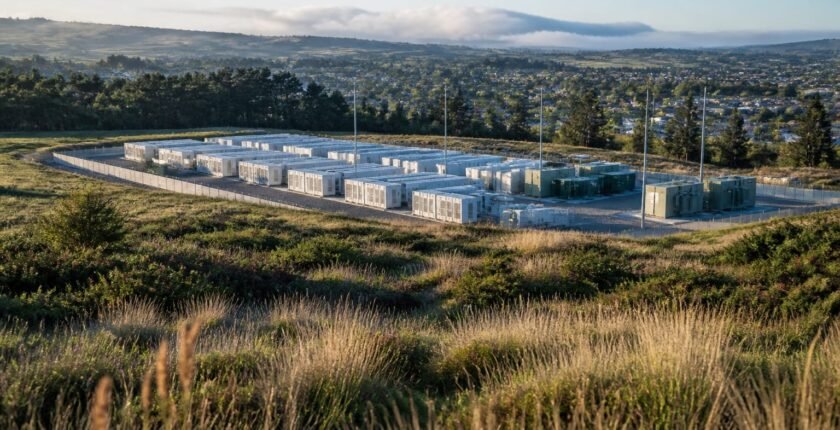
They're banks of batteries that are connected to the grid,
Keith Latham
Key takeaways
- Planning commission vote: James City County Planning Commission voted 5-2 to recommend the project to the Board of Supervisors.
- Project size and site: The proposal is for a 650-megawatt battery energy storage facility on a 220-acre industrial waterfront parcel in Grove.
- Grid connection and chemistry: The site would connect to Dominion Energy’s 500-kilovolt Surry-Skiffes Creek transmission line and use lithium-ion batteries.
- Jobs: Planners estimate about 150 construction jobs over two years.
Table of contents
How the commission decided and what residents said
The planning commission forwarded a favorable recommendation after a 5-2 roll call; Crystal Haskins and chair Kira Allman opposed the motion. Planning commissioner Jack Haldeman argued the project would spur economic development and relieve pressure on county revenues, while others accepted staff findings that the use fits an industrial area.
Residents at the hearing and at an earlier Sept. 29 informational meeting hosted by Pelican Energy said they fear fire risk, airborne toxins and construction disruption. Suzanne Berthier warned about "thermal runaway," saying fires in batteries can trigger others and release dangerous chemicals; Cathy Reynolds told commissioners she felt Grove residents’ views were being sidelined in favor of revenue.
Christopher Balser, an apprentice with the International Brotherhood of Electrical Workers, spoke in favor of local hiring, and the county's planning staff reported that the nearest residential neighbor is almost a mile from the site. The recommendation advances the file to the Board of Supervisors for a final decision.
Site history and how the plant would connect to the grid
The proposed location occupies an abandoned industrial footprint with a multi-decade manufacturing past. Dow Chemical Co. developed the riverside property in 1958 to make acrylic fibers; BASF Corp. acquired it in 1978 and operated there until 1989 when Mann Industries bought part of the site. Mann filed for bankruptcy in 1993 and the facility went inactive; BASF later reacquired portions and the Virginia Department of Environmental Quality declared the property remediated in 2021.
Tenaska’s site plan shows battery units and a substation tied into Dominion Energy’s 500-kilovolt Surry-Skiffes Creek transmission line that crosses the parcel. A 2019 file photo in local coverage shows the Surry-Skiffes Creek line from Hog Island, underscoring why grid access is a central justification for locating storage here.
Planners described the proposal as a low-impact industrial reuse of a waterfront site and said it is not expected to generate significant sustained traffic or noise during operations, though construction will be more intensive.
Developer claims, safety standards and next steps
Keith Latham of Tenasca, described in the hearing as representing the project, said the installation is "banks of batteries that are connected to the grid" and framed the project as a reliability and resilience resource. He called the reuse of the former BASF/Mann footprint a practical choice and noted the site’s distance to the nearest home.
Planner Allison Jackura told commissioners the use provides a low-impact industrial option for the parcel and that the project would adhere to national fire safety standards, an argument county staff used when recommending a special use permit. Locally, Pelican Energy Storage said it aims to be "a good neighbor" at outreach events, but residents pressed officials on whether national standards fully address thermal runaway risks specific to large lithium-ion banks.
The formal file awaiting Board of Supervisors review includes the special use permit and site plan; if approved, the developer expects construction to create about 150 jobs over a two-year build window. Exact permitting milestones and any mitigation measures the board requires remain to be set at the supervisors’ review.
Why this could go ahead — and what could stop it
The case for
- Allison Jackura, the county planner, said the site is zoned for industrial reuse and that the project provides a low‑impact industrial option for a remediated parcel declared clean by the Virginia Department of Environmental Quality in 2021.
- Keith Latham (Tenasca) argued the batteries will improve grid reliability and resilience by storing generation for peak periods; the property’s direct tie to Dominion Energy’s 500-kilovolt Surry-Skiffes Creek line strengthens the technical case.
The case against
- Opposition centers on safety: Suzanne Berthier and other residents cited thermal runaway and toxic emissions from failing lithium-ion batteries, a concern that could prompt stricter mitigation or conditions at the Board of Supervisors review.
- Local political pushback and calls for more scrutiny after the Sept. 29 public meeting could delay permits or lead supervisors to deny the special use permit despite the planning commission’s 5-2 recommendation.
What to be careful about
- Board of Supervisors could reject the special use permit despite the planning commission recommendation.
- Community safety concerns about thermal runaway and toxic releases may force additional mitigation measures or technology changes.
- Construction and traffic disruptions during the two-year build window could generate sustained local opposition and legal challenges.
- Site’s industrial history (1958, 1978, 1989, 1993) and the 2021 remediation create a perception risk that could slow approvals even though state remediation was declared complete.
The bottom line
The planning commission’s 5-2 recommendation keeps the 650-megawatt Grove battery storage proposal on track but does not guarantee approval: the Board of Supervisors must still vote and could attach conditions or deny the special use permit. The project leverages a remediated 220-acre industrial parcel and a direct connection to Dominion Energy’s 500-kilovolt Surry-Skiffes Creek line—factors that strengthen the technical and economic case. At the same time, resident concerns about thermal runaway and local disruption have already prompted vocal opposition. The supervisors’ review will test whether the county accepts staff assurances about safety and mitigation or sides with residents seeking stricter controls.
What to watch
- Watch for the Board of Supervisors’ final vote on the special use permit; no date has been set.
- Watch filings for the project's site plan and any conditions the Board requires; no date has been set.
Frequently asked questions
Who is proposing the Grove battery storage plant?
The project is presented by Tenaska in partnership with Pelican Energy Storage; a representative identified as Keith Latham (named in coverage as from Tenasca) spoke for the developer at the hearing.
How large is the proposed facility and where would it sit?
Planners described a 650-megawatt battery energy storage system on a 220-acre industrial waterfront parcel in Grove, off Pocahontas Trail, with a grid tie to Dominion Energy’s 500-kilovolt Surry-Skiffes Creek line.
What safety and employment impacts were cited?
Supporters say the project will create about 150 construction jobs over two years and boost grid resilience; residents raised thermal runaway and toxic-emission concerns at the Sept. 29 public meeting and in the planning hearing.
Related reading