
Blog
Philippine hydropower seeks fast-track during El Niño
Estimated reading time: 4 minutes · Last updated:
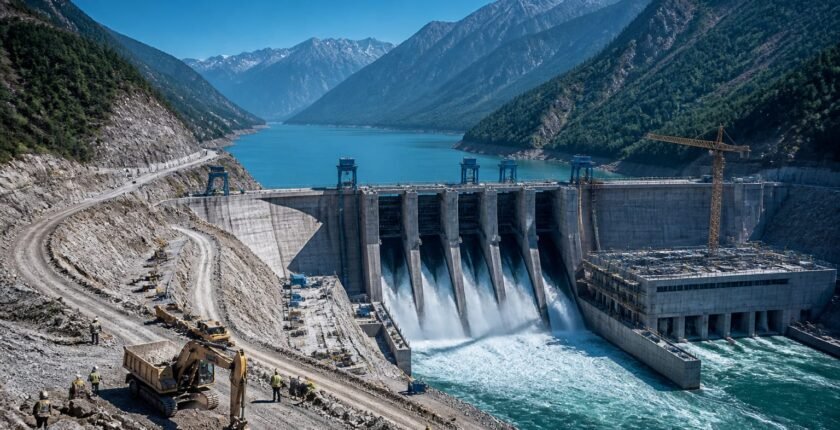
PhilHydro Association president Francis Joel Arrieta Sayre has asked the Department of Energy to help developers fast-track hydropower construction during the current El Niño, saying lower reservoir and river levels make civil works easier even as they cut generation. He said developers should "maximize the forthcoming El Niño for hydro developers to fast-track development." The association represents owners and technology providers, among them Aboitiz Power Corp. and First Gen Corp. The Philippines is preparing for an El Niño projected to persist through the first half of 2027, which the DoE has warned could reduce hydropower output substantially. These details were first reported by BusinessWorld Online.
While the water levels are low which does not bode well for operating hydro plants, it will be easier for hydro construction,
Francis Joel Arrieta Sayre
Key takeaways
- PhilHydro Association president Francis Joel Arrieta Sayre asked the Department of Energy to help developers fast-track hydropower construction during El Niño.
- Hydropower accounted for about 12% of the Philippines' installed generation capacity as of December 2025, the DoE says.
- The Department of Energy warned that warmer temperatures could cut hydropower generation by as much as 40%.
- For Mindanao, the Department of Energy has placed an installation target of 175 megawatts (MW) for run-of-river projects, and it expects those capacities to be delivered in the 2028–2031 period.
Table of contents
Why developers want to push construction during low flows
Francis Joel Arrieta Sayre, president of the PhilHydro Association, said the dry spell associated with El Niño provides an opportunity to advance civil works: lower river and reservoir levels make river diversion and construction of dams easier, even though the resulting reduced inflows will suppress electricity generation. The Department of Energy has warned that warmer temperatures could cut hydropower output by as much as 40%, and hydropower accounted for about 12% of the country's installed generation capacity as of December 2025.
PhilHydro's president also pointed to sharply higher costs and unfinished projects as a reason to seek government support now, urging policy steps that allow plants under construction to be completed while rivers and reservoirs are low.
Auctions and the Green Energy Auction targets
Sayre said PhilHydro supports the Department of Energy's planned seventh Green Energy Auction, which the DoE plans to open to run-of-river hydropower. Run-of-river plants generate electricity from flowing water without large reservoir storage. For Mindanao, the DoE has set an installation target of 175 megawatts (MW) for such projects, with delivery expected between 2028 and 2031.
Previous auction rounds covered run-of-river under GEA-1 and pumped-storage under GEA-3; projects awarded in those rounds remain under development, and PhilHydro says some are nearing completion.
Requests for more auctions and a long-term roadmap
Sayre urged the government to hold equivalent GEA auctions for Luzon and the Visayas in 2027, and to run separate tenders for pumped-storage and impounding-dam baseload hydropower within the next two years. He requested a medium- to long-term hydropower roadmap aligned with the Philippine Energy Plan 2023–2050 so developers can plan new builds and expansions against likely offtake.
The association says hydro can help deliver the government's renewable target of 35% by 2030 and 50% by 2050, but it needs policy clarity and financing to turn the current pipeline into operating plants.
| Attribute | Detail |
|---|---|
| PhilHydro membership | Includes Aboitiz Power Corp. and First Gen Corp. |
| DoE run-of-river target | 175 megawatts (MW) for Mindanao; delivery 2028–2031 |
| Hydropower share | About 12% of installed capacity (Dec 2025) |
How the case for and against fast-tracking stacks up
The case for
- A dry spell can lower excavation and diversion costs and allow civil works to proceed without full reservoir management, letting delayed projects finish sooner.
- If DoE auctions and delivery schedules are firmed—particularly the Mindanao 175 megawatts target—projects can secure offtake and financing and come online on predictable timetables.
The case against
- Lower water availability during El Niño will reduce generation—DoE warned it could be as much as a 40% drop—so completed capacity may produce less power until hydrology recovers.
- Inflated construction costs and ongoing financing gaps mean that speed alone will not finish projects unless coupled with subsidies, PPAs or other support.
What to be careful about
- Reduced reservoir and river inflows during El Niño that limit generation even if construction advances.
- Project delays driven by higher capital costs that fast-tracking alone cannot resolve without financing or policy support.
The bottom line
Whether projects can use the dry spell to complete civil works will depend on how quickly the Department of Energy advances auctions, finalizes delivery timetables and unlocks financing. DoE decisions on the planned GEA-7, any Luzon and Visayas rounds, and the Mindanao run-of-river target of 175 megawatts (MW) will determine which schemes can proceed while reservoirs are low. With El Niño expected to last into the first half of 2027, timing matters: a brief construction window can lower installation costs for builders but leave operators with reduced generation until hydrology recovers. Sayre said PhilHydro members, including Aboitiz Power Corp. and First Gen Corp., will be watching the DoE timetable closely.
What to watch
- Watch for DoE-run run-of-river auctions in Luzon and the Visayas in 2027; PhilHydro asked for these next year.
- Watch for initial project deliveries under the Mindanao 175 megawatts target between 2028 and 2031.
Frequently asked questions
How much of the Philippines' power mix is hydropower?
Hydropower accounted for about 12% of the Philippines' installed generation capacity as of December 2025, according to the Department of Energy.
How badly can El Niño cut hydropower output?
The Department of Energy has warned that warmer, drier conditions could reduce hydropower generation by as much as 40%, which would lower output while reservoirs remain shallow.
What is the DoE target in the upcoming Green Energy Auction for run-of-river projects?
Under the planned GEA-7, the DoE is targeting 175 megawatts (MW) of run-of-river capacity in Mindanao, with deliveries slated to occur between 2028 and 2031.
Related reading