
Blog
Fervo Cape Station Starts Selling Geothermal Power
Estimated reading time: 5 minutes · Last updated:
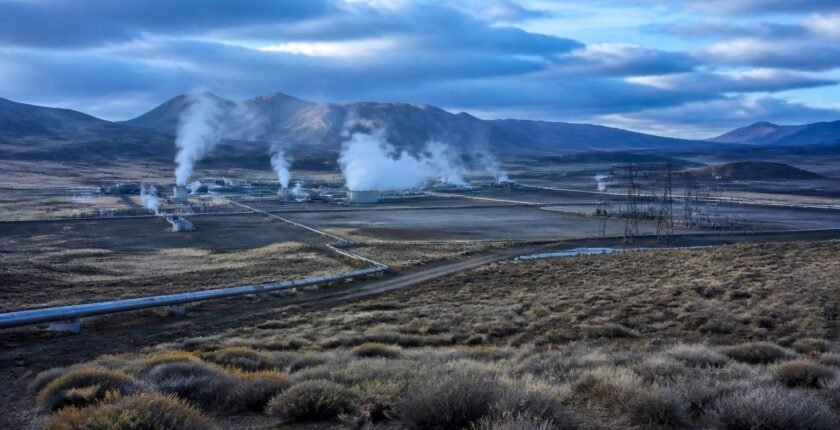
Fervo Energy has begun selling electricity from a 33‑megawatt unit at its Cape Station project in Beaver County, Utah, synchronizing that unit to the grid on 24 September and starting commercial operation six days later, as first reported by Canary Media. The initial 33‑MW block is the first utility‑scale deployment of the startup’s enhanced geothermal technique, which engineers its own geothermal resource deep underground by drilling into hot, dry rock. Cape Station is a $2 billion development that the company plans to expand to 500 MW, and it has agreements and construction underway for an additional 400 MW.
Traditional geothermal would have never been done in southern Utah.
Dawn Owens, Fervo’s senior vice president and head of development and commercial markets
Key takeaways
- Fervo synchronized a 33‑MW unit at Cape Station to the grid on 24 September and began commercial operation six days later.
- Cape Station is a $2 billion project planned to reach 500 MW, with agreements and construction supporting a further 400 MW.
- Phase 1 has been quoted at $7,000 per kilowatt and Phase 2 at $5,500 per kilowatt, figures the company previously gave to Canary Media.
- Fervo operates a 3.5‑MW pilot (Project Red) in Nevada and says the in‑progress and future PPAs together represent about 1,000 MW — roughly enough to power 1 million U.S. homes annually.
Table of contents
What went live and how Fervo creates its resource
Fervo Energy brought a 33‑megawatt generating unit at Cape Station online in late September, feeding electricity to retail buyer Shell Energy in California. The unit synchronized to the grid on 24 September and began commercial operation six days later; Fervo has been testing and ramping output since synchronization. The company describes Cape Station as the first utility‑scale example of its next‑generation, enhanced geothermal system.
Unlike conventional geothermal plants that tap naturally occurring steam or hot water reservoirs, Fervo has engineered its own geothermal resource deep underground by using directional drilling and reservoir stimulation techniques adapted from oil and gas. That engineered reservoir produces hot fluid the plant uses to make steam and drive turbines. The startup previously demonstrated the approach at Project Red, a 3.5‑MW pilot in Nevada that went online in late 2023; Cape Station is the first time Fervo has exported power from a utility‑scale installation.
Scale, costs and the commercial picture
Cape Station is a $2 billion development that Fervo plans to build to 500 MW in total. The company turned on an initial 33‑MW block and says it intends to bring two more 33‑MW power blocks into service by 1 January 2027, with the project’s remaining 400 MW under construction and slated to come online in 2028. Fervo has declined to disclose detailed PPA prices for in‑progress deals, but the company previously told Canary Media that Phase 1 would cost $7,000 per kilowatt and Phase 2 $5,500 per kilowatt.
Those build‑cost figures sit well above the 2025 average cost to build a natural‑gas plant, which Bloomberg reported as $2,157 per kilowatt. The higher upfront capital intensity underlines why developers and investors are focused on cutting drilling and completion costs for enhanced geothermal systems. Fervo also says the in‑progress and future power‑purchase agreements represent about 1,000 MW of commitments — roughly enough to serve 1 million U.S. homes annually — and that part of Cape Station’s capacity will be backed by a separate agreement with Google.
Grid role, flexibility and finance
Fervo and buyers are positioning enhanced geothermal as always‑on, dispatchable capacity that can help balance growing solar and wind supply and serve power‑hungry customers like data centers. Dawn Owens, Fervo’s senior vice president and head of development and commercial markets, says the technology can operate behind the meter to power data centers directly and that flexible operation—ramping to meet evening demand when solar falls—could increase the asset’s grid value.
Mitchell Smith, grid lead for the Mountain West Geothermal Consortium, framed the first‑power milestone as proof of scale and called for increased public and private financing to speed additional projects. The commercial and financing path ahead will hinge on whether developers can materially reduce drilling and well‑completion costs and on regulators’ handling of environmental and community impacts tied to reservoir creation and operations.
| Project | Cost per kilowatt | Status / Year cited |
|---|---|---|
| Fervo Phase 1 (Cape Station) | $7,000 per kilowatt | Company figure cited to Canary Media |
| Fervo Phase 2 (Cape Station) | $5,500 per kilowatt | Company figure cited to Canary Media |
| Natural‑gas plant (average) | $2,157 per kilowatt | Bloomberg, 2025 |
How Cape Station could succeed — and what could slow it
The case for
- Learning‑curve declines in drilling and completion costs could bring per‑kilowatt build costs down from the Phase 1 and Phase 2 figures the company cited.
- Flexible operation and behind‑the‑meter arrangements for large customers such as data centers could raise revenue per megawatt by supplying power at value‑constrained hours.
The case against
- High upfront capital intensity — company‑quoted build costs of $7,000/kW for Phase 1 vs. $2,157/kW for gas in 2025 — could limit commercial uptake without sustained cost reductions or subsidies.
- Permitting, environmental review and local community impacts from engineered reservoirs could slow project timelines and increase development costs.
What to be careful about
- High upfront drilling and well‑completion costs that make initial capital expenditures far larger than conventional thermal plants.
- Environmental and community impacts tied to reservoir engineering and stimulation, which could invite stricter permitting or operational limits.
- Opaque PPA terms for many deals: Fervo has declined to disclose contract pricing for in‑progress and future agreements, making revenue visibility limited to what the company has publicly described.
The bottom line
Fervo’s Cape Station marks a milestone: a 33‑MW unit synchronized to the grid and moved into commercial operation using engineered reservoirs in hot, dry rock. The project demonstrates that the enhanced‑geothermal technique can be deployed at utility scale, but the path to broad deployment runs through big challenges — notably the company‑quoted $/kW build costs and regulatory and community scrutiny of reservoir engineering. Whether learning‑curve gains, targeted PPAs with data centers and public financing can bridge that gap will determine if Cape Station is the start of rapid scale‑up or a single advanced demonstration.
What to watch
- Watch for Fervo to commission two more 33‑MW power blocks by 1 January 2027.
- Watch for Cape Station’s remaining 400 MW — the portion the company says is under construction and backed by a Google agreement — to come online in 2028.
Frequently asked questions
How large is Cape Station now and what is the planned size?
Cape Station has a 33‑MW unit in commercial operation and the project is planned to expand to 500 MW, with an additional 400 MW the company says is under construction and slated for 2028.
What does 'enhanced' geothermal mean for Fervo?
Enhanced geothermal, as Fervo practices it, means engineering a reservoir in hot, dry rock using directional drilling and reservoir stimulation adapted from oil and gas to produce hot fluid for power generation.
How do build costs compare with other plants?
Fervo has cited $7,000 per kilowatt for Phase 1 and $5,500 per kilowatt for Phase 2; by comparison, Bloomberg reported a 2025 average of $2,157 per kilowatt to build a natural‑gas plant.
Who is buying the power from the first unit?
The first commercial output from the 33‑MW unit is contracted to Shell Energy, a retail power provider in California, according to the company.
Related reading