
Blog
New York approves two utility thermal energy pilots
Estimated reading time: 5 minutes · Last updated:
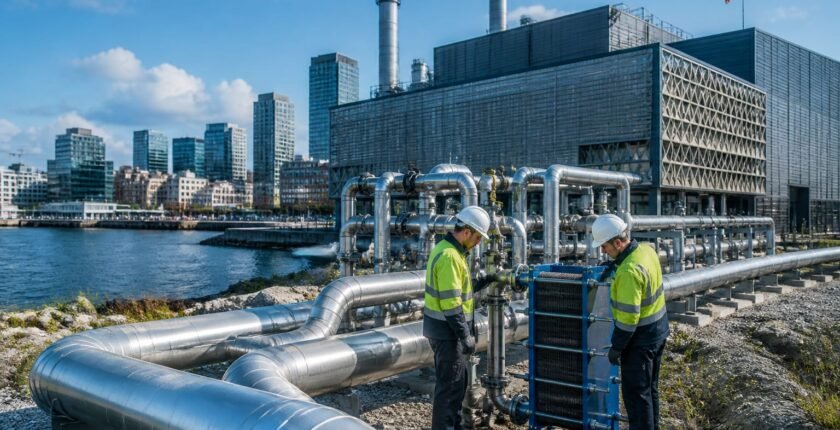
The New York Public Service Commission has approved two utility thermal energy network pilots that together will receive $111.5 million in funding to test utility-owned clean-heat delivery. Jeff St. John of Canary Media reported that Orange Rockland will build a roughly $50 million network in Haverstraw, and National Fuel Gas will spend $61 million on a Buffalo pilot. The pilots aim to use borefields and wastewater heat recovery to feed electric heat pumps and legacy district systems, and to test whether utilities can deliver cleaner heat while retaining jobs and existing underground infrastructure. These projects will be a key test of the Utility Thermal Energy Network model in New York.
From a workers’ rights and environmental justice standpoint, it’s a win-win.
Theodore Moore, executive director of ALIGN
Key takeaways
- The New York Public Service Commission committed a combined $111.5 million to two utility thermal energy network pilots.
- Orange Rockland plans to spend $50 million in Haverstraw to connect up to 30 structures using borefields and sewer heat.
- National Fuel Gas plans to spend $61 million in Buffalo, combining boreholes and wastewater heat recovery to serve low‑income multifamily housing and part of the downtown district system.
- The PSC will tap $93 million from a $150 million state commitment to offset costs to utility customers.
Table of contents
- Key takeaways
- What the approvals actually cover
- How utility thermal energy networks work and where they’ve been tried
- The funding and the trade-offs the commission weighed
- What success would look like — and the challenges ahead
- How the pilots could scale — and what could stop them
- What to be careful about
- Frequently asked questions
What the approvals actually cover
The Public Service Commission approved two discrete pilot plans aimed at testing whether utilities can transition from selling fossil gas to delivering clean heat, as first reported by Canary Media. One pilot is in Haverstraw, a Hudson River town of about 40,000 people; Orange Rockland estimates a $50 million build to serve up to 30 single- and multifamily homes, various commercial and municipal properties, and an elementary school. The Haverstraw design relies on borefields drilled on municipal land and taps into wastewater in the sewer network as a heat source.
The second pilot is in Buffalo, where National Fuel Gas is proposing a $61 million project that will combine water from boreholes with a wastewater heat recovery system and connect to parts of the city’s existing steam district to displace some fossil‑gas boilers serving low‑income multifamily housing and other downtown buildings. The commission approved these two projects while declining nine other UTEN proposals across the state.
How utility thermal energy networks work and where they’ve been tried
Utility thermal energy networks circulate water or other heat-exchange fluids through networks of pipes fed by boreholes, wastewater lines, or industrial heat sources. Those steady ambient temperatures hundreds of feet below ground and the waste heat captured from sewers or plants increase heat pump efficiency compared with stand‑alone heat pumps, easing peak electricity demand and offering a route away from gas boilers.
Networks of this type already heat and cool campuses and districts in parts of Europe and Asia and a handful of U.S. projects. Massachusetts hosts an early utility-owned pilot that serves about 140 customers, and other states including California, Colorado, Minnesota and Washington are exploring similar utility roles. New York’s pilots aim to apply those concepts within regulated utility frameworks while retaining the jobs of pipefitters, steamfitters and plumbers.
The funding and the trade-offs the commission weighed
Cost allocation was central to the commission’s decision. The order directs $93 million of state funds to reduce the customer bill impact for the two utilities; that money is designated from a $150 million commitment to thermal energy networks inside a broader state fund of nearly $1 billion for climate and energy programs. The commission rejected nine other proposals in part because the utilities would have needed to collect roughly $1 billion from customers to build them.
That calculus reflects two tensions. New York officials do not want to saddle customers with new charges while energy costs are rising, yet regulators and advocates also want to avoid further investment that reinforces fossil‑gas supply infrastructure. The pilots were approved as a lower‑risk way to gather performance data before any broader cost recovery or roll‑out decisions are made.
What success would look like — and the challenges ahead
For advocates, a successful pilot will show measurable efficiency gains for heat pumps, lower operating emissions, and a clear cost path that does not leave customers paying for stranded gas infrastructure. UpgradeNY coalition members and labor groups emphasise that utility ownership should preserve jobs while shifting the utility business model to selling thermal services, not methane.
Challenges include proving the economics at scale, integrating with legacy district systems, and getting utilities to share detailed performance and cost data. The commission limited the initial approvals to two pilots so regulators can evaluate outcomes; stakeholders said they want the utilities and state agencies to publish sufficient data to let other communities judge whether UTENs are a replicable option.
| Project | Utility | Budget | Heat sources | Target customers |
|---|---|---|---|---|
| Haverstraw | Orange Rockland | $50 million | Borefields on municipal land; wastewater heat recovery | Up to 30 structures (single/multifamily, commercial, government, elementary school) |
| Buffalo | National Fuel Gas | $61 million | Boreholes and wastewater heat recovery; tie into legacy steam district | Low‑income multifamily housing and downtown district customers |
How the pilots could scale — and what could stop them
The case for
- If the pilots show heat‑pump efficiency gains and lower lifecycle costs, regulators could approve broader utility investments and use the $150 million commitment to support early builds.
- Utility ownership could preserve skilled pipeline and heating jobs by converting existing underground assets to thermal networks rather than abandoning them.
The case against
- If capital costs per customer remain high or customer bills rise when subsidies end, regulators may decline wider cost recovery, stalling scale‑up.
- Limited transparency or inadequate performance data from the pilots would leave other communities without a credible blueprint and discourage investment.
What to be careful about
- Customer cost exposure if pilots do not deliver expected savings once state offsets are exhausted.
- Insufficient operational or cost data from utilities could prevent learning and replication.
- Technical complexity tying new borefield and wastewater systems to legacy steam districts could require expensive retrofits.
The bottom line
The PSC’s approvals mark a cautious step toward utility‑led thermal networks in New York: two funded pilots and a state subsidy to limit bill impacts. The Haverstraw and Buffalo projects will be evaluated not only for their engineering — borefields, wastewater recovery and district ties — but also for their economics and data transparency. If they prove that heat pumps can operate more efficiently and that utilities can recover costs without burdening customers, the state’s $150 million commitment could seed further builds. If they fall short on cost or data, regulators are likely to slow broader deployment until clearer evidence emerges.
What to watch
- Watch for the utilities’ final design and construction filings with the Public Service Commission; no date has been set.
- Watch for publishing of pilot performance and cost data once the Haverstraw and Buffalo projects move into implementation; no date has been set.
Frequently asked questions
What funding did the commission approve for the pilots?
The commission committed a combined $111.5 million to the two pilots, and it will tap $93 million from a $150 million state commitment to reduce costs passed to utility customers.
Which utilities are running the pilots and what will they build?
Orange Rockland will build the Haverstraw pilot with about $50 million to serve up to 30 structures; National Fuel Gas is planning a $61 million Buffalo project that combines boreholes and wastewater heat recovery and ties into the downtown steam system.
Why did the commission reject other projects?
The commission declined nine other UTEN proposals in part because those builds would have required utilities to collect roughly $1 billion from customers, a cost burden regulators judged too large without more demonstration data.
Related reading