
Blog
Upper Horizons Threatens the Neretva River
Estimated reading time: 5 minutes · Last updated:
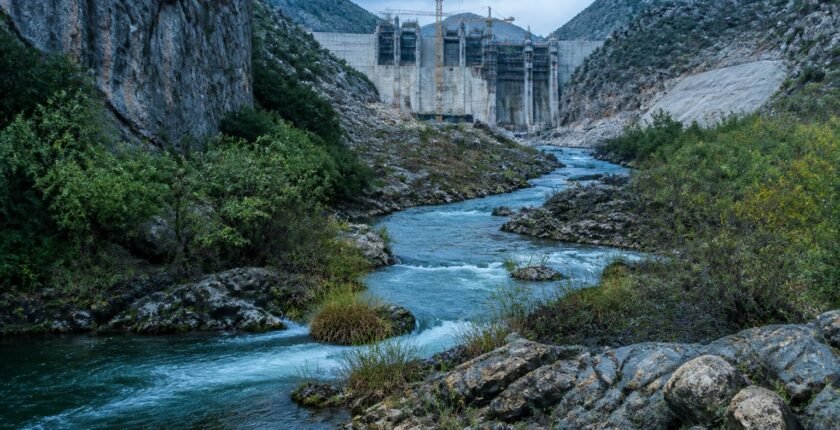
The Upper Horizons hydropower scheme would redirect large volumes of karst water away from the Neretva basin, putting the river’s ecology, wetlands and downstream livelihoods at risk. Environmental groups and local residents warn the project could remove about two billion cubic metres of water a year from the Neretva’s catchment, altering salt intrusion at the delta and drying peat in Hutovo Blato. The reporting, based on field visits and interviews with residents and scientists, was as first reported by BIRN. The first plant, Dabar, is almost complete in Republika Srpska; planners envisage two more plants that together will feed the older Lower Horizons system downstream.
Fishing has been in my family for four generations,
Miroslav Dugandzic, Komin fisherman
Key takeaways
- Projected annual diversion: A 2021 estimate cited by a Croatian MP placed Upper Horizons’ withdrawal at about two billion cubic metres per year from the Neretva basin.
- Existing withdrawals: Lower Horizons already takes an estimated four billion cubic metres a year from the Neretva basin.
- Nevesinje reservoir size: Nevesinje reservoir is planned to hold 61.8 million cubic metres of water and flood about nine square kilometres.
- Project financing: Construction of the Dabar plant is backed by a 190-million-euro loan from China’s Exim Bank and built by China Energy Gezhouba Group.
Table of contents
How Upper Horizons would shift Neretva’s water
Upper Horizons is a cascade of three new plants—Dabar, Nevesinje and Bileca—designed to capture karst water in eastern Herzegovina and run it into the Trebisnjica basin to feed the older Lower Horizons plants. The scheme’s core mechanism is diversion: water collected in wet months will be stored and released through tunnels and reservoirs so downstream turbines in the Trebisnjica system can generate year‑round.
The system ties new reservoirs to an existing network. Lower Horizons—the mid‑20th century plants Trebinje I and II, Capljina and Dubrovnik—already draw heavily on the Neretva basin: Lower Horizons already takes an estimated four billion cubic metres a year from the Neretva basin. Project engineers say that linking the new Upper Horizons reservoirs to that network increases predictability of supply but also concentrates where the basin’s water ends up.
Ecological costs: wetlands, endemic fish and carbon stores
Hutovo Blato, a Ramsar site and peat bog fed by Neretva springs, acts as a natural flood buffer and a long‑term carbon sink. Irene Rozic, the park’s director, told BIRN that Hutovo Blato “stores more carbon than all the forests in Bosnia and Herzegovina,” but that parts of the park already dry in autumn because of past diversions and could dry further if Upper Horizons reduces incoming water.
The karst poljes that supply the Neretva basin are also hotspots for cave and endemic species. Ichthyologist Matej Vucic found juvenile Telestes dabar in May 2025 after an eight‑year absence, but he warns that those fish, plus Telestes metohiensis and Delminichthys ghetaldii, rely on regular surface flooding to reproduce. If tunnels intercept the seasonal floods, those mating cycles and the subterranean habitats they depend on could be interrupted or lost.
Politics, permits and local consent
Upper Horizons is being built inside Republika Srpska, but its impacts cross entity borders within Bosnia and Herzegovina and reach into Croatia, which has filed complaints under the Espoo Convention. That cross‑border footprint makes mitigation politically sensitive: the Federation government sought an inter‑entity commission to coordinate water management but the motion failed to pass.
Local resistance is growing. On May 25, 2026, landowners near Nevesinje were called to a meeting where officials offered about 3.5 euros per square metre for plots in the planned Nevesinje reservoir; attendees refused the offer, according to local journalist Miljan Kovac. Civil society groups such as Foundation Atelier for Community Transformation (ACT) have staged protests and publicity stunts in Mostar to raise awareness of cultural as well as environmental impacts.
Money on the table—and stalled payments
Hidroelektrana Dabar d.o.o., a subsidiary of state utility Elektroprivreda Republike Srpske, is the project promoter. China Energy Gezhouba Group is the main contractor and the project is backed by a 190‑million‑euro loan from China’s Exim Bank, guaranteed by Republika Srpska. Local reporting says Exim Bank stopped disbursing in August 2025 and that Gezhouba temporarily reduced its workforce when diversion works lagged.
Official transparency is limited: Republika Srpska has renewed Dabar permits on the basis of a 2012 impact study and, according to Bankwatch, has refused to disclose the loan contract and construction contract with Gezhouba. The combination of disclosed funding, paused disbursements and withheld contracts leaves the project’s timetable and costs uncertain.
| Project | Status | Water figure | Notes |
|---|---|---|---|
| Dabar (Upper Horizons) | Under construction | Main plant of Upper Horizons; construction by China Energy Gezhouba Group; backed by a 190‑million‑euro loan from China’s Exim Bank | |
| Nevesinje reservoir (Upper Horizons) | Planned / land meetings held | 61.8 million m3 | Set to flood about nine square kilometres; owners offered about 3.5 euros/m2 for plots |
| Lower Horizons (Trebinje I/II, Capljina, Dubrovnik) | Operating since 1960s–70s | About 4 billion m3/year | Existing diversion system that already reduces freshwater reaching the Neretva delta |
| Upper Horizons (overall) | In construction/planning | Estimated 2 billion m3/year (2021 estimate cited) | Would feed Lower Horizons to smooth seasonal generation |
How the case for and against the project could unfold
The case for
- If Exim Bank resumes disbursements and Gezhouba completes tunnel works, Dabar could reach grid connection on schedule; the plant’s director said the site should be connected to the grid in 2028, enabling generation.
- Federation‑level measures to require Republika Srpska to share documentation and mitigation plans could force stronger environmental conditions on future permits, reducing some impacts on springs and downstream wetlands.
The case against
- Pending complaints under the Bern Convention and the Espoo Convention, and Croatia’s transboundary challenge, could lead to operational restrictions or injunctions that delay or add costs to the project.
- Continued extraction without up‑to‑date hydrological data risks irreversible loss of endemic cave species and carbon release from drying peat if Hutovo Blato’s water table falls further.
What to be careful about
- Drying of Hutovo Blato peat bogs and release of stored carbon dioxide and methane as parts of the park already experience autumn desiccation.
- Local extinction of endemic fish such as Telestes dabar, Telestes metohiensis and Delminichthys ghetaldii if seasonal flooding cycles are interrupted by tunnels and reservoirs.
- Transboundary saltwater intrusion and agricultural damage in the Neretva delta as reduced freshwater flow allows seawater to penetrate further upstream.
- Social conflict from expropriation: thousands of land parcels were listed for expropriation near Nevesinje, with low compensation offers that communities rejected.
The bottom line
Upper Horizons links new reservoirs and tunnels in eastern Herzegovina to an existing mid‑century hydropower network, promising steadier generation while shifting where the basin’s water flows. That trade‑off matters because scientific and local witnesses say the Neretva’s delta and Hutovo Blato already show the effects of past diversions: peat drying, species loss and salt intrusion. With legal challenges pending under the Bern and Espoo conventions, suspended disbursements reported in 2025 and local resistance to expropriation, the project’s environmental and social costs are likely to shape its timetable and final design.
What to watch
- Watch for the Dabar plant connection to the grid; the plant’s director said it should be connected in 2028.
- Watch for the outcome of Croatia’s Espoo Convention complaint; no date has been set.
- Watch for any official disclosure of the Exim Bank loan contract or the construction contract with China Energy Gezhouba Group; no date has been set.
Frequently asked questions
What is the Upper Horizons project?
Upper Horizons is a set of three planned hydropower plants—Dabar, Nevesinje and Bileca—designed to divert karst water into the Trebisnjica basin to feed the older Lower Horizons plants.
How much water could be diverted from the Neretva?
A 2021 estimate cited by a Croatian MP placed Upper Horizons’ withdrawal at about two billion cubic metres per year, while Lower Horizons already takes an estimated four billion cubic metres a year.
Which ecosystems and species are most at risk?
Hutovo Blato peatlands and endemic cave and river fish—including Telestes dabar, Telestes metohiensis and Delminichthys ghetaldii—are named in the reporting as threatened if seasonal floods are intercepted.
Who is financing and building the project?
The Dabar plant is being constructed by China Energy Gezhouba Group and backed by a 190‑million‑euro loan from China’s Exim Bank; the promoter is Hidroelektrana Dabar d.o.o., a subsidiary of Elektroprivreda Republike Srpske.
Related reading