
Blog
Rosatom, Teletech to Build 500 MWh BESS Assembly in Egypt
Estimated reading time: 5 minutes · Last updated:
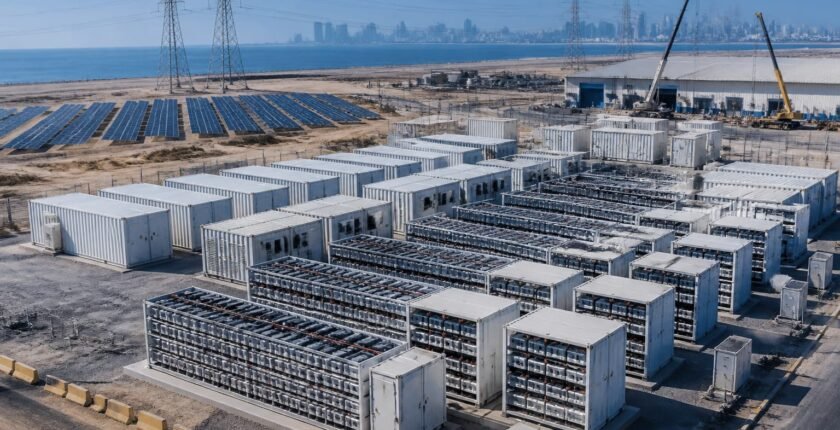
Rosatom and Egypt’s Telecom and Technology Co. (Teletech) signed an agreement to establish a local battery energy storage system (BESS) assembly facility in Egypt, with an annual throughput target of 500 megawatt-hours (MWh), as first reported by Egypt Oil & Gas. Announced at the Egypt Energy 2026 Exhibition and Conference, Rosatom said the deal includes staff training and a staged plan to expand production. Ihab Saad, Chief Technology Officer of Teletech, said the partnership combines advanced lithium‑ion battery storage technology with local implementation capability, and Murad Aslanov, Director of Rosatom’s Country Office in Egypt, tied the move to improved grid stability and lower import dependence.
Teletech’s partnership with Rosatom represents a timely step toward strengthening Egypt’s energy infrastructure: we are combining advanced lithium-ion battery storage technology with local implementation capabilities,
Ihab Saad, Chief Technology Officer of Teletech
Key takeaways
- Capacity: Rosatom and Teletech set a potential annual assembly capacity of 500 megawatt-hours (MWh) in Egypt.
- Partners: The agreement pairs Russia’s Rosatom with Egypt’s Telecom and Technology Co. (Teletech).
- Policy goal: Egypt has set an updated target of 42% renewable energy generation by 2030.
Table of contents
- Key takeaways
- What the Rosatom–Teletech agreement covers and its stated capacity
- How the deal sits inside Egypt’s wider BESS buildout
- Industry implications: what assembly brings and what it does not
- Case for and against faster local assembly lifting Egypt’s BESS capacity
- What to be careful about
- Frequently asked questions
What the Rosatom–Teletech agreement covers and its stated capacity
At the Egypt Energy 2026 Exhibition and Conference, Rosatom and Teletech announced plans to establish local assembly of battery energy storage systems in Egypt. The companies said the initiative will emphasise personnel training and a phased ramp-up in production rather than a single launch date. They cited a headline target of about 500 megawatt‑hours (MWh) of output per year.
The announcement frames the facility as an assembly line for lithium-ion energy storage systems rather than a cell-manufacturing plant: Rosatom’s Energy Storage business unit is identified in the release as the technology supplier, and Teletech as the local implementation, procurement and project execution partner. The agreement lists target sectors for deployment including electricity, telecommunications, data centres and oil and gas operations, which typically use assembled BESS units for backup and peak-shifting.
How the deal sits inside Egypt’s wider BESS buildout
The Rosatom–Teletech assembly follows other recent steps to expand domestic battery capacity. In August, Egypt laid the foundation for China’s Sungrow to construct a $50 million assembly plant in the Suez Canal Economic Zone; the project targets about 10 GWh of output per year and is slated to enter service in April 2027. Separately, Egypt’s Cabinet awarded golden licences in July for two BESS projects near Benban, signalling parallel deployment of large utility-scale systems.
Those projects and the Rosatom tie-up are presented in official and industry commentary as tools to stabilise the grid and shift daytime solar generation into evening peaks while the country ramps up renewable generation. Egypt’s stated policy target in the announcement is to reach 42% renewable energy generation by 2030, a goal the new local capacity aims to support by shortening delivery chains and building local technical skills.
Industry implications: what assembly brings and what it does not
Local assembly reduces some logistics costs, creates hardware installation expertise and shortens the time between ordered systems and deployed capacity, which Rosatom and Teletech highlight in their statements. Murad Aslanov, Director of Rosatom’s Country Office in Egypt, said building local capacity can support grid stability as renewable energy expands, reduce dependence on imported technologies and develop domestic technical expertise.
The published agreement does not assert local cell production. That matters because assembled BESS units typically rely on imported battery cells and modules; Rosatom said the initiative concentrates on technology transfer, workforce training and stepwise capacity increases rather than building a fully integrated domestic supply chain. For policymakers and project owners, an assembly capability of 500 megawatt-hours (MWh) is a concrete advance, but the scale, schedule and provenance of critical components will determine how much of national demand it can meet.
| Project | Partners | Planned annual capacity | Start/operations | Location |
|---|---|---|---|---|
| Rosatom–Teletech assembly | Rosatom; Teletech | 500 megawatt-hours (MWh) | no date set | Egypt |
| Sungrow SCZONE plant | China's Sungrow | 10 gigawatt-hours (GWh) | operations expected in April 2027 | Suez Canal Economic Zone (SCZONE) |
Case for and against faster local assembly lifting Egypt’s BESS capacity
The case for
- Local assembly can shorten procurement lead times for utilities, data centres and telecoms installing BESS units and accelerate deployment supporting grid balancing.
- Training and technology transfer outlined in the agreement can grow domestic skills and create project-execution capability for future BESS projects.
The case against
- The announced 500 megawatt-hours (MWh) annual capacity is modest against Sungrow’s planned 10 gigawatt-hours (GWh), limiting how much national demand assembly alone can meet without cell manufacture.
- The agreement does not specify cell sourcing or a start date, so supply-chain constraints for battery cells could still bottleneck deployments despite local assembly capacity.
What to be careful about
- The announcement describes assembly and staff training but does not state whether battery cells will be sourced locally; continued reliance on imported cells would leave projects exposed to global supply disruptions.
- The 500 megawatt-hours (MWh) figure is a potential annual output; without firm timing or a production ramp schedule, expected deliveries may lag grid needs.
- Overlap with other projects (for example Sungrow’s 10 gigawatt-hours (GWh) plan) could create competition for skilled labour and logistics in the Suez Canal Economic Zone and Benban area.
The bottom line
The Rosatom–Teletech agreement sets a clear, narrow aim: assemble lithium-ion BESS units in Egypt with an initial headline capacity of 500 megawatt-hours (MWh) per year and local training to support scale-up. That capacity will add deployment flexibility for sectors from utilities to data centres, but it remains an assembly play rather than full cell manufacture. The project therefore reduces some lead-time and logistics risks while leaving questions about component sourcing and the production ramp. How quickly assembly turns into operational deliveries, and whether cell production follows, will determine how much the move eases Egypt’s path to 42% renewables by 2030.
What to watch
- watch for a company statement or filing that sets a start date for Rosatom–Teletech assembly operations; no date has been set.
- watch for Sungrow’s SCZONE plant to enter operations in April 2027, as planned.
- watch for announcements detailing whether battery cells will be manufactured locally or imported; no date has been set.
Frequently asked questions
What production capacity did Rosatom and Teletech announce?
Rosatom and Teletech announced an annual output goal of around 500 megawatt‑hours (MWh) for the planned local BESS assembly facility.
How does that compare with other local projects?
China’s Sungrow is developing a separate plant intended to deliver roughly 10 GWh annually and to start operations in April 2027, a scale well above the 500 MWh figure.
Will this deliver cells or assembled systems?
The Rosatom release and Teletech’s statement describe assembly, staff training and incremental expansion; they do not state that local battery cell manufacture will take place.
Related reading