
Blog
Empire Wind Power Delayed to 2027 by US Vessel Holdups
Estimated reading time: 6 minutes · Last updated:
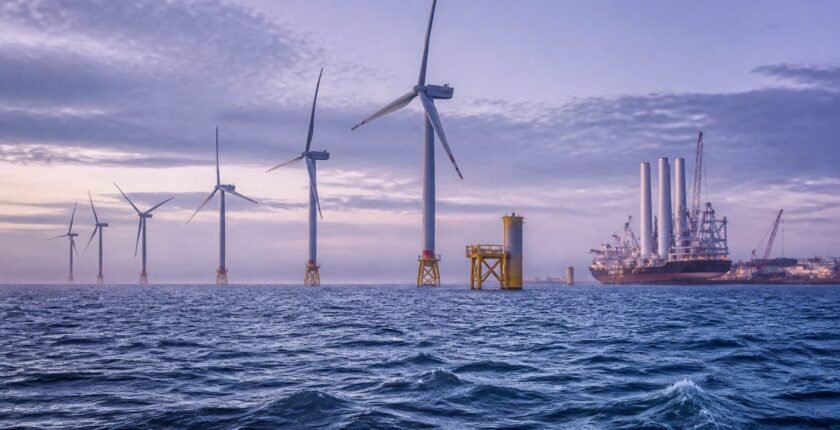
The Empire Wind delay comes down to boats. Equinor said on 29 October 2026 that late U.S.-built barges and tugs have pushed back turbine installation at its 810-megawatt project off New York. The wind farm is now expected to start sending power to the grid in the first half of 2027. Those support vessels matter because the Jones Act bars the foreign-built installation ship from carrying components between U.S. ports. The project is about 80% complete, with foundations, substation and cables finished. Equinor says total spending will not change, though some capital moves from 2026 into 2027. It also says its expected U.S. investment tax credits stay on their original timetable.
Most of the remaining project scope relates to offshore turbine installation, which is expected to start next year.
Torgrim Reitan, Equinor chief financial officer
Key takeaways
- Schedule: Equinor now expects Empire Wind, its 810 MW project off New York, to deliver power in the first half of 2027 after delays to U.S.-built support vessels.
- Jones Act bottleneck: The Singapore-built installation ship Maersk Viridis cannot carry turbine parts between U.S. points, so the project depends on American barges and tugs sailing from the South Brooklyn Marine Terminal.
- Progress: All 54 turbine foundations, the offshore substation and cable work are done, leaving offshore turbine installation as the main job left on a project Equinor puts at about 80% complete.
- Money: Equinor keeps its roughly $7.5 billion investment estimate and expects about $2.5 billion in tax credits, $2 billion in 2027 and $500 million in 2028, on the original timing.
- Legal: A federal court dismissed Equinor's challenge to the December 2025 stop-work order on 30 September 2026, ending a repayment risk on a $2.7 billion project loan.
Table of contents
- Key takeaways
- Why a Foreign Ship Needs U.S. Barges to Build Empire Wind
- What Is Built and What Is Left at the 810 MW Site
- Why Equinor Says the Budget and Tax Credits Hold
- How Empire Wind Got Through Two Federal Stop-Work Orders
- What could keep Empire Wind on its 2027 target, and what could not
- What to be careful about
- Frequently asked questions
Why a Foreign Ship Needs U.S. Barges to Build Empire Wind
Empire Wind relies on an installation system designed by Maersk Offshore Wind and built around Maersk Viridis, a vessel constructed in Singapore. The Jones Act is a U.S. shipping law that reserves the carriage of cargo between American points to ships built in the United States. Because Maersk Viridis was built abroad, it cannot load turbine parts in Brooklyn and sail them to the site itself.
The workaround is a set of purpose-built American barges and tugs. They are meant to collect components at the South Brooklyn Marine Terminal, run them offshore and lock directly onto Maersk Viridis. Parts then pass from barge to installation ship while the ship stays on station, with no trips back to port.
That arrangement is where the schedule slipped. In August, Maersk Viridis arrived in waters off Pascagoula, Mississippi, where crews began testing the vessel and getting it ready. The domestic support vessels did not keep pace, and Equinor says that holdup is what moved the turbine campaign back. The episode shows how much an American offshore wind build now rests on American shipyards delivering on time.
What Is Built and What Is Left at the 810 MW Site
Equinor puts the project at roughly 80% complete. All 54 turbine foundations are in place, and the offshore substation and cable work are finished. That leaves about a fifth of the job, and almost all of it is offshore.
Torgrim Reitan, Equinor's chief financial officer, made the point to investors as the company reported third-quarter 2026 results. "Most of the remaining project scope relates to offshore turbine installation, which is expected to start next year," he said, adding: "This is a bit later than planned." Equinor describes the slip as several months rather than a year or more.
The wind farm sits about 14 miles south of Long Island. Its 54 turbines, averaging about 15 MW each, add up to 810 MW. Once running, the project is expected to supply roughly 500,000 New York homes. None of that output can flow until the turbines are lifted onto the foundations already standing in the water.
Why Equinor Says the Budget and Tax Credits Hold
The delay changes timing, not the bill, Equinor says. The company does not expect total capital expenditure to move, though part of the spending planned for 2026 will now fall in 2027. Capital expenditure is money spent building an asset, as opposed to the cost of running it.
Equinor has previously estimated total investment at approximately $7.5 billion. That figure includes redevelopment of the South Brooklyn Marine Terminal, the staging port the barges are meant to sail from, as well as the wind farm itself.
Tax credits are the other moving part. Equinor expects U.S. investment tax credits worth about $2.5 billion, with $2 billion of that booked in 2027 and $500 million the year after, in 2028. An investment tax credit cuts the tax a company owes by a share of its qualifying project spending. Equinor says the revised construction schedule should not change when those credits are recognised, even though turbine work now falls in the same year as the larger tranche.
How Empire Wind Got Through Two Federal Stop-Work Orders
The vessel problem lands after a rough stretch with Washington. The Trump administration ordered work stopped in April 2025, pointing to concerns about how the project had been permitted federally. That order was lifted a month later.
In December 2025 the Bureau of Ocean Energy Management, the federal agency that oversees offshore energy leasing, stopped work at Empire Wind plus four more offshore wind developments, citing national security. Equinor went to federal court and won preliminary relief that let construction carry on.
Equinor's third-quarter financial statements say a federal court threw out the case on 30 September 2026 after the suspension lapsed. The company says the ruling ended any danger that lenders could demand repayment of a $2.7 billion project loan within 12 months as a consequence of the order. That removes a financing threat just as the vessel delay stretches the build into another year.
| Milestone | Timing | Outcome |
|---|---|---|
| Trump administration stop-work order | April 2025 | Lifted a month later |
| BOEM suspension of Empire Wind and four other projects | December 2025 | Preliminary relief let work continue |
| Maersk Viridis arrives off Pascagoula | August | Testing and preparation |
| Court dismisses Equinor's case | 30 September 2026 | Loan repayment risk removed |
| Third-quarter update | 29 October 2026 | About 80% complete; turbine work delayed |
| Offshore turbine installation | 2027 | Expected to start |
| Power to grid | First half of 2027 | Expected |
What could keep Empire Wind on its 2027 target, and what could not
The case for
- Foundations, the offshore substation and cable work are complete, so the remaining work is concentrated in one campaign.
- Maersk Viridis is already in U.S. waters after testing off Pascagoula, Mississippi.
- The federal court case is closed, removing the $2.7 billion loan repayment risk tied to the December 2025 order.
- Equinor reports no change to total capital expenditure or to the timing of its tax credits.
The case against
- Turbine installation cannot begin until the U.S.-built barges and tugs are ready, and Equinor has given no month for that.
- The Jones Act leaves no fallback of using the foreign-built installation ship to ferry parts from Brooklyn.
- Equinor has already moved the timetable once by several months, and further shipyard slippage would press directly on the first-half 2027 target.
- The project has faced two federal stop-work orders since April 2025.
What to be careful about
- Further delays to the U.S.-built barges and tugs would push turbine installation, and therefore power delivery, beyond the first half of 2027.
- Shifting capital spending from 2026 into 2027 concentrates construction cost and tax credit recognition in the same year.
- The project has twice been halted by federal order, in April 2025 and December 2025, so renewed federal action remains an exposure.
- The installation method depends on a novel barge-to-ship transfer system that has yet to run a full turbine campaign at this site.
The bottom line
Empire Wind is nearly built on paper and waiting in practice. Foundations, substation and cables are in place, and Equinor says the budget and tax credit timetable hold. What remains is the most visible step: lifting 54 turbines onto their foundations, which cannot start until the American barges and tugs built to feed Maersk Viridis are ready. Equinor has named 2027 for that work and the first half of the year for power, without a month. The court case is closed and the $2.7 billion loan risk is gone, so the next test is mechanical rather than legal. If the support fleet arrives early in 2027, the target looks reachable. Further shipyard slippage would press directly against it.
What to watch
- Watch for the start of offshore turbine installation, which Equinor expects in 2027; no month has been set, and it depends on the U.S.-built barges and tugs being ready.
- Watch whether Empire Wind delivers power in the first half of 2027, the window Equinor gave on 29 October 2026.
- Watch Equinor's 2027 results for recognition of about $2 billion in investment tax credits, which the company says the revised schedule will not delay.
Frequently asked questions
When will Empire Wind start producing electricity?
Equinor now expects power in the first half of 2027. Offshore turbine installation, the main remaining task, is expected to begin in 2027 once U.S.-built support vessels are ready.
How many homes will Empire Wind power?
The 810 MW project is expected to supply roughly 500,000 New York homes once operating. It sits about 14 miles south of Long Island and uses 54 turbines.
Will the delay raise Empire Wind's cost?
Equinor says total capital expenditure will not change, although some spending moves from 2026 into 2027. It has previously put total investment, including the South Brooklyn Marine Terminal redevelopment, at approximately $7.5 billion.
Is Empire Wind's $2.7 billion loan still at risk?
No, according to Equinor. A federal court dismissed its challenge to the December 2025 suspension on 30 September 2026 after the order expired, which Equinor says ended the risk the loan could become repayable within 12 months.
Related reading