
Blog
Chile Battery Storage Capacity Jumps 124% in a Year
Estimated reading time: 7 minutes · Last updated:
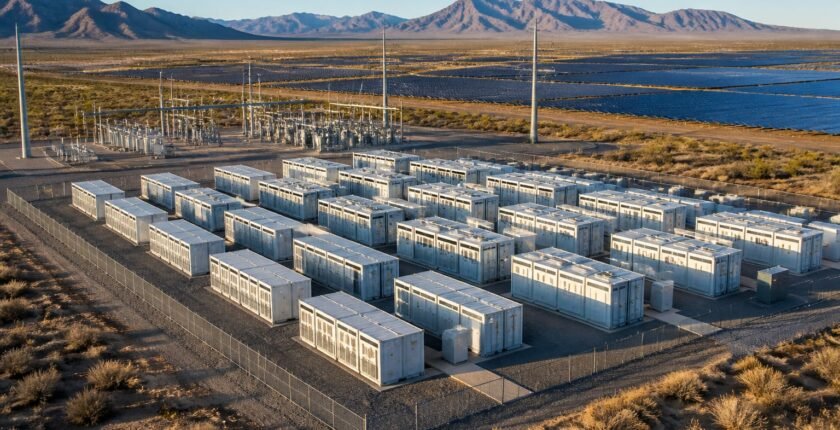
Chile battery storage capacity more than doubled in a year. By September 2026 the country had 3,125 MW of operational battery energy storage systems able to hold 13,555 MWh, roughly 3.1 GW/13.6 GWh, according to data compiled by the Chilean Renewable Energy and Storage Association, known as ACERA. Stored energy capacity rose 124.3% from 6,043 MWh in September 2025, when installed power stood at 1,405 MW. A battery energy storage system, or BESS, charges from the grid or a nearby plant and releases the power later. In Chile most of these batteries sit beside solar farms. The queue behind them is larger still: 13,735 MWh is in testing and 22,123 MWh is under construction.
Key takeaways
- Fleet size: ACERA counted 3,125 MW/13,555 MWh of operational battery storage in Chile in September 2026, against 1,405 MW/6,043 MWh a year earlier.
- Solar dominance: Batteries paired with solar plants hold 2,375 MW/10,521 MWh, or 77.6% of Chile's operational storage energy capacity.
- Pipeline: Another 3,017 MW/13,735 MWh is in testing and 5,130 MW/22,123 MWh is under construction, with 19,972 MW of further BESS projects approved.
- Grid output: Chilean batteries injected 584 GWh in September 2026, equal to 7.9% of the generation ACERA tracked and 216.3% more than a year before.
Table of contents
- Key takeaways
- Why Solar Farms Host Most of Chile's Batteries
- A Testing and Construction Queue Bigger Than the Operating Fleet
- How Much Power Chile's Batteries Now Deliver
- Is Curtailment Finally Easing in Chile?
- What could speed up or slow Chile's storage build-out
- What to be careful about
- Frequently asked questions
Why Solar Farms Host Most of Chile's Batteries
Power capacity grew almost as fast as energy capacity. Installed BESS output climbed from 1,405 MW to 3,125 MW over the twelve months, an increase of about 122%. Dividing stored energy by power gives the fleet an average duration of roughly 4.3 hours. Duration is the time a battery can run at full output before it is empty, so a typical Chilean unit can discharge for a little over four hours.
Solar is where most of that capacity lives. ACERA puts 2,375 MW/10,521 MWh alongside photovoltaic plants, which is 77.6% of the energy the operating fleet can store. Standalone batteries, which connect to the grid without a generator on the same site, add 618 MW/2,640 MWh.
Wind and hydro play minor roles. Batteries at wind farms total 73 MW/145 MWh, giving them a duration of about two hours, half that of the wider fleet. Units attached to hydropower plants come to 60 MW/249 MWh. The pattern reflects where Chile has built its newest generation: solar plants produce in daylight, and pairing them with storage lets their output reach the evening.
A Testing and Construction Queue Bigger Than the Operating Fleet
The next stage of growth is already physically built. ACERA lists 3,017 MW/13,735 MWh of batteries in testing, slightly more stored energy than the entire fleet now in commercial operation. Hybrid solar-plus-storage plants make up 2,222 MW/10,550 MWh of that, and standalone projects 728 MW/2,850 MWh.
Behind the testing stage sits 5,130 MW/22,123 MWh under construction, with an average duration of 4.3 hours. Hybrid solar projects account for 3,877 MW/16,258 MWh, standalone systems 1,217 MW/5,721 MWh and wind-linked batteries 36 MW/144 MWh. By power, ACERA splits the construction pipeline 76% solar-linked and 24% standalone. If everything operating, testing and under construction is counted together, Chile would hold roughly 49.4 GWh of battery storage.
Further back, ACERA counts 19,972 MW of approved BESS projects and 8,716 MW still in environmental assessment, though it has no energy capacity figures for any of them. The approvals continue: between August and early October, Chilean authorities cleared 17 solar and storage projects that include at least 15.37 GWh of batteries.
How Much Power Chile's Batteries Now Deliver
Storage is now a measurable share of supply. Batteries injected 584 GWh into the system in September 2026, equal to 7.9% of the generation ACERA counted. That is a 216.3% rise on a year earlier, so output roughly tripled while energy capacity a little more than doubled. ACERA's figures alone do not show why output outpaced capacity.
Solar remains the engine behind the batteries. Chile had 12,981 MW of installed solar capacity in September, or 32.4% of total power capacity in the electricity system, with 1,117 MW in testing and 3,748 MW under construction. Over the month, solar plants produced 1,936 GWh, a 10% increase on September of the previous year, accounting for 26.1% of all electricity generated.
Non-conventional renewables, which ACERA groups under the Spanish acronym ERNC, produced 3,431 GWh in September, or 46.2% of monthly generation. Their share for January to September was 42.9%. At noon on 13 September, ERNC sources supplied 84.9% of hourly generation, led by solar, a peak that shows how much midday power the batteries have available to shift.
Is Curtailment Finally Easing in Chile?
Curtailment is the power that wind and solar plants could produce but are told to withhold, usually because the grid cannot absorb it. ACERA puts solar and wind curtailment at 3,546 GWh from January to September 2026, a 4.6% fall from the same period in 2025.
That decline is recent. Over the first seven months of 2026, curtailment reached 2,680 GWh, which ACERA described as a record for that stretch of the year. Subtracting one figure from the other implies roughly 866 GWh was curtailed across August and September combined. ACERA does not attribute the improvement to storage, and the nine-month total remains large next to the 584 GWh batteries delivered in September.
Small-scale generation adds another layer to the system batteries must balance. By September 2026, installed capacity stood at 509 MW for small power generation facilities, or PMG, and at 3,877 MW for their distributed counterparts, known as PMGD. Net billing installations, which let households and businesses sell surplus power back to the grid, totalled 538 MW across 44,691 registered systems as of August 2026.
| Stage | Power (MW) | Energy (MWh) | Solar-linked | Standalone |
|---|---|---|---|---|
| Operational | 3,125 | 13,555 | 2,375 MW/10,521 MWh | 618 MW/2,640 MWh |
| Testing | 3,017 | 13,735 | 2,222 MW/10,550 MWh | 728 MW/2,850 MWh |
| Under construction | 5,130 | 22,123 | 3,877 MW/16,258 MWh | 1,217 MW/5,721 MWh |
| Approved | 19,972 | Not available | Not available | Not available |
| Environmental assessment | 8,716 | Not available | Not available | Not available |
What could speed up or slow Chile's storage build-out
The case for
- 13,735 MWh already in testing is more than the operating fleet, so commercial capacity could roughly double once those units are commissioned.
- A 22,123 MWh construction pipeline with an average 4.3-hour duration would add long enough storage to move midday solar into the evening.
- Approvals keep coming, with 19,972 MW of BESS cleared and 17 solar and storage projects holding at least 15.37 GWh approved between August and early October.
The case against
- Curtailment still reached 3,546 GWh in the first nine months of 2026, showing the grid cannot yet absorb all renewable output.
- ACERA has no energy capacity data for the 19,972 MW approved or the 8,716 MW in assessment, so the size of the later pipeline is uncertain.
- Storage is concentrated at solar plants, which hold 77.6% of operational energy capacity, leaving wind-linked storage at only 73 MW.
What to be careful about
- Projects in testing and construction may not all reach commercial operation, so the pipeline figures overstate certain future capacity.
- Curtailment has fallen only 4.6% year on year, and a further rise in solar build-out could outpace the batteries meant to absorb it.
- Approved and assessment-stage projects carry no energy capacity figures, which limits how far the later pipeline can be measured.
The bottom line
Chile's battery fleet is now large enough to show up in national generation data. At 3,125 MW/13,555 MWh, it supplied 7.9% of the generation ACERA tracked in September, and the 13,735 MWh in testing could double it again without a single new permit. The harder question is whether storage can keep pace with solar, which already makes up 32.4% of system capacity and pushed renewables to 84.9% of hourly supply at noon on 13 September. Curtailment of 3,546 GWh over nine months shows how much clean power still goes unused. The 4.6% decline is a start. Whether it becomes a trend depends on how quickly the 22,123 MWh under construction comes online.
What to watch
- Watch ACERA's next monthly bulletin, covering October 2026, for whether battery injections keep rising beyond September's 584 GWh; no release date has been set.
- Watch how much of the 13,735 MWh in testing moves into commercial operation, which would roughly double the fleet; no completion date has been given.
- Watch the full-year 2026 curtailment total to see whether the 4.6% decline recorded through September holds through December.
Frequently asked questions
How much battery storage does Chile have in 2026?
ACERA counted 3,125 MW of operational battery power and 13,555 MWh of storage in September 2026. That compares with 1,405 MW and 6,043 MWh in September 2025.
How long can Chile's batteries discharge?
The operating fleet averages roughly 4.3 hours, based on 13,555 MWh spread over 3,125 MW. Projects under construction also average 4.3 hours, while wind-linked units run for about two.
What share of Chile's electricity comes from batteries?
Batteries injected 584 GWh in September 2026, which ACERA puts at 7.9% of the generation it counted. That was 216.3% more than in September 2025.
How many battery projects are approved in Chile?
ACERA counts 19,972 MW of approved BESS projects and 8,716 MW in environmental assessment, without energy capacity data for either. Between August and early October, authorities also approved 17 solar and storage projects with at least 15.37 GWh of batteries.
Related reading