
Blog
Oregon Geothermal Well Hits 629 Degrees but No Power Yet
Estimated reading time: 7 minutes · Last updated:
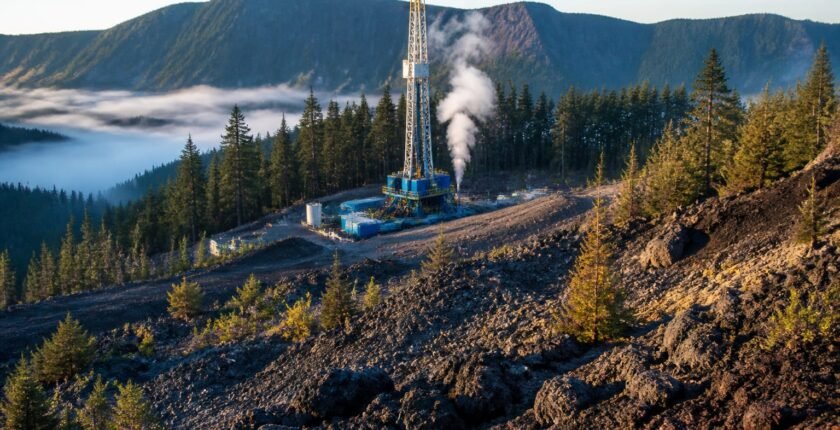
An Oregon geothermal well on Newberry Volcano has set a temperature mark for engineered geothermal. It has not yet produced any electricity. Mazama Energy says its 2025 well reached a bottomhole temperature of 629 degrees, which the company counts as a record for an engineered system. A second well, drilled in 2026, is aiming for rock above 750 degrees at a planned 15,500 feet. On 17 September 2026 the company closed a $135 million funding round. That came sixteen days after its 1 September drilling announcement. The power demonstration is scheduled for 2027. Until then, the drilling speed is proven. The economics are not.
Key takeaways
- Temperature: Mazama Energy's 2025 well at Newberry Volcano reached 629 degrees, which the company holds as a record for an engineered geothermal system.
- Drilling speed: The second Newberry well passed 10,350 feet in 15 drilling days, about 80 percent less time than the 2025 well needed for the same depth, by Mazama Energy's figures.
- Funding: Mazama Energy closed an oversubscribed $135 million round on 17 September 2026, with two unnamed oil majors joining earlier backers.
- No power yet: The Newberry system has generated no electricity, and the power demonstration is set for 2027.
- Forward figures: A resource of more than 10 gigawatts and costs of $4,500 to $4,950 per kilowatt, falling to $3,200, are company targets and are not certified.
Table of contents
- Key takeaways
- Why 705 Degrees Fahrenheit Is the Number That Matters
- What Makes Newberry a Measured Bet Rather Than a Blind One
- How the Second Well Reached 10,350 Feet in 15 Days
- What $135 Million Buys, and What It Does Not
- The Question a Drilling Log Cannot Answer
- The case for and against Newberry
- What to be careful about
- Frequently asked questions
Why 705 Degrees Fahrenheit Is the Number That Matters
Conventional geothermal plants run on steam. Developers tap hot water underground and let it flash to vapour at the surface. That vapour then drives a turbine. The model works, but it needs many wells for the power it delivers.
Above roughly 705 degrees Fahrenheit, water reaches its critical point. Past that point it is a single dense phase rather than a liquid or a steam. In that state it moves with the ease of a gas while holding heat the way a liquid does. A turbine earns its output from the energy in each pound of fluid, not from volume. So supercritical water packs far more usable energy into every pound brought up the well.
Mazama Energy frames the payoff in one comparison. By its figures, a well at 750 degrees can yield up to ten times the power of a conventional well at 390 degrees. Drilling is the main cost, so ten times the output per hole would mean fewer wells. It would also mean lower water use and a smaller surface pad. That is why temperature is the figure the whole project is built around.
What Makes Newberry a Measured Bet Rather Than a Blind One
Newberry is a broad shield volcano southeast of Bend in central Oregon. Its caldera holds two lakes and an obsidian flow about 1,300 years old. The site is a conventional choice for heat. The federal survey has recorded hot springs inside the caldera and high temperatures in earlier exploration holes. The resource has been measured, not guessed at.
Mazama Energy drilled its earlier well there in 2025. That well reached a bottomhole temperature of 629 degrees, which the company describes as a record for an engineered geothermal system. In an engineered system, fluid is circulated through rock that has been worked to carry it. Ordinary geothermal instead draws on a natural reservoir of hot water.
The second well, drilled in 2026, is the one drawing attention. It is designed to reach a total depth of 15,500 feet. At that depth Mazama Energy expects rock hotter than 750 degrees, about two miles beneath the rig floor. The well has not yet reached that depth or that temperature. The supercritical case therefore remains a target, not a result.
How the Second Well Reached 10,350 Feet in 15 Days
The drilling numbers come from Mazama Energy itself, not from an independent auditor. ThinkGeoEnergy carried the detail. The second well passed 10,350 feet in 15 drilling days. The company says that took about 80 percent less time than the 2025 well needed to reach the same depth.
A single drill bit cut 3,578 feet of that interval without being pulled. It came out when the well hit a casing point. Instantaneous penetration exceeded 350 feet an hour. Sustained rates stayed above 130 feet an hour over long stretches. The company reported no failures of downhole motors or directional tools.
That last point carries the most weight. Each trip to pull pipe to the surface costs days. Heat usually destroys steering electronics before anything else in the hole. One caveat applies to the headline figure. Drilling days count only time spent cutting rock. They exclude calendar days spent on casing work and repairs.
What $135 Million Buys, and What It Does Not
Mazama Energy closed an oversubscribed $135 million round on 17 September 2026, its funding announcement on GlobeNewswire states. Two oil majors put venture money in alongside the funds behind earlier rounds. The two majors are not named.
The money has not yet bought electricity. The system has circulated fluid through engineered rock but has generated no power. The funding announcement places the power demonstration in 2027.
Mazama Energy also cites a resource of more than 10 gigawatts at Newberry. The company is still seeking independent certification of that figure. Until then it is a target, not a certified reserve. Early costs are quoted at $4,500 to $4,950 per kilowatt. The company describes a path down to $3,200 per kilowatt. Every one of these figures looks forward, not back.
The Question a Drilling Log Cannot Answer
Fast drilling is a genuine result, and the log confirms it within a day. A bit either advances or it does not. That makes speed the easiest part of this project to verify.
The harder question is whether rock this hot will hold a fracture network open. It also has to keep producing heat for years. That problem has ended other enhanced geothermal projects, and no drilling log speaks to it. Sustained circulation and power output over time will provide the answer.
Newberry also gave Mazama Energy an unusual head start. Decades of exploration had already sampled the temperature gradient before its rigs arrived. The same method may not repeat its gains in rock nobody has mapped. That limits how far the Newberry result can be applied to other sites.
| Well | Year drilled | Depth | Temperature | Status |
|---|---|---|---|---|
| Earlier well | 2025 | Not stated | 629 degrees bottomhole | Completed |
| Second well | 2026 | Passed 10,350 ft; 15,500 ft planned | Above 750 degrees targeted | Target not yet reached |
The case for and against Newberry
The case for
- Supercritical fluid above about 705 degrees Fahrenheit could deliver up to ten times the power per well, by Mazama Energy's figures, cutting the number of costly holes.
- Drilling to 10,350 feet in 15 drilling days with no motor or directional tool failures addresses two of the biggest time and cost drains in hot-rock drilling.
- Decades of prior exploration at Newberry mean the heat is measured, lowering the chance of drilling into a weaker resource than expected.
The case against
- No electricity has been generated, and the power demonstration is not due until 2027.
- Whether hot rock keeps fractures open and produces for years remains untested here, and that problem has ended other enhanced geothermal projects.
- The 10 gigawatt resource and the $3,200 per kilowatt cost path are uncertified company targets.
- The speed gains came at a well-mapped site and may not repeat in unmapped rock.
What to be careful about
- The second well has not yet reached 15,500 feet or rock above 750 degrees, so the supercritical output case is unproven.
- Drilling performance figures come from Mazama Energy, not an independent auditor.
- The resource estimate of more than 10 gigawatts may change once independent certification is completed.
- A fracture network that closes or loses productivity over time would undercut the economics regardless of drilling speed.
The bottom line
The Newberry wells have shown two things clearly. Mazama Energy can drill into very hot rock quickly, reaching 10,350 feet in 15 drilling days without a motor or steering failure. Its 2025 well recorded 629 degrees. Investors were persuaded enough to commit $135 million. The part that pays has not been shown yet. That means sustained circulation through hot fractured rock and a certified 10 gigawatt resource. It also means costs falling toward $3,200 per kilowatt and, above all, electricity from a turbine. The second well still has to reach 15,500 feet and rock above 750 degrees. Whether Newberry becomes a working power source rather than a record hole will be settled in 2027.
What to watch
- Watch for the Newberry power demonstration, which Mazama Energy's funding announcement places in 2027 and which would be the system's first output of electricity.
- Watch whether the second well reaches its planned 15,500 feet and rock above 750 degrees; no date for reaching total depth has been given.
- Watch for independent certification of the more than 10 gigawatt resource Mazama Energy cites at Newberry; no date has been set.
Frequently asked questions
What is supercritical geothermal energy?
It uses water heated past roughly 705 degrees Fahrenheit, where water becomes a single dense phase rather than liquid or steam. Mazama Energy says a well at 750 degrees can deliver up to ten times the power of a conventional well at 390 degrees.
Has the Newberry Volcano geothermal project produced electricity?
No. The system has circulated fluid through engineered rock but has generated no power. Mazama Energy's funding announcement sets the power demonstration for 2027.
How much would power from Newberry cost?
Mazama Energy quotes early costs of $4,500 to $4,950 per kilowatt, with a path down to $3,200 per kilowatt. These are company projections, not results from an operating plant.
Who invested in Mazama Energy's $135 million round?
Two oil majors invested venture money alongside the funds that backed Mazama Energy's earlier rounds. The round closed on 17 September 2026 and was oversubscribed; the oil majors are not named.
Related reading