
Blog
Boise Plans Geothermal Heating for 300 Affordable Homes
Estimated reading time: 6 minutes · Last updated:
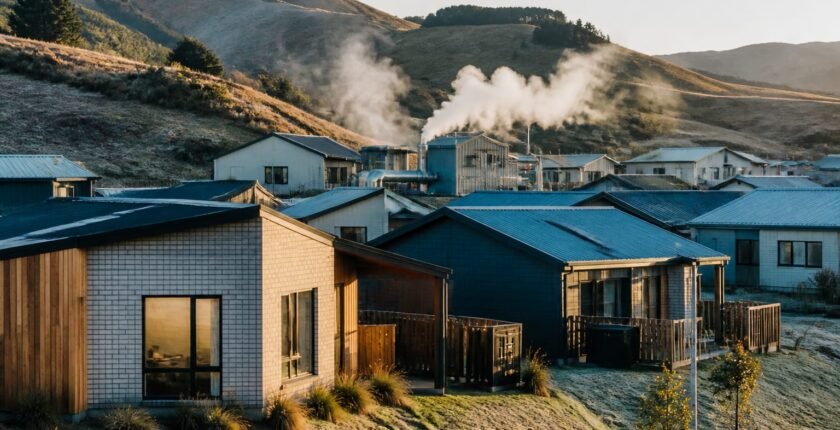
Boise plans to extend its city-run geothermal heating network to an affordable housing development of more than 300 units in the Lusk District. The move follows a $2.5 million gift from Micron Technology in October 2026, which closes a funding gap. The city puts the overall project at about $140 million and says the geothermal heat could trim residents' utility bills by up to 80%. Construction is expected to start in spring 2027, with tenants moving in during 2028. Boise geothermal heating already reaches about 100 buildings, among them the Idaho State Capitol. The water comes out of the ground at 177 degrees Fahrenheit. The new link would carry that heat into homes built to be affordable.
Thanks to Micron's investment, we are one step closer to bringing clean geothermal heat to hundreds of affordable homes in Boise.
Lauren McLean, Mayor of Boise
Key takeaways
- Micron funding: Micron Technology gave Boise $2.5 million in October 2026 to extend the city's geothermal network to a planned affordable housing development of more than 300 units.
- Project scale: Boise puts the total project price at about $140 million, with groundbreaking in the Lusk District expected in spring 2027 and residents arriving in 2028.
- Bill savings: The city says free underground heat could cut utility bills for the new homes by up to 80%.
- Cooling study: A $1 million Bloomberg Philanthropies Mayors Challenge award in February 2026 pays for network upgrades and a look at using the hot water for cooling.
- National context: The Building Decarbonization Coalition counts 33 geothermal network projects across the U.S. that are planned, under construction or completed.
Table of contents
- Key takeaways
- How Micron's $2.5 Million Closes Boise's Funding Gap
- Why Boise Says Geothermal Heat Could Cut Bills by 80%
- A $1 Million Bloomberg Award Tests Whether Hot Water Can Cool
- Boise Sits Among 33 Geothermal Network Projects Nationwide
- What could help or hold back the expansion
- What to be careful about
- Frequently asked questions
How Micron's $2.5 Million Closes Boise's Funding Gap
Micron Technology, the semiconductor multinational based in Boise, made the $2.5 million gift in October 2026. The city says the money covers the shortfall that stood between its geothermal network and the planned Lusk District housing. That development is a partnership between the Housing Land Trust Program and J. Fisher Cos., and it will contain more than 300 affordable units.
April Arnzen is Micron's executive vice president and chief people officer, and she also leads the company's charitable arm, the Micron Foundation. In a statement she linked the gift to the company's long roots in the city: "Boise has been Micron's headquarters for 48 years, and investing in this community means investing in the people who call it home."
Mayor Lauren McLean presented the gift as the kind of partnership needed to add housing that residents can afford. The schedule, though, stretches well into the future. Groundbreaking is pencilled in for spring 2027 and occupancy for 2028, so the promised savings remain a projection for now.
Why Boise Says Geothermal Heat Could Cut Bills by 80%
A geothermal heating network is a system of pipes that carries naturally hot water from underground into buildings, replacing boilers or furnaces that burn fuel. In Boise the water reaches buildings at 177 degrees Fahrenheit. The system now serves about 100 of them, the Idaho State Capitol included.
The city's case for cheaper bills rests on one point. The heat itself costs nothing, because the earth supplies it. On that basis Boise estimates that tenants in the new development could save as much as 80% on utilities. That is an upper limit rather than a promised average, and actual savings will only be known once people live there.
The climate argument runs alongside the financial one. Boise has set a goal of carbon neutrality by 2050. The city credits its geothermal network with avoiding thousands of tons of carbon emissions each year, which it compares to taking more than 2,000 gas-powered cars out of use. Every new connection shifts more heating demand onto that carbon-free supply.
A $1 Million Bloomberg Award Tests Whether Hot Water Can Cool
Micron's gift is the second outside award Boise has secured for the network in 2026. In February, the Bloomberg Philanthropies Mayors Challenge gave the city $1 million to upgrade the system so it can serve affordable housing.
That same award also funds a look at a different use for the water. Maria Ortega, the city's communications senior manager, says technologies now at an early stage might one day turn the network's hot water into cooling. Her framing is tentative, and it is right to read it that way.
Boise has given no date, budget or site for a cooling trial. If the idea worked, pipes that warm buildings in winter could also do useful work in summer, spreading the cost of the network across more months of the year. For now, heat is the only service the system delivers, and the Lusk District homes are being planned around it.
Boise Sits Among 33 Geothermal Network Projects Nationwide
The nonprofit Building Decarbonization Coalition counts 33 geothermal network projects spread across the U.S. that are planned, being built or finished. These systems rely on bore holes, which are drilled shafts that trade heat with the ground. They can form part of thermal energy networks, which move heat between buildings. They can also give gas utilities a line of business that fits climate goals.
The other projects vary widely in scale. In Denver, the plan is to heat and cool downtown buildings using warmth pulled from underground and from wastewater. Enfield, North Carolina, a small rural town, won seed funding in 2026 for a network intended to lower residents' energy costs.
Framingham, Massachusetts, shows what utility ownership looks like. There, about 140 customers get heating and cooling from a network owned by Eversource Energy, a gas and electric utility. A federal grant of $8.6 million is set to double its size. Boise's model differs: the city runs its system itself and is now aiming it at affordable housing.
| Project | Location | Status | Scale or funding | Heat source |
|---|---|---|---|---|
| Existing city network | Boise, Idaho | Operating | About 100 buildings | Underground water at 177°F |
| Lusk District housing | Boise, Idaho | Groundbreaking spring 2027 | 300+ units; $2.5M from Micron | Boise geothermal network |
| Downtown network | Denver | Planned | Downtown buildings | Earth and sewage |
| Town network | Enfield, North Carolina | Seed funding secured in 2026 | Rural town | Geothermal |
| Eversource network | Framingham, Massachusetts | Operating, set to double | About 140 customers; $8.6M federal grant | Geothermal |
What could help or hold back the expansion
The case for
- Boise already runs a working network serving about 100 buildings, so the extension builds on an existing system rather than a new one.
- Two outside awards, $2.5 million from Micron and $1 million from Bloomberg Philanthropies, have been committed in 2026.
- Free underground heat underpins the city's estimate of utility savings of up to 80% for residents.
The case against
- The housing will not break ground until spring 2027 or house residents until 2028, leaving room for delays.
- The 80% figure is an upper bound from the city, not a measured result for these homes.
- The cooling idea depends on technologies Maria Ortega describes as early-stage, with no trial date set.
What to be careful about
- Construction of the Lusk District development could slip past its spring 2027 start or 2028 opening.
- Real bill savings may fall short of the city's up-to-80% estimate once the homes are occupied.
- The cooling use studied under the Bloomberg award may not prove workable with Boise's water.
The bottom line
Boise's plan attaches two new pots of money to an asset the city already runs. Micron's $2.5 million and Bloomberg Philanthropies' $1 million help stretch a network that heats about 100 buildings toward more than 300 affordable homes in the Lusk District. The promised payoff, utility savings of up to 80%, rests on the simple fact that underground heat costs nothing once the pipes are laid. What remains open is delivery. The housing has to break ground in spring 2027 and open in 2028, and the cooling idea is still early. If both come through, Boise would show how affordable housing and fuel-free heat can be built together, as 33 similar networks spread across the country.
What to watch
- Watch for the Lusk District housing to break ground in spring 2027, the first physical step in bringing geothermal heat to the new homes.
- Watch for residents to move in during 2028, when the city's estimate of savings of up to 80% can be tested against real bills.
- Watch for any announcement on a cooling trial using the network's hot water; Boise has set no date.
Frequently asked questions
Who runs Boise's geothermal heating system?
The City of Boise operates the network itself. It pipes underground water at 177 degrees Fahrenheit to about 100 buildings, including the Idaho State Capitol. That contrasts with Framingham, Massachusetts, where Eversource Energy owns the network.
Who is building the affordable homes in Boise's Lusk District?
The Housing Land Trust Program is developing the project with J. Fisher Cos. It will have more than 300 units, with groundbreaking expected in spring 2027 and residents in 2028.
How much is Boise spending to bring geothermal heat to affordable housing?
The city puts the project's total price at about $140 million. Micron Technology contributed $2.5 million to close a funding gap, and Bloomberg Philanthropies awarded $1 million in February 2026 for system upgrades.
Can Boise's geothermal water be used for air conditioning?
Not yet. Maria Ortega, the city's communications senior manager, says early-stage technologies might one day use the hot water for cooling, and the Bloomberg award funds a look at that idea.
Related reading