
Blog
India Pumped Storage Could Hit 105.56 GW by 2035-36
Estimated reading time: 7 minutes · Last updated:
India had about 7.43 GW of pumped storage hydropower running in August 2026. A Central Electricity Authority (CEA) pathway envisions that fleet reaching approximately 105.56 GW by 2035–36. The idea is simple. Spare electricity pumps water up to a high reservoir, and the water later runs back down through turbines when demand peaks. That makes India pumped storage a large, long-duration partner to batteries as solar and wind grow toward the government's goal of 500 GW of non-fossil capacity by 2030. The Ministry of Power is backing the build-out with guidelines, bidding rules and a transmission-charge waiver. Whether the pipeline gets built still depends on site studies, approvals and construction.
Key takeaways
- Current fleet: India operated approximately 7.43 GW of pumped storage across 10 projects above 25 MW as of August 2026, with 15.87 GW across 11 more projects under construction or implementation.
- Storage need: The Central Electricity Authority projects India needs 73.93 GW of storage by 2031–32, split between 26.69 GW of pumped storage and 47.24 GW of battery systems.
- Mapped potential: India has identified 320 pumped storage sites worth 345.38 GW. The CEA places the largest share, 129.72 GW, in the Western Region, led by Maharashtra at 67.36 GW.
- Growth pathway: The CEA pathway envisages 100.81 GW of commissioning between 2025–26 and 2035–36, taking cumulative pumped storage capacity to approximately 105.56 GW.
- Policy incentive: Any pumped storage project that has its construction contract awarded on or before 30 June 2028 qualifies for a full, 100 per cent exemption from Inter-State Transmission System charges, and that exemption runs for 25 years.
Table of contents
- Key takeaways
- How a Water Battery Moves Power From Surplus to Peak
- Why India's Renewable Build-Out Needs 73.93 GW of Storage
- What Is Running, Building and Awaiting Approval
- Where India's 345.38 GW of Potential Is Concentrated
- How the CEA Pathway and Policy Push Aim for 105.56 GW
- What could speed or slow India's pumped storage build-out
- What to be careful about
- Frequently asked questions
How a Water Battery Moves Power From Surplus to Peak
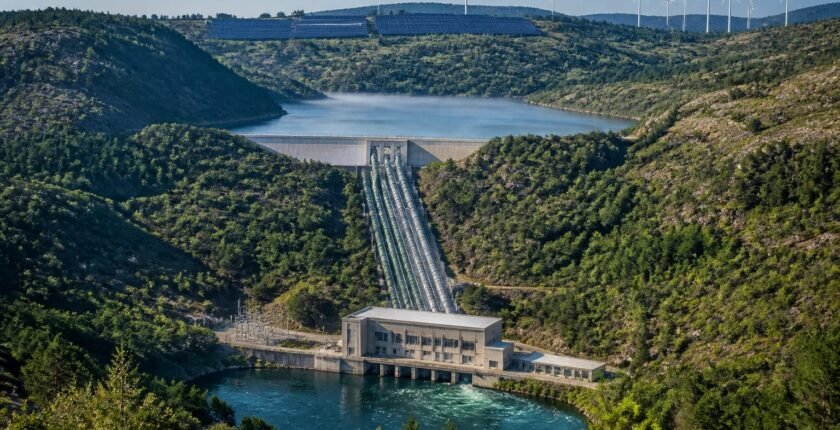
Pumped storage is often called a water battery, and the label fits. A Pumped Storage Project, or PSP, usually pairs two reservoirs set at different heights. When the grid has more electricity than it needs, that surplus drives pumps that lift water uphill. Once raised, the water holds stored potential energy.
When demand climbs, operators let the water fall back through turbines, which generate electricity before the water settles in the lower basin. It can then be pumped up again. A single plant can repeat this cycle many times, moving output from hours of surplus to hours of scarcity.
India sorts these plants by how their reservoirs relate to natural watercourses. An on-stream project puts both reservoirs on a river, stream or nallah. An off-stream open-loop design keeps one reservoir on a watercourse and builds the other away from it. In an off-stream closed-loop scheme, neither basin touches a river or perennial stream. India is looking for more off-stream sites because they can be developed faster and do less harm to aquatic ecology.
Why India's Renewable Build-Out Needs 73.93 GW of Storage
India had 308.027 GW of installed non-fossil generating capacity in September 2026, after adding roughly 55.29 GW during 2025–26. The government's goal is 500 GW of non-fossil capacity by 2030. Solar output follows the sun and wind follows the weather. Neither lines up neatly with the hours when consumers use the most electricity.
The CEA estimates India will need 73.93 GW of storage by 2031–32. It divides that requirement into 26.69 GW from pumped storage and 47.24 GW from Battery Energy Storage Systems, or BESS.
The two technologies do different jobs. Batteries respond within moments, which suits frequency regulation and short peaks. They can also be installed quickly beside a solar farm or close to where power is used. Pumped storage needs the right terrain and heavy civil works. In return, it shifts far larger volumes of energy over many hours and runs for decades. Location, required duration and the service the grid needs decide which technology fits a given site.
What Is Running, Building and Awaiting Approval
As of August 2026, India had approximately 7.43 GW of pumped storage operating across 10 projects, counting only plants above 25 MW. Another 11 projects, totalling 15.87 GW, were under construction or implementation. A further eight projects, worth 10.40 GW, had been appraised or had received CEA concurrence.
Taken together, roughly 33.7 GW is either operating or moving through the system. That is only slightly above the 31.80 GW the CEA pathway expects by 2029–30. Meeting that milestone therefore depends on almost the entire visible pipeline reaching service on schedule.
Globally, India trails well behind the leaders. The International Renewable Energy Agency (IRENA) put worldwide installed pumped storage at 159.8 GW at the end of 2025. China held nearly 66 GW, Japan around 22 GW and the United States approximately 19 GW. IRENA's data placed India fourth with 7.18 GW, about 4.5 percent of the world total. India's fleet then grew to about 7.43 GW in 2026.
Where India's 345.38 GW of Potential Is Concentrated
India has mapped 320 candidate pumped storage projects with a combined potential of 345.38 GW. That tally includes plants already running. Off-stream sites dominate, with 258 projects worth 288.71 GW, against 62 on-stream projects worth 56.67 GW.
The CEA identifies the Western Region as holding the largest share, at 129.72 GW. It attributes this to the terrain and steep river gradients of the Western Ghats. Maharashtra alone accounts for 67.36 GW and Gujarat for 33.36 GW. The Southern Region follows with 97.76 GW, led by Andhra Pradesh, Telangana and Tamil Nadu. The Eastern Region has 53.41 GW, of which 41.53 GW is in Odisha. The Northern Region has 50.32 GW, led by Uttar Pradesh and Himachal Pradesh. The North Eastern Region adds 14.18 GW.
Mapped potential is not a construction queue. Each site still needs studies before anything is built. These cover topography, geology, hydrology, reservoir behaviour, foundations, seismic risk, environmental effects and grid connection.
How the CEA Pathway and Policy Push Aim for 105.56 GW
The CEA pathway foresees 100.81 GW of commissioning between 2025–26 and 2035–36, including projects already under construction. That would bring cumulative capacity to approximately 105.56 GW. The interim marks are around 31.80 GW by 2029–30, 52.99 GW by 2030–31 and 61.79 GW by 2031–32. These are envisaged figures. Each depends on project preparation, approvals and construction.
The 2031–32 figure is roughly 2.3 times the 26.69 GW the CEA assigns to pumped storage in its storage requirement for that same year. One way to read the gap is that the requirement is a floor and the pathway a stretch target.
Support comes in several layers. The Ministry of Power issued dedicated guidelines in April 2023. In February 2025 the ministry added a second set, covering tariff-based competitive bidding, which standardises the procurement of both storage capacity and stored power. Budget support covers the infrastructure a project needs to get built, including access roads and bridges, railway sidings and ropeways, plus communications and transmission lines. An August 2025 notification set the capital expenditure threshold for CEA concurrence on hydroelectric schemes at Rs 3,000 crore. It also exempted off-stream closed-loop pumped storage regardless of cost. The CEA's Jal Vidyut DPR portal tracks survey and investigation work.
| Region | Identified potential | Leading states |
|---|---|---|
| Western | 129.72 GW | Maharashtra 67.36 GW, Gujarat 33.36 GW |
| Southern | 97.76 GW | Andhra Pradesh, Telangana, Tamil Nadu |
| Eastern | 53.41 GW | Odisha 41.53 GW |
| Northern | 50.32 GW | Uttar Pradesh, Himachal Pradesh |
| North Eastern | 14.18 GW | Not specified |
What could speed or slow India's pumped storage build-out
The case for
- A pipeline of 15.87 GW under construction and 10.40 GW appraised or concurred already exceeds twice the operating fleet.
- Off-stream sites make up 288.71 GW of the 345.38 GW identified, and closed-loop schemes no longer need CEA concurrence regardless of cost.
- The 100 per cent transmission-charge waiver for 25 years rewards developers who secure construction awards by 30 June 2028.
The case against
- The 31.80 GW target for 2029–30 leaves little margin over the roughly 33.7 GW currently operating or in the pipeline.
- Every identified site still needs geological, hydrological, seismic and environmental assessment, along with transmission connectivity, before construction can begin.
- Batteries can be installed faster near demand, and the CEA requirement already assigns 47.24 GW of storage to BESS.
What to be careful about
- Delivery risk: the CEA describes its 105.56 GW figure as an envisaged pathway that depends on preparation, approvals and construction, not a committed build schedule.
- Site risk: individual projects can fail on geology, seismicity or foundation conditions discovered during investigation.
- Deadline risk: projects that miss the 30 June 2028 construction-award cut-off lose eligibility for the Inter-State Transmission System charge waiver.
- Grid risk: storage only helps if new transmission lines connect it to new solar and wind generation.
The bottom line
Pumped storage gives India a proven way to carry surplus solar and wind power into peak hours, at a scale that batteries find hard to match over long durations. The numbers are encouraging. About 33.7 GW is operating or in the pipeline, 345.38 GW of potential has been mapped, and the CEA sees a path above 100 GW within a decade. The constraint is execution. Off-stream sites, the 2028 deadline for the transmission waiver and the Rs 3,000 crore concurrence rule are all meant to speed it up. The clearest early test is whether the fleet reaches 31.80 GW by 2029–30, a mark that leaves almost no slack in today's pipeline.
What to watch
- Watch how many pumped storage projects secure construction awards before 30 June 2028, the cut-off for the 25-year transmission-charge waiver.
- Watch whether cumulative capacity reaches the CEA's 31.80 GW mark by 2029–30, which would require nearly all of today's pipeline to be commissioned.
- Watch progress toward the CEA's 73.93 GW storage requirement for 2031–32, and whether pumped storage reaches the 61.79 GW its own pathway envisages for that year.
Frequently asked questions
Do off-stream closed-loop pumped storage projects need CEA approval in India?
No. An August 2025 notification exempted off-stream closed-loop pumped storage schemes from CEA concurrence regardless of capital expenditure. Other hydroelectric schemes need concurrence above a Rs 3,000 crore threshold.
What is the ISTS charge waiver for pumped storage projects?
For eligible pumped storage projects, the deadline is 30 June 2028: those awarded for construction by then pay none of the Inter-State Transmission System charges, a 100 per cent waiver. The exemption applies for 25 years, counted from the start of commercial operation.
How does India's pumped storage compare with China and Japan?
IRENA data show China had nearly 66 GW and Japan around 22 GW at the end of 2025, against India's 7.18 GW. India ranked fourth, behind the United States at approximately 19 GW.
Will batteries or pumped storage provide most of India's storage?
The CEA's 2031–32 requirement leans toward batteries, assigning 47.24 GW to BESS and 26.69 GW to pumped storage. The CEA's separate pathway, however, envisages pumped storage reaching 61.79 GW that year.
Related reading