
Blog
Concrete Ring Wind Tower Reaches 653-Foot Hub in Bavaria
Estimated reading time: 7 minutes · Last updated:
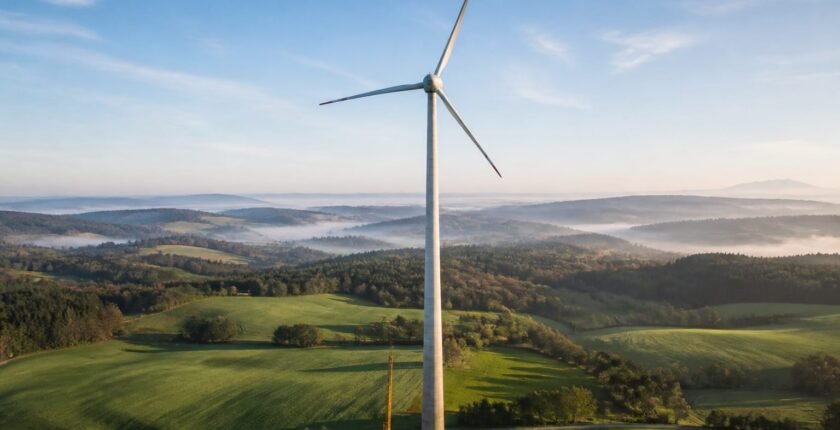
A concrete ring wind tower on Winnberg hill, next to the Sengenthal headquarters of the Bavarian firm that built it, now holds a Vestas turbine 653 feet above the ground. The builder says that hub height beats the previous tallest hybrid tower of its kind by roughly 30 feet. The method is about logistics. The lower two thirds of the structure is stacked from narrow, curved concrete segments that fit on a standard flatbed, and only the top section is conventional steel tube. The 7.2 MW machine is expected to produce around 17 to 18 GWh a year. The record is narrower than it first sounds, because a telescoping tower in Brandenburg already stands taller.
Key takeaways
- The record: The Winnberg tower near Sengenthal, Bavaria, puts a 7.2 MW Vestas turbine at a 653-foot hub height, which the builder says is roughly 30 feet above the previous tallest hybrid tower.
- How it is built: Concrete rings, each cast in three curved pieces, form the lower two thirds of the tower and are clamped together on site with steel tension cables, with a steel tube only at the top.
- Expected output: The turbine is expected to generate around 17 to 18 GWh a year, split between the builder's own production site and the public grid.
- Taller rival: A turbine in Brandenburg has passed 1,190 feet using a telescoping tower, a less proven method than the stacked rings at Winnberg, which have moved into serial production.
- Next steps: A second prototype is planned for next year to refine the design, and Vestas plans to install the same turbine model at a wind farm in South Australia, its first use outside Europe.
Table of contents
- Key takeaways
- Why Trucks, Not Steel, Cap Most Tower Heights
- How the Winnberg Prototype Went Up Beside Its Builder
- What 653 Feet Buys in Electricity
- Which Record Does Winnberg Actually Hold?
- The Loads and Objections That Come With Height
- Will Stacked Concrete Towers Spread?
- What to be careful about
- Frequently asked questions
Why Trucks, Not Steel, Cap Most Tower Heights
Most onshore wind towers are rolled steel tubes delivered in sections. Each section has to pass under highway bridges and swing around tight bends on the road to site. That transport ceiling keeps most steel towers well below 500 feet, because a wider or taller tube simply cannot travel on ordinary roads.
The Winnberg design gets around the problem by changing what is shipped. Every concrete ring is cast as three curved pieces, so no single load is too wide for a flatbed. Crews stack the rings on the hill and then post-tension them. Post-tensioning means steel cables run through the concrete and are tightened, squeezing the stack into one rigid structure, the same technique used on many bridge decks.
Steel appears only at the top, where the tower has narrowed enough for a standard tube to be trucked in. That hybrid structure is what let the hub reach 653 feet, more than 150 feet above the 500-foot mark that most all-steel towers fall short of.
How the Winnberg Prototype Went Up Beside Its Builder
The site is Winnberg, a hill about 1,837 feet above sea level directly beside the company's own headquarters in Sengenthal. Placing the prototype there lets the firm watch its own design in operation. Measured to a blade tip pointing straight up, the whole machine stands 935 feet tall, so the tip reaches about 282 feet above the hub.
The tower was not poured in one go. Dozens of rings were cast at a plant close by, left to cure and then trucked up the hill over several weeks. A self-climbing crane lifted them into place. Rather than being dismantled and rebuilt taller at every stage, this crane rises with the tower as it grows.
The ground itself demanded extra work. Local soil conditions meant the foundation had to be cast in place, with added stabilisation of the surrounding ground. That kind of detail grows in importance with every extra foot, because a taller tower pushes far harder on whatever holds it up.
What 653 Feet Buys in Electricity
The case for all that concrete is wind speed. Air close to the ground is slowed by friction from terrain, trees and buildings, so it generally moves faster and more steadily higher up. Even a 50-foot gain in hub height can raise a turbine's output by a measurable amount.
At Winnberg, the backers have published an expected annual yield of around 17 to 18 GWh. That is enough for several thousand average German households. Part of the power will run the builder's own production site, and the remainder will go to the public grid.
This explains why German developers have spent two decades pushing hubs upward. Much of the country's interior is hilly and wooded, and the best wind there often blows well above the treeline. A tower that can clear the trees by a wide margin opens sites that a shorter machine would struggle to make pay.
Which Record Does Winnberg Actually Hold?
Headline claims about the world's tallest turbine need care here. A separate turbine in Brandenburg has already passed 1,190 feet using a telescoping tower. Winnberg's record is narrower: the builder's published account frames it as the tallest serial-produced wind tower, a category defined by construction method rather than raw height.
That distinction matters more than it seems. The Brandenburg machine relies on a construction approach that is far less proven and remains a one-off experiment. The stacked-ring system, by contrast, is already in repeatable serial production, which is what a developer buying dozens of towers actually needs.
The builder calls Winnberg a milestone for modular design. The better reading is that it is a commercial record, not an engineering ceiling. A height that can be ordered and delivered again is worth more to the industry than a taller tower nobody can yet reproduce at scale.
The Loads and Objections That Come With Height
Height carries physical costs. A taller tower weighs more, takes greater bending from gusts and needs a foundation able to resist forces that no 300-foot tower ever had to handle. The soil work at Winnberg shows these costs rising as the structure grows.
There is a public cost too. A taller turbine can be seen from much further away. In Germany, onshore wind projects have repeatedly met local resistance over views and shadow flicker, the strobing effect of blades passing in front of the sun, often before any construction begins.
Nobody involved is treating the design as finished. A second prototype is planned for next year to refine the method. Vestas, which supplied the turbine and paired it with the Bavarian tower system, plans to install the same model at a wind farm in South Australia. That would be the turbine's first deployment outside Europe.
| Tower | Location | Construction | Height cited | Status |
|---|---|---|---|---|
| Winnberg hybrid | Sengenthal, Bavaria | Concrete rings with a steel top section | 653 ft hub, 935 ft to blade tip | Serial production |
| Telescoping turbine | Brandenburg | Telescoping tower | Past 1,190 ft | One-off experiment |
| Conventional steel | Typical onshore sites | Rolled steel tube sections | Mostly well short of 500 ft | Standard practice |
Will Stacked Concrete Towers Spread?
The case for
- Ring segments travel on standard flatbeds, removing the bridge and road limits that cap steel tubes.
- The system is already in serial production, so the 653-foot height can be repeated rather than rebuilt from scratch.
- Vestas plans to use the same turbine model in South Australia, taking the pairing beyond Europe.
The case against
- Taller towers face heavier gust loads and need tougher foundations, as the cast-in-place base at Winnberg showed.
- Greater visibility feeds local objections over views and shadow flicker that have stalled German onshore projects.
- A second prototype is still needed next year to refine the approach, so the design is not yet settled.
What to be careful about
- Soil conditions at future sites may demand the same costly cast-in-place foundations and ground stabilisation used at Winnberg.
- Local opposition over sightlines and shadow flicker could block taller turbines before construction starts.
- The telescoping approach in Brandenburg could mature and challenge stacked concrete as the preferred route to height.
The bottom line
Winnberg shows that the limit on onshore tower height was never mainly about steel. It was about roads. Breaking each concrete ring into three flatbed-sized pieces let the builder lift a 7.2 MW Vestas turbine to a 653-foot hub, about 30 feet above the previous hybrid record by its own account. The real test is repetition. A taller telescoping machine already stands in Brandenburg, but stacked concrete is the method in serial production, and a second prototype next year plus the South Australia project will show whether it travels well. Foundations, gust loads and local objections over views will keep pushing back as towers rise.
What to watch
- Watch for the second Winnberg-style prototype, which the builder plans to put up next year to refine the stacked-ring method; no exact date has been set.
- Watch for Vestas installing the same turbine model at its planned South Australia wind farm, the first deployment outside Europe; no date has been given.
- Watch whether the telescoping tower in Brandenburg moves beyond a one-off experiment toward repeat production; no timeline has been announced.
Frequently asked questions
How do you get a 653-foot wind tower to a hilltop site?
In pieces small enough for a normal truck. Each concrete ring at Winnberg is cast in three curved segments, carried on a standard flatbed and lifted by a self-climbing crane that grows with the tower.
Why build wind turbines so tall?
Wind near the ground is slowed by friction from trees, terrain and buildings, so it is generally faster and steadier higher up. Even 50 extra feet of hub height can measurably raise output, which is why the Winnberg turbine is expected to produce around 17 to 18 GWh a year.
Is the Winnberg turbine the tallest in the world?
Not in absolute terms. A turbine in Brandenburg has passed 1,190 feet with a telescoping tower, while Winnberg's record, as described by its builder, is for a serial-produced tower.
Will this turbine be used outside Germany?
Vestas plans to install the same model at a wind farm in South Australia. That would be the turbine's first deployment outside Europe, though no date has been given.
Related reading