
Blog
Hyundai 5 MW Electrolyzer Rated for 700 Tons of Hydrogen
Estimated reading time: 7 minutes · Last updated:
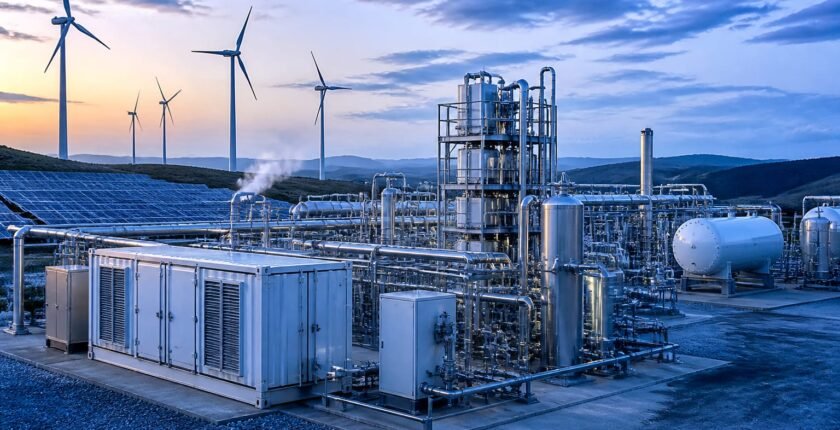
Hyundai Motor Group is showing a 5 MW electrolyzer module at World Hydrogen Expo 2026 in Goyang, South Korea. The module is built from twelve polymer electrolyte membrane stacks, and the company rates it at roughly 700 metric tons of hydrogen per year. The stacks are designed to be added in blocks, and Hyundai says the same architecture can stretch to hundreds of megawatts. Beside it, a robot automatically refuels a fuel cell cleaning truck, and a new truck fuel cell is aimed at longer service life. The show opened on 4 November 2026 at KINTEX and closes on 6 November. Everything on the stand runs under HTWO, Hyundai's hydrogen brand and business platform.
Key takeaways
- Production module: Hyundai says twelve PEM electrolyzer stacks form one 5 MW class module rated at about 700 metric tons, or 772 US tons, of hydrogen a year.
- Scale claim: Hyundai Motor Group says the modular design can grow to hundreds of megawatts, though its only running electrolysis site named is a 1 MW container in Gwangju.
- Refueling robot: Hyundai's ACR-H robot refuels a fuel cell electric cleaning truck automatically at KINTEX, in what the company calls the system's first demonstration.
- Truck fuel cells: A more durable commercial vehicle fuel cell and the Bluelink Uptime Care fleet software made their debut alongside the 2027 NEXO SUV.
- Expo scale: World Hydrogen Expo 2026 runs 4 to 6 November in Goyang with about 190 companies and organizations from 12 countries.
Table of contents
- Key takeaways
- How Twelve Stacks Add Up to a 5 MW Hydrogen Module
- Where Hyundai Is Testing Electrolysis and Waste-to-Hydrogen
- A Refueling Robot and Sturdier Truck Fuel Cells
- Can Saemangeum AI Valley Join Hydrogen, AI and Robotics?
- What could help or hold back Hyundai's hydrogen push
- What to be careful about
- Frequently asked questions
How Twelve Stacks Add Up to a 5 MW Hydrogen Module
Polymer electrolyte membrane electrolysis, usually shortened to PEM, splits water into hydrogen and oxygen by passing electricity across a thin solid membrane. Hyundai's production exhibit is built on this method, packaged as stacks that combine into larger units.
Twelve of those stacks form a single 5-megawatt-class system module. Hyundai rates the module at approximately 700 metric tons of hydrogen a year, which it puts at 772 US tons. Dividing the rating by the power class gives about 140 metric tons per megawatt per year. That yardstick will help compare it with rival electrolyzers once their figures are published on the same basis.
The bigger claim concerns scale. The group says the modular design can be multiplied into installations of hundreds of megawatts. That is a design statement, not a project. Hyundai has named no plant of that size, no customer and no date, and the largest unit it describes as running is far smaller.
Where Hyundai Is Testing Electrolysis and Waste-to-Hydrogen
In Gwangju, a containerized demonstration facility in the 1-megawatt class is already operating. That puts it at about one fifth of the power class of the module on show. Hyundai is chasing further demonstrations in Boryeong, Buan and Jeju, but it has not given capacities or start dates for any of them.
Electrolysis is only one route on the stand. Hyundai is also presenting waste-to-hydrogen work centred on HTWO Energy Cheongju, which turns organic waste into hydrogen. The company frames this as a circular economy model, in which refuse that would otherwise need disposal becomes a fuel feedstock.
Two more projects complete the production list. A facility in Paju would make hydrogen from biogas, and Hyundai is pursuing initiatives in Indonesia that it describes as tailored to local conditions. Taken together, the sites show a company spreading its bets across feedstocks rather than relying on a single production path.
A Refueling Robot and Sturdier Truck Fuel Cells
ACR-H is the Automatic Charging Robot-Hydrogen that Hyundai built for commercial vehicles. The company calls its appearance at the expo the system's first demonstration. On the stand, the robot refuels a fuel cell electric cleaning truck on its own. The stated aim is to spare commercial drivers a repetitive chore and make refueling easier.
The robot is part of a wider fleet display that covers operation, maintenance, fleet management and refueling. A new fuel cell system for commercial vehicles also made its debut. Hyundai said better cells and key components make the stack more durable, supporting reliability over long shifts and long-distance routes. No lifetime figure has been published.
Software ties the fleet together. Bluelink Uptime Care lets operators monitor how vehicles are running and the condition of their components. It offers abnormality diagnostics, preventive maintenance prompts and real-time alerts.
The vehicle line-up runs from the 2027 NEXO SUV to a hydrogen locomotive model plus a flat-type fuel cell module meant for heavy, long-haul transport. Visitors can step aboard the ELEC CITY Fuel Cell, a low-floor intercity bus shown in development form. Rides in the New XCIENT Fuel Cell tractor and an upgraded UNIVERSE Fuel Cell coach are reserved for designated industry participants and media.
Can Saemangeum AI Valley Join Hydrogen, AI and Robotics?
Hyundai's broader argument is that production, transport and industrial demand should be planned together and sized to local resources. The stand lays out scenarios linking where hydrogen is made with where it is used, across cities, ports, logistics hubs and factories.
The most ambitious of these is the Saemangeum AI Valley concept. It joins solar generation and electrolysis to AI data centers, a plant that builds robots and an AI hydrogen city. Hyundai presents it as a self-sustaining loop blending hydrogen energy, AI and robotics across urban services.
That vision deserves caution. It is labelled a concept, and Hyundai has attached no capacity, investment figure or timeline to it. The hardware nearest to market is more modest: a 1 MW container in Gwangju and a 5 MW module design not yet shown at the hundreds-of-megawatts scale the company describes.
The setting is a trade show of about 190 companies and organizations, drawn from 12 countries, with conference and partnership sessions on hydrogen business, project investment and cross-border cooperation. Hyundai said it wants its exhibit to show systems that work in practice and suit different regions and industries.
| Location | Project type | Status |
|---|---|---|
| Gwangju | 1 MW class containerized PEM demonstration | Operating |
| Boryeong | Demonstration project | Being pursued |
| Buan | Demonstration project | Being pursued |
| Jeju | Demonstration project | Being pursued |
| Cheongju | Waste-to-hydrogen (HTWO Energy Cheongju) | Presented at expo |
| Paju | Biogas-based hydrogen production | Being pursued |
| Indonesia | Locally tailored initiatives | Being pursued |
What could help or hold back Hyundai's hydrogen push
The case for
- The twelve-stack design lets capacity be added in 5 MW class blocks rather than requiring one bespoke large unit.
- A 1 MW class container is already operating in Gwangju, giving Hyundai field data before larger builds.
- Hyundai spans production, refueling robots, fuel cells and fleet software, so it can offer buyers a linked system rather than single parts.
The case against
- The hundreds-of-megawatts scale is a design claim with no named project, customer or date behind it.
- The Boryeong, Buan and Jeju demonstrations have no published capacity or schedule.
- Hyundai has given no durability figure for the new fuel cell and no energy-use figure for the electrolyzer module.
What to be careful about
- The 700 metric ton rating is Hyundai's own figure, with no independent test or operating data published for a full 5 MW module.
- The Saemangeum AI Valley is a concept with no stated capacity, funding or timeline, so it may not progress beyond the display.
- Electrolyzer output depends on the electricity supplied, and Hyundai has not said what power source or utilisation rate the 700 ton figure assumes.
The bottom line
The numbers Hyundai brought to Goyang are specific enough to test: twelve PEM stacks, a 5 MW class module and a rating of roughly 700 metric tons of hydrogen a year. What they lack so far is a track record. The one running electrolysis site named is a 1 MW container in Gwangju, and the projects in Boryeong, Buan and Jeju have no published capacity or schedule. The truck-side news is more immediately practical, with ACR-H automating a routine task and a sturdier fuel cell aimed at long routes. The next useful signal will be an order for the module at multi-megawatt scale, because that is where the hundreds-of-megawatts claim either proves itself or stays on a display board.
What to watch
- World Hydrogen Expo 2026 closes at KINTEX on 6 November 2026; watch for any supply or partnership deals Hyundai announces from the expo's partnership programme.
- Watch for capacities and start dates for Hyundai's demonstration projects in Boryeong, Buan and Jeju; no dates have been set.
- Watch for the first order for the 5 MW module at multi-megawatt scale, which would test Hyundai's hundreds-of-megawatts claim; no project has been named.
Frequently asked questions
How much hydrogen can Hyundai's 5 MW electrolyzer produce?
Hyundai rates the twelve-stack, 5 MW class module at approximately 700 metric tons of hydrogen a year, or 772 US tons. That works out to roughly 140 metric tons per megawatt annually, though Hyundai has not said what power supply the rating assumes.
What is Hyundai's ACR-H robot?
ACR-H, short for Automatic Charging Robot-Hydrogen, is a Hyundai robot that refuels commercial fuel cell vehicles automatically. At World Hydrogen Expo 2026 it refuels a fuel cell electric cleaning truck, in what Hyundai calls the system's first demonstration.
Where is Hyundai producing hydrogen in South Korea?
A 1 MW class containerized PEM facility is operating in Gwangju, and Hyundai is pursuing demonstrations in Boryeong, Buan and Jeju. It also runs waste-to-hydrogen work at HTWO Energy Cheongju and is pursuing a biogas-based plant in Paju.
Can the public ride Hyundai's hydrogen buses at the expo?
Among the exhibits open to visitors is a low-floor ELEC CITY Fuel Cell intercity bus, still at the development stage, which anyone can step aboard. Rides in the upgraded UNIVERSE Fuel Cell coach and the New XCIENT Fuel Cell tractor are limited to designated industry participants and media.
Related reading