
Blog
Vineyard Wind Hits Full Commercial Operation at 800MW
Estimated reading time: 6 minutes · Last updated:
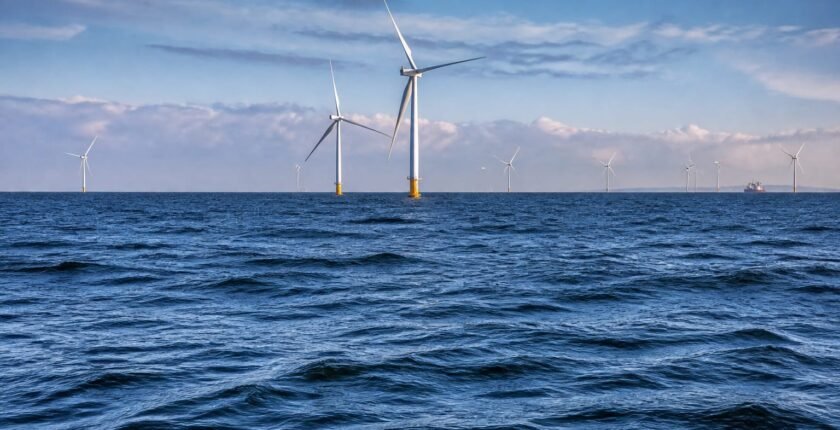
Vineyard Wind 1, an 800-megawatt offshore wind farm roughly 15 miles off Massachusetts, entered full commercial operation on Thursday, 29 October 2026. Its 62 turbines can now produce enough electricity for about 400,000 homes in New England. The milestone ends a run of more than eight years since Massachusetts chose the project in its first offshore wind auction. That run was broken up by a 2019 federal permitting hold, a 2024 blade failure and a stop-work order in December 2025. Hours before the news broke, the neighbouring Revolution Wind project said it had reached full power. New England now has two offshore farms in full operation as winter approaches.
Vineyard Wind has already saved Massachusetts families and businesses millions of dollars on their electricity bills.
Maura Healey, Governor of Massachusetts
Key takeaways
- Milestone: Vineyard Wind 1 reached full commercial operation on 29 October 2026, spokesperson Craig Gilvarg said.
- Capacity: The project's 62 turbines total 800 megawatts, enough for about 400,000 homes in New England.
- Second project: Revolution Wind, rated at 704 megawatts and roughly 350,000 homes, reached full power hours before Vineyard Wind's announcement.
- Cost and jobs: Vineyard Wind cost $4.5 billion and employed about 3,500 people, many of them union members.
- Policy backdrop: A federal permitting pause under the Trump administration has stalled every US offshore wind project except five that were already being built.
Table of contents
- Key takeaways
- What Full Commercial Operation Means for New England's Grid
- Why New England Staked Its Energy Plans on Offshore Wind
- How Vineyard Wind Survived Eight Years of Setbacks
- Why One Finished Farm Does Not Settle the Industry's Future
- What could help or hurt New England's offshore wind supply
- What to be careful about
- Frequently asked questions
What Full Commercial Operation Means for New England's Grid
Craig Gilvarg, a Vineyard Wind spokesperson, confirmed the milestone in an email, as first reported by WBUR. "On Thursday, October 29, Vineyard Wind 1 reached full commercial operations, further strengthening New England's energy supply," Gilvarg wrote. Commercial operation is the point at which a power plant moves out of testing and commissioning and into routine output.
The project's 62 turbines have a combined rating of 800 megawatts. That is enough electricity for about 400,000 homes in the region. Revolution Wind is slightly smaller at 704 megawatts, which covers roughly 350,000 homes. Together the two farms add about 1,504 megawatts, or power for around 750,000 homes on the projects' own per-home estimates.
The timing matters to advocates. Katie Segal, senior director of offshore wind for the Environmental League of Massachusetts, said so in a text message. "New England is better off now that we have not one but TWO fully commercially operational projects," she wrote. "We are in for a difficult winter and wind will help with costs and reliability."
Why New England Staked Its Energy Plans on Offshore Wind
The region's interest in offshore wind comes down to geography. None of the six New England states has oil or gas reserves. Each has little spare land for solar panels or onshore turbines. What the region does have is shallow coastal water swept by winds that rank among the strongest and steadiest anywhere.
That combination has put offshore wind at the centre of state energy planning for years. Vineyard Wind became the test case for whether the plan could survive contact with federal politics, supply chains and engineering problems.
Massachusetts Gov. Maura Healey hailed the finished project as "a major milestone for the American offshore wind industry." The regional grid, she said, would get "an important boost" from it. According to her statement, the project had "already saved Massachusetts families and businesses millions of dollars on their electricity bills." Healey also forecast that electricity prices would fall once both farms were operating.
Healey did not put a figure on those savings, and the price cut she expects has yet to show up on bills. Her pledge that her administration would keep backing the industry and its workers is a political commitment, not a measured outcome.
How Vineyard Wind Survived Eight Years of Setbacks
The first delay came in 2019, when the first Trump administration put the project's permitting on hold with no end date. Construction approval arrived only after President Biden took office, and the build itself did not go smoothly.
In 2024 a defective turbine blade broke apart and dropped debris into the sea. Much of it came ashore on Nantucket. The public reaction was sharp, and a federal investigation followed that pushed the schedule back again.
The most serious threat came in late December 2025. With the project 95% finished, the Trump administration ordered work halted on Vineyard Wind and four other offshore projects then under construction. The US Interior Department argued the farms threatened national security. Several federal judges rejected that reasoning, and the projects were cleared to restart.
Vineyard Wind said in mid-March 2026 that construction was done. Its remaining turbines still had to be brought online and tied into the New England grid. In total the $4.5 billion project gave work to about 3,500 people, a large share of them union members.
Why One Finished Farm Does Not Settle the Industry's Future
Finishing Vineyard Wind does not mean the US pipeline has started moving again. The Trump administration has opposed the industry since early 2025, using executive orders and halting construction on projects with stop-work directives. It has also frozen new permits across the board. Because of that freeze, just five projects that were already underway still have a clear path forward.
Wind advocates are looking to Congress. A federal permitting reform bill now under negotiation could give projects more certainty. Supporters also hope it would stop future administrations from singling out power sources or projects they oppose. The bill's fate is uncertain, so that remains a hope rather than a plan.
The evidence so far points in one direction. Projects that were already in the water when the pause began can finish if courts back them, as Vineyard Wind did. Projects that still need federal permits have no such protection. Until Congress acts or the policy changes, New England's offshore wind supply is likely to grow only as far as the farms already under construction.
| Project | Capacity | Homes powered (approx.) | Status |
|---|---|---|---|
| Vineyard Wind 1 | 800 MW (62 turbines) | 400,000 | Full commercial operation, 29 October 2026 |
| Revolution Wind | 704 MW | 350,000 | Full power, announced hours earlier |
What could help or hurt New England's offshore wind supply
The case for
- Two farms with a combined 1,504 megawatts are now running ahead of a winter that Katie Segal expects to be difficult.
- Federal judges overturned the December 2025 stop-work orders, which gives projects already under construction a legal precedent.
- A permitting reform bill under negotiation in Congress could shield future projects from shifts in administration policy.
The case against
- The federal permitting pause has frozen every project except five that were already being built.
- The reform bill's passage is uncertain.
- The 2024 blade failure shows that equipment problems can set operating projects back through federal investigations.
What to be careful about
- Gov. Maura Healey's claim of savings worth millions of dollars has no published figure behind it, so the price benefit cannot yet be checked.
- Further executive action by the Trump administration could again target offshore wind, as the December 2025 stop-work orders did.
- Without permitting reform, New England's offshore wind capacity may stall once the five projects under construction are finished.
- Any repeat of a blade failure like the 2024 Nantucket incident could take turbines out of service during peak winter demand.
The bottom line
Vineyard Wind's switch to full commercial operation on 29 October 2026 gives New England 800 megawatts of offshore capacity. Combined with Revolution Wind, the region has about 1,504 megawatts heading into winter. The project's history shows how exposed offshore wind remains to federal decisions. A permitting hold, a blade failure and a stop-work order each cost it time, and judges rather than regulators cleared the last obstacle. Gov. Maura Healey's promise of lower bills has not been quantified. The wider pipeline is still frozen outside five projects under construction. Whether more farms follow depends on a permitting bill in Congress whose prospects are uncertain, not on the region's winds.
What to watch
- Watch how the two farms perform through the coming winter, which Katie Segal of the Environmental League of Massachusetts expects to be difficult.
- Watch whether Congress passes the federal permitting reform bill now under negotiation; no vote date has been set.
- Watch for any new federal action against the five offshore projects allowed to continue under the permitting pause; nothing has been scheduled.
Frequently asked questions
Where is Vineyard Wind located?
Vineyard Wind sits about 15 miles off the coast of Massachusetts. Massachusetts selected it more than eight years ago in the state's first offshore wind auction.
How much did Vineyard Wind cost to build?
The project cost $4.5 billion. It employed about 3,500 people during development and construction, many of them union workers.
Why was Vineyard Wind ordered to stop work in December 2025?
In late December 2025 the US Interior Department said Vineyard Wind and four other offshore projects posed a national security threat. Vineyard Wind was 95% complete at the time. Several federal judges disagreed, and work was allowed to resume.
What happened with the Vineyard Wind blade failure on Nantucket?
In 2024 a faulty turbine blade broke and dropped debris into the ocean, and much of it washed up on Nantucket. The incident caused public anger and a federal investigation that delayed the project again.
Related reading