
Blog
Google Signs 396MW Geothermal Deal With Fervo in Utah
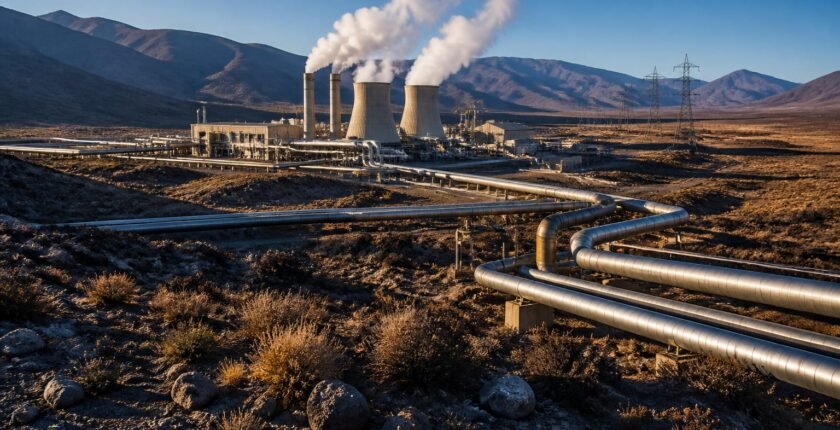
Estimated reading time: 4 minutes · Last updated:
Google has agreed to buy 396 megawatts of power from Fervo Energy's Cape Station, an enhanced geothermal project in Beaver County, Utah. The contract is split into four phases of 99 megawatts, runs for 15 years and starts delivering in 2028. Google also holds an option on roughly 600 megawatts more, which would lift the total close to 1 gigawatt by June 2030. Fervo Energy says the supply is meant to anchor a possible Google data center in Utah, a facility that still awaits approvals. The Google geothermal deal is a test of whether enhanced geothermal can be built at commercial scale.
Key takeaways
- The contract: Google will take 396 megawatts from Fervo Energy's Cape Station in Beaver County, Utah, in four 99-megawatt phases over 15 years, with deliveries starting in 2028.
- The option: An option on about 600 additional megawatts could bring Google's contracted geothermal capacity from Fervo to nearly 1 gigawatt by June 2030.
- The plant today: At the end of September 2026, the first 33-megawatt unit at Cape Station began commercial operation, a first step toward the 500 megawatts planned in total.
- The data center: Fervo Energy says the power is meant to support a potential Google data center in Utah that still depends on feasibility work, state and local approvals and commercial terms.
- The cost hurdle: Geothermal supplies just 0.4% of electricity from US utility-scale plants, held back by high upfront costs.
Table of contents
Why Google Wants Round-the-Clock Power in Utah
Fervo Energy describes the contracted power as the base for a Google data center that may be built in Utah. That plan is conditional. It hinges on three things: whether the site is technically workable, whether state and local officials approve it, and whether the two companies settle commercial terms.
The appeal for Google is timing. Solar and wind output rises and falls with the weather, while a geothermal plant can run at any hour, which suits data centers whose load from artificial intelligence keeps climbing. Gas covered more than 40% of US data center electricity demand in 2024.
Cape Station Is Running, but at a Fraction of Its Plan
Cape Station passed its first milestone at the end of September 2026, when its first 33-megawatt unit entered commercial operation. Phase one is three such units, about 100 megawatts in all, and the full complex is planned at 500 megawatts.
That leaves a long climb. The 396 megawatts Google has committed to equals roughly 79% of the planned site, and the option would push contracted volume toward 1 gigawatt, about twice Cape Station's planned size. Where the extra power would come from has not been explained.
Fervo has delivered for Google before. Project Red in Nevada began generating in 2023 and supplies the local grid, including Google's data centers. The companies, partners for five years, signed a 115-megawatt Nevada agreement in 2024.
How Enhanced Geothermal Works and Why It Still Costs So Much
Enhanced geothermal systems, or EGS, drill deep wells into hot rock and pump in water under pressure to widen existing cracks or open new pathways. The water picks up heat underground, returns to the surface and drives generators.
Roland Horne, director of the Geothermal Energy Program at Stanford University, says the aim of EGS is to create permeability in rock that has little or none, which opens many more sites to geothermal development.
Cost is the brake. Geothermal supplies only 0.4% of electricity from US utility-scale power plants, and high upfront spending has held it back. Fervo now has to build Cape Station out to 500 megawatts and show the approach works commercially.
| Agreement | Location | Capacity | Timing |
|---|---|---|---|
| Project Red | Nevada | Not disclosed | Generating since 2023 |
| Nevada agreement | Nevada | 115 MW | Signed in 2024 |
| Cape Station contract | Beaver County, Utah | 396 MW (four 99 MW phases) | Deliveries from 2028, 15-year term |
| Expansion option | Not specified | About 600 MW | Total near 1 GW by June 2030 |
What could make or break the deal
The case for
- A 15-year offtake from Google gives Fervo a long-term buyer while Cape Station is still being built out.
- The first 33-megawatt unit is already in commercial operation, so the site is producing power before Google's deliveries begin in 2028.
- Google has a five-year working history with Fervo, including Project Red and a 115-megawatt Nevada agreement.
The case against
- The Utah data center the power is meant to serve still depends on feasibility, state and local approvals and commercial terms.
- Cape Station is planned at 500 megawatts, while the option would take contracted volume toward 1 gigawatt.
- High upfront costs keep geothermal at 0.4% of US utility-scale generation.
What to be careful about
- The Google data center in Utah may not proceed if technical feasibility, approvals or commercial terms fall through.
- Cape Station must grow from one 33-megawatt unit to 396 megawatts of contracted supply before the phases come due.
- With financial terms undisclosed, the cost of the power and the project's economics cannot be assessed.
The bottom line
The contract gives Fervo a large, long-dated buyer at a moment when its flagship plant has only one unit running. For Google, it secures firm, weather-independent supply for a Utah data center that is still only a proposal. The fixed terms are clear: 396 megawatts in four 99-megawatt blocks, 15 years, first deliveries in 2028, and an option toward nearly 1 gigawatt by June 2030. What remains open is the price, which has not been disclosed, and whether Cape Station can grow from 33 operating megawatts to its 500-megawatt plan.
What to watch
- Deliveries under the contract are scheduled to begin in 2028, the first test of whether Cape Station can supply its 99-megawatt phases on time.
- June 2030 is the point by which Google's option could lift its contracted capacity to nearly 1 gigawatt, if it chooses to exercise it.
- Watch for state and local decisions on the proposed Google data center in Utah; no date has been set.
Frequently asked questions
How much does Google pay Fervo for the geothermal power?
The financial terms of the 396-megawatt agreement have not been disclosed. The known terms are four 99-megawatt phases, a 15-year delivery period and first deliveries in 2028.
Is Google building a data center in Utah?
According to Fervo Energy, the contracted power is meant for a Google data center that may be built in Utah. Whether that facility goes ahead hinges on several conditions: it must prove technically feasible, win sign-off from state and local authorities, and reach agreed commercial terms.
What is an enhanced geothermal system?
An enhanced geothermal system pumps pressurised water down deep wells to open or widen fractures in hot rock, then brings the heated water back up to generate electricity. Roland Horne of Stanford University says this lets geothermal projects be built in many more locations.
Related reading