
Blog
Germany Capacity Auction Goes All Gas as Batteries Miss Out
Estimated reading time: 6 minutes · Last updated:
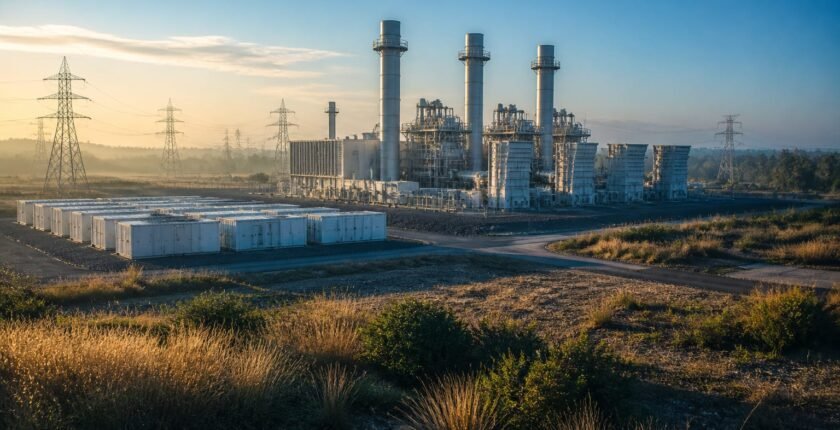
The Bundesnetzagentur, Germany's federal network agency, has awarded every megawatt of its first long-term capacity auction to gas-fired plants. The total is 5.16 GW under 15-year contracts, with delivery booked from 2031. Battery storage won nothing. Bidders had to run at full power for ten hours straight, recharge within three hours, then run flat out for another eight, and few battery systems today last beyond four hours. RWE and LEAG together took 99% of the awarded capacity. The regulator has already opened a second call for the remaining 3.84 GW of the 9 GW first-phase target, with bids due on 29 December. Batteries are expected to compete in a later phase built for short-duration flexibility.
Key takeaways
- All gas: The Bundesnetzagentur awarded the entire 5.16 GW of Germany's first long-term capacity round to gas power plant projects, on 15-year contracts starting in 2031.
- Two winners dominate: RWE, with seven projects, and LEAG, with three, secured 99% of the capacity between them, and a single municipal authority won the remainder.
- Batteries shut out: The qualification test of ten hours at full power, a three-hour recharge and eight more hours at full power excluded battery systems, most of which run for four hours or less.
- More capacity on offer: Bids for the remaining 3.84 GW of the 9 GW first phase are due on 29 December, under a scheme the European Commission cleared at a cost of EUR 15.6 billion to EUR 35.2 billion.
Table of contents
Who Won Germany's First Capacity Auction
The round drew 41 bids totalling almost 12 GW. Seven of them were thrown out because their paperwork was irregular. The 5.16 GW that won contracts is a little over two-fifths of the capacity offered by bidders, so competition was real even though only one technology won.
Two companies took almost everything. The Bundesnetzagentur's award list shows RWE winning support for seven projects and LEAG, short for Lausitz Energie Kraftwerke AG, for three. Together those ten bids for large gas plants account for 99% of the awarded capacity. The eleventh winner is a municipal authority.
LEAG's winning bids are understood to involve converting its lignite-fired plants to burn gas. One detail in the published figures does not reconcile. RWE is credited with 58% of the awarded capacity alongside a count of three projects, which sits awkwardly with the seven projects attributed to it elsewhere. Readers should treat the project-by-project split as unsettled until the full list is checked.
Why a Ten-Hour Test Kept Batteries Out
A battery energy storage system, or BESS, is a bank of rechargeable cells connected to the grid that can absorb surplus power and release it later. Several BESS projects did bid in this round. None could realistically qualify.
The test is demanding. A plant has to deliver its full rated output for ten hours without a break, refill in just three hours, then deliver maximum output again for eight hours. That is a cycle of about 21 hours. Most grid batteries built today are sized for four hours or less, so a ten-hour run would mean buying roughly two and a half times the storage for every megawatt offered.
A second hurdle sits on top of the first. A so-called resilience rule requires essential components to be manufactured inside the European Economic Area. Gas plants face no equivalent condition. For battery developers who rely on cells made outside Europe, that clause alone could rule a bid out regardless of duration.
What the Contracts Pay and What They Are For
The awards are the opening phase of the Electricity Supply Security and Capacity Act, known as StromVKG. Winners receive a weighted average of EUR 155,296 per MW. The ceiling for the round was published as EUR 244,000 per MWh, a unit that does not match the per-MW award figure, so the size of the discount cannot be stated cleanly.
The capacity is derated, meaning it is counted at the level a plant can be relied on to supply rather than its nameplate rating. Its main purpose is cover during dunkelflaute. That German term describes long stretches when wind and solar output both stay weak, the kind of event that a four-hour battery cannot ride through on its own.
Gas is not meant to be the permanent answer. The plants must run in a fully climate-neutral way from 2045. In practice that means switching fuel to hydrogen, biomethane or biogas within the life of assets that only start delivering in 2031.
Where Batteries Fit in the Next Phases
The first phase is not finished. The Bundesnetzagentur has issued a call for the remaining 3.84 GW of the 9 GW it plans to procure as long-term capacity, with a deadline of 29 December. The same ten-hour test appears to apply, so batteries face the same barrier in this second call.
The opening for storage comes afterwards. The next phase will run generation capacity auctions with conditions adjusted for short-duration flexibility, which is where four-hour batteries are strongest. The law also lets demand response, where large users cut consumption on request, and existing plants join in a later, third phase.
The European Commission approved Germany's capacity mechanism under state aid rules in early September. It put the cost of the measure at between EUR 15.6 billion and EUR 35.2 billion. How much of that budget eventually reaches storage depends on rules for the later phases that have not yet been published.
| Phase | What is procured | Capacity | Battery role | Timing |
|---|---|---|---|---|
| Phase 1, first round | Long-term capacity, 15-year contracts | 5.16 GW awarded, all gas | Effectively ineligible | Delivery from 2031 |
| Phase 1, second call | Long-term capacity | 3.84 GW remaining | Same ten-hour test | Bids due 29 December |
| Phase 2 | Generation capacity auctions | Not published | Rules adjusted for short-duration flexibility | No date set |
| Phase 3 | Demand response and existing plants | Not published | Not specified | Later stage |
What the gas sweep means for storage
The case for
- The next phase is designed around short-duration flexibility, which matches the four-hour systems most battery developers already build.
- The European Commission's approval of a EUR 15.6 billion to EUR 35.2 billion scheme means a large funded market exists for later phases.
- The 2045 climate-neutrality requirement on gas winners keeps pressure on the system to add low-carbon flexibility over time.
The case against
- The remaining 3.84 GW of long-term capacity appears to carry the same ten-hour test, so batteries are likely to miss out again on 29 December.
- The European Economic Area manufacturing rule applies to storage but not gas, which disadvantages projects using imported cells.
- 15-year contracts from 2031 lock in RWE and LEAG gas capacity for the long-duration role batteries cannot yet fill.
What to be careful about
- The ten-hour discharge test may carry into the second call, leaving battery projects without long-term contracts for all 9 GW of the first phase.
- The European Economic Area component rule could exclude battery bids even in later phases if it is retained.
- Gas winners must reach climate neutrality by 2045, which depends on hydrogen, biomethane or biogas supply that the scheme does not itself secure.
- The concentration of 99% of capacity in two companies leaves little room for new entrants in Germany's long-duration backup role.
The bottom line
Germany's first capacity round shows what happens when the specification is written around a single job. The job here is riding out a long dunkelflaute, and a ten-hour test with a European manufacturing rule attached left gas as the only plausible winner. RWE and LEAG now hold 99% of 5.16 GW of contracts running from 2031. The second call for 3.84 GW, due on 29 December, looks unlikely to change that picture. The real test for storage comes later, in auctions the Bundesnetzagentur has promised to shape around short-duration flexibility. Until those rules are published, battery developers have a funded scheme worth up to EUR 35.2 billion in view, and no confirmed route into it.
What to watch
- Watch the 29 December deadline for bids on the remaining 3.84 GW of long-term capacity, and whether any battery project qualifies this time.
- Watch for the Bundesnetzagentur's rules for the second-phase generation capacity auctions, which are meant to suit short-duration flexibility; no date has been set.
- Watch delivery under the first 15-year contracts, which is booked to begin in 2031.
Frequently asked questions
Why couldn't batteries win Germany's capacity auction?
The rules required ten hours of continuous full-power output, a recharge within three hours and eight more hours at full power. Few battery systems today last longer than four hours, so BESS bids were effectively ineligible.
What is the resilience rule in Germany's capacity market?
It requires essential components of a bidding facility to be manufactured in the European Economic Area. Battery projects face it, but gas plants do not have an equivalent requirement.
How much will Germany's capacity mechanism cost?
The European Commission, which approved the state aid in early September, estimated the cost at between EUR 15.6 billion and EUR 35.2 billion. First-round winners receive a weighted average of EUR 155,296 per MW.
Will the new German gas plants burn gas forever?
No. Starting in 2045, the winning plants will have to run with zero net climate impact, which implies a switch to hydrogen, biomethane or biogas.
Related reading