
Blog
Chenab Hydro Projects Near Commissioning With Treaty Paused
Estimated reading time: 7 minutes · Last updated:
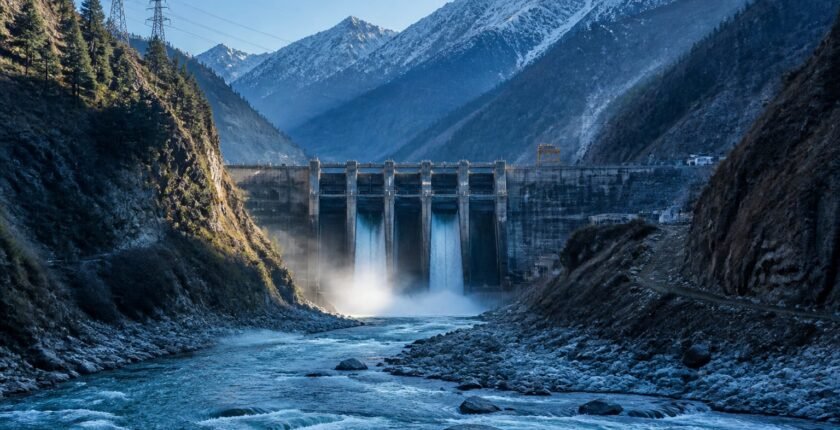
India has started commissioning two Chenab hydro projects, the 1,000 MW Pakal Dul and the 624 MW Kiru, both in Kishtwar district of Jammu and Kashmir. A senior official expects both to be running within a couple of months. Together they would add about 1,624 MW on the western rivers of the Indus system. India once shared use of those rivers with Pakistan under the Indus Water Treaty, which it has held in abeyance since the Pahalgam terror attack. The government wants the commissioning process under way before the end of December, as first reported by ThePrint. One senior official says approvals now move faster without treaty restrictions, and New Delhi is pushing a wider pipeline of dams on the same rivers.
There is no back and forth like earlier. This will help expedite the projects.
Senior government official involved with the Chenab projects
Key takeaways
- Two plants in commissioning: Pakal Dul (1,000 MW) and Kiru (624 MW) in Kishtwar have entered commissioning, and a senior official hopes both will operate within a couple of months.
- Rs 12,399 crore of dams: Kiru cost Rs 4,287 crore and Pakal Dul Rs 8,112 crore, and Chenab Valley Power Projects Limited is building both.
- A wide capacity gap: India has developed 3,500 MW of hydel capacity on the western rivers, against the 18,569 MW its share of their water could support.
- Treaty limits lifted for now: With the Indus Water Treaty on hold, a senior official says design and operating restrictions no longer slow the Chenab projects, and renegotiation remains uncertain.
- Ravi project due mid 2027: Punjab's Rs 3,300 crore Shahpurkandi project, which includes 206 MW of power, is due to be fully operational by mid 2027.
Table of contents
- Key takeaways
- Kiru and Pakal Dul Are Built to Run on River Flow
- Why Starting Commissioning Does Not Mean Power Yet
- What Putting the Indus Treaty on Hold Changes
- India Has Built About 19 Percent of Its Western-River Potential
- Shahpurkandi Aims to Keep Ravi Water at Home by Mid 2027
- What could speed or slow the Chenab buildout
- What to be careful about
- Frequently asked questions
Kiru and Pakal Dul Are Built to Run on River Flow
Kiru sits on the Chenab itself. It cost Rs 4,287 crore. Its dam stands 135 metres high, and its underground power house holds four 156 MW units. Prime Minister Narendra Modi laid its foundation stone in February 2019.
Pakal Dul is the larger and costlier plant. It stands on the Marusudar, a Chenab tributary that also runs through Kishtwar. It has a 167-metre dam and four 250 MW units underground, and it cost Rs 8,112 crore. That works out to roughly Rs 8.1 crore per megawatt, against about Rs 6.9 crore for Kiru.
Both are run-of-the-river schemes. A plant of this kind generates from the river's passing flow. It keeps only limited pondage and surcharge storage rather than a large reservoir. Chenab Valley Power Projects Limited is building them. The company is a joint venture of the National Hydroelectric Power Corporation and the Jammu and Kashmir State Power Development Corporation.
Why Starting Commissioning Does Not Mean Power Yet
One senior government official who works on both projects described where things stand: "The process of commissioning both the 624 MW Kiru and 1000 MW Pakal Dul project has started. We are hopeful of operationalising the two projects in the next couple of months."
A second official, who asked not to be named, warned that generation comes well after that stage begins. "A number of tests are carried out, systems are checked, the dam is filled up and then emptied. Even after the construction is completed, all these processes take time," the official said.
The two accounts do not fully line up. One official says commissioning has already begun, while the government's working target is to start it by December-end. The couple of months is a hope rather than a published schedule, and no switch-on date has been announced.
The rest of the Chenab pipeline is moving unevenly. The Centre is also speeding up the 540 MW Kwar and 850 MW Ratle projects. The second official said Kwar will probably be commissioned by 2028, and that Ratle has been delayed for various reasons that were not spelled out.
What Putting the Indus Treaty on Hold Changes
The World Bank brokered the Indus Water Treaty between India and Pakistan in 1960. It split the basin in two. India received unrestricted rights over the three eastern rivers, the Ravi, Beas and Sutlej, which carry about 20 percent of the system's water. Pakistan received unrestricted use of the three western rivers, the Indus, Jhelum and Chenab, which carry roughly 80 percent.
On the western rivers, the treaty confines India to "non-consumptive" uses. These include run-of-the-river power, agriculture and domestic supply. Its provisions also constrain how India designs projects in the basin and how it operates them once built.
The first official said those constraints do not apply while the treaty is on hold. "There is no back and forth like earlier. This will help expedite the projects," the official said.
That describes the current pause, not a settled outcome. There is no clarity on whether the treaty will be renegotiated, or when. India has used the interval to accelerate work on rivers where it lacks the infrastructure to use its existing share.
India Has Built About 19 Percent of Its Western-River Potential
India's permitted use of the western rivers could support 18,569 MW of hydropower. So far it has developed 3,500 MW, or roughly 19 percent of that potential. Completed plants such as Baglihar, Salal and Kishanganga fall short of using India's full share.
The pipeline would narrow that gap. Kiru, Pakal Dul, Kwar and Ratle together come to about 3,014 MW. Four more projects are at various stages of planning: Sawalkot at 1,856 MW, Kirthai-II at 930 MW, Dulhasti Stage-II at 260 MW and Uri-I Stage-II at 240 MW. Those four add up to roughly 3,286 MW.
"Once all the projects on the western rivers are complete, India will be able to better harness the water of the western rivers and bolster our energy requirements," the second official said.
Power is not the only option under study. India is examining several ideas, among them a tunnel of 10-12 km that would carry Chenab water into the Ravi.
Shahpurkandi Aims to Keep Ravi Water at Home by Mid 2027
On the Ravi, one of the eastern rivers, Punjab is implementing the Rs 3,300 crore Shahpurkandi multipurpose river valley project. The dam is finished, and its 206 MW hydropower component is close to completion. By mid 2027, the whole project will be running, according to a senior official in Punjab's irrigation department.
The scheme targets Ravi water that now passes unused through the Madhopur barrage and on into Pakistan. Its irrigation and generation benefits arrive in full only once the power plants are finished.
On the eastern rivers, India already uses about 95 percent of its allocation. It does so through dams including Bhakra on the Satluj, Ranjit Sagar on the Ravi, and Pong and Pandoh on the Beas. Further plans include a multipurpose scheme on the Ujh, a Ravi tributary in Jammu and Kashmir, for irrigation and hydropower, plus a second Sutlej-Beas link in Punjab.
| Project | River | Capacity | Cost | Status |
|---|---|---|---|---|
| Pakal Dul | Marusudar (Chenab tributary) | 1,000 MW | Rs 8,112 crore | Commissioning under way |
| Kiru | Chenab | 624 MW | Rs 4,287 crore | Commissioning under way |
| Kwar | Chenab | 540 MW | Not stated | Likely by 2028 |
| Ratle | Chenab | 850 MW | Not stated | Delayed |
| Sawalkot | Western rivers | 1,856 MW | Not stated | Planning |
| Kirthai-II | Western rivers | 930 MW | Not stated | Planning |
| Dulhasti Stage-II | Western rivers | 260 MW | Not stated | Planning |
| Uri-I Stage-II | Western rivers | 240 MW | Not stated | Planning |
| Shahpurkandi | Ravi | 206 MW | Rs 3,300 crore (whole project) | Due mid 2027 |
What could speed or slow the Chenab buildout
The case for
- Construction on Kiru and Pakal Dul is finished, so the remaining work is testing, filling and checking rather than building.
- A senior official says treaty-related design and operating restrictions no longer apply, which removes a source of back and forth on approvals.
- Kwar is on track for 2028, which would bring the four active Chenab projects to about 3,014 MW.
The case against
- Commissioning involves filling and emptying the dam and checking systems, so the couple-of-months target could slip.
- Ratle is delayed, and the reasons have not been spelled out.
- There is no clarity on whether the treaty will be renegotiated, which leaves the future rules for western-river projects open.
What to be careful about
- Testing at Kiru and Pakal Dul could take longer than the couple of months one official hopes for, delaying the first power.
- Ratle's unexplained delay could leave the Chenab pipeline short of its 850 MW contribution for an unknown period.
- A renegotiated treaty could bring back design or operating restrictions that one official says have now lifted.
- Shahpurkandi's irrigation and power benefits depend on finishing its 206 MW power plants by the mid 2027 target.
The bottom line
The Chenab projects show how India is using the treaty pause. The visible change is not a dramatic diversion of water but a quicker route for dams already built. Kiru and Pakal Dul still need weeks of filling, emptying and checking before they generate, and the only timeline on record is one official's hope of a couple of months. Once both run, India's western-river capacity would rise from 3,500 MW to roughly 5,124 MW. That is still far short of the 18,569 MW its share allows. The bigger open questions lie outside the power houses: whether the treaty is renegotiated, when Ratle recovers, and whether the Chenab-to-Ravi tunnel moves beyond a proposal.
What to watch
- Watch whether the commissioning process for Kiru and Pakal Dul is formally under way by the end of December 2026, the government's working deadline.
- Watch for first power from the two plants in early 2027, if the official hope of a couple of months holds after testing.
- Watch Shahpurkandi's 206 MW power component, which Punjab expects to have fully operational by mid 2027.
Frequently asked questions
Who is building the Pakal Dul and Kiru hydro projects?
Chenab Valley Power Projects Limited is executing both. The company is a joint venture of the National Hydroelectric Power Corporation and the Jammu and Kashmir State Power Development Corporation.
Can India store Chenab water behind Pakal Dul and Kiru?
Only to a limited extent. Both are run-of-the-river plants, which hold pondage and surcharge storage but no large live storage. During commissioning, though, each dam is filled and then emptied as part of testing.
Is India planning to move Chenab water to other rivers?
India is studying several options. One is a 10-12 km tunnel that would carry water from the Chenab into the Ravi, which remains a proposal for now.
What other water projects is India planning on the eastern rivers?
Beyond Shahpurkandi on the Ravi, India plans a multipurpose project on the Ujh, a Ravi tributary in Jammu and Kashmir, for irrigation and hydropower. It also plans a second Sutlej-Beas link in Punjab.
Related reading