
Blog
Grebe Nests at Idaho Hydropower Reservoir Fail in Storms
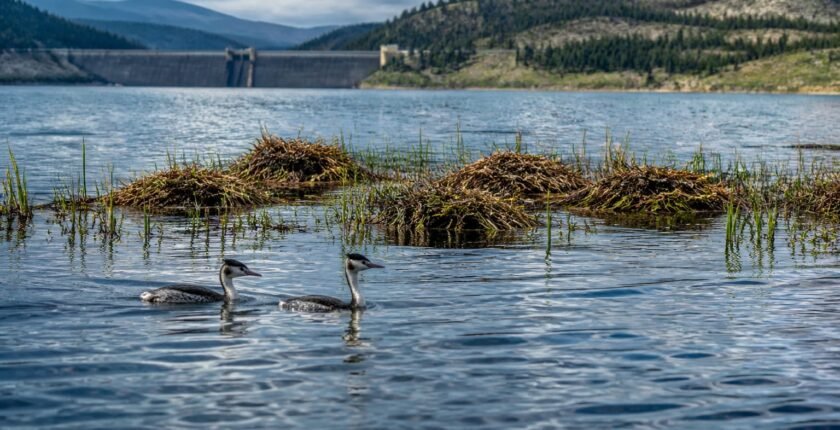
Estimated reading time: 6 minutes · Last updated:
Rain combined with wind-driven waves sharply raised failure rates among grebe nests at Cascade Reservoir in Idaho, according to a University of Idaho and U.S. Geological Survey study in the Journal of Freshwater Ecology. Drone surveys over two breeding seasons followed 3,888 Clark's Grebe and Western Grebe nests. Over a full 29.5-day nesting cycle, the chance of a nest surviving fell below 1%. Storms unsettled nest platforms, pushed floating vegetation underwater and carried eggs off. The findings arrive as Idaho Power works through relicensing with the Federal Energy Regulatory Commission, which requires dam operators to adopt wildlife mitigation plans. In a state that gets more than half its generation from water, the grebe nests show what reservoir operation costs local birds.
Key takeaways
- The study: University of Idaho and U.S. Geological Survey researchers used drones over two breeding seasons to follow 3,888 Clark's Grebe and Western Grebe nests at Cascade Reservoir.
- The cause: Rainfall paired with waves driven by wind across open reservoir water was linked to higher nest failure, as platforms destabilised, vegetation sank and eggs washed out.
- The survival odds: The probability that a nest lasted a full 29.5-day nesting cycle dropped below 1%, according to Energies Media writer Anke Maree's summary of the paper.
- The regulatory link: Idaho Power's relicensing before the Federal Energy Regulatory Commission requires a wildlife mitigation plan, and Maree points to adjusted seasonal reservoir drawdowns as one option.
Table of contents
- Key takeaways
- How Drones Followed 3,888 Grebe Nests at Cascade Reservoir
- Why Rain and Wind Together Sink Grebe Nests
- What Grebe Losses Mean for Idaho Power's FERC Relicensing
- Why Idaho Cannot Simply Step Back From Hydropower
- Can reservoir operations protect grebe colonies?
- What to be careful about
- Frequently asked questions
How Drones Followed 3,888 Grebe Nests at Cascade Reservoir
The fieldwork took place at Cascade Reservoir in Idaho and was carried out by researchers from the University of Idaho and the U.S. Geological Survey. Instead of entering the colonies on foot or by boat, the team flew drones over the breeding sites. That non-invasive method lets surveyors count and recheck nests without flushing the adults sitting on them.
Across two breeding seasons the surveys logged 3,888 nests from two waterbirds in the same genus: Clark's Grebe (Aechmophorus clarkii) and Western Grebe (Aechmophorus occidentalis). A sample that large gives researchers enough successes and failures to pull apart the influence of separate weather variables, which a handful of nests could not do.
The goal was specific. The team set out to identify the environmental conditions behind the widespread nest failures seen at reservoir sites, and the paper in the Journal of Freshwater Ecology concentrates on direct effects on breeding waterbirds rather than broader ecosystem change.
Why Rain and Wind Together Sink Grebe Nests
A reservoir offers wind a long, unbroken stretch of water to work on, and the result is strong wave action that reaches the colonies. The study ties nest losses to the interaction of that wave action with rainfall, not to either condition in isolation.
When the two arrive together, three things go wrong. Nest platforms lose their stability. Floating vegetation that the colonies depend on is pushed below the surface. Eggs are carried away by the water. Any one of these can end a nesting attempt outright.
Maree's summary of the paper puts the probability of a nest surviving a complete 29.5-day nesting cycle at below 1%. Her summary does not make clear whether that figure covers every nest tracked or only those exposed to storm conditions, so it is best read as a measure of how hostile the site can be rather than a single colony-wide average.
Maree also ties the findings to climate. She argues that extreme weather has grown more frequent and more destructive as greenhouse gas emissions keep setting records, and that adding more severe storms to a reservoir setting drives survival down further. That is her framing of the trend; the study's own measurements come from two breeding seasons at one site.
What Grebe Losses Mean for Idaho Power's FERC Relicensing
Idaho Power is going through a multi-year relicensing process with the Federal Energy Regulatory Commission. Renewal requires dam operators to adopt wildlife mitigation plans that work, and Maree writes that Idaho Power must put measures in place to shield breeding colonies from severe wave action before relicensing can go ahead, with the peak nesting months the priority.
Maree regards the study as bearing directly on that application. Nothing Maree has put forward, however, shows that Idaho Power operates Cascade Reservoir or that the reservoir falls within the relicensing at issue, and FERC has yet to announce any decision. For now, tying this dataset to that licence remains an argument rather than a regulatory finding.
The remedy Maree favours is a nature-based one: adjusting seasonal reservoir drawdowns. A drawdown is the planned lowering of a reservoir's water level. Timing those changes around the nesting season is an operational lever rather than new construction, which matters in a permitting process that Maree describes as slow and expensive. She argues that thorough environmental impact research can shorten such reviews by giving regulators data up front.
Why Idaho Cannot Simply Step Back From Hydropower
The tension exists because Idaho depends heavily on its dams. Maree puts hydroelectric output at more than half of the state's total generation, produced by 140 dams in operation. Nationally, she writes, hydropower supplies about 27% of renewable electricity generated in the US and almost 6% of total large-scale power.
Hydro also does a job that wind and solar cannot do alone. Its plants can ramp output within seconds when demand swings, which lets grid operators absorb the variable output of weather-dependent sources. Maree argues that keeping this balance becomes more important as climate deadlines approach.
Those deadlines are close. Federal and state goals target 100% carbon-free power by 2050, and Idaho's utilities have set 2045 as their net-zero year. The grebe research does not argue against hydropower. It argues that the way a reservoir is operated during a few critical months could decide whether its breeding colonies succeed.
Can reservoir operations protect grebe colonies?
The case for
- Drone surveys of 3,888 nests give operators and regulators site-specific evidence about when and how nests fail.
- Adjusted seasonal drawdowns are an operating change rather than new infrastructure, so they can be targeted at peak nesting months.
- FERC relicensing requires a wildlife mitigation plan, creating a formal point at which colony protection must be addressed.
The case against
- Nest survival across a full 29.5-day cycle fell below 1%, leaving little margin before colonies fail outright.
- Maree argues severe weather is becoming more frequent, which would raise wave and rain exposure over time.
- Any change to water levels must be weighed against the fast-response flexibility that makes hydro valuable for balancing wind and solar.
What to be careful about
- If Idaho Power's mitigation plan does not satisfy FERC on colony protection, the relicensing timeline could lengthen.
- If storms during nesting months become more common, breeding failure at Cascade Reservoir could worsen beyond what two seasons of data captured.
- Results from one reservoir over two seasons may not transfer directly to other reservoirs with different wind exposure or water management.
The bottom line
The Cascade Reservoir work gives a concrete answer to a question hydropower operators usually face in general terms: what actually destroys nests on a reservoir. Across 3,888 nests and two breeding seasons, rain arriving together with wind-driven waves was the combination tied to failure, and full-cycle survival fell below 1%. What the study does not settle is how Idaho Power, or FERC, will respond. The connection to the relicensing is drawn by Maree rather than by a regulatory ruling, and no mitigation plan has been published. Seasonal drawdown timing is the lever on the table. Whether it can protect colonies without blunting the grid flexibility Idaho relies on is the open question.
What to watch
- Watch for FERC's decision on Idaho Power's hydropower relicensing; no date for a ruling has been set.
- Watch whether Idaho Power's wildlife mitigation plan includes seasonal drawdown changes timed to peak nesting months; no filing date has been given.
- Watch whether the University of Idaho and USGS team extends drone monitoring at Cascade Reservoir into later breeding seasons; no follow-up has been announced.
Frequently asked questions
What is a Clark's Grebe?
Clark's Grebe, Aechmophorus clarkii, is a breeding waterbird and one of two grebe species tracked at Cascade Reservoir. The other was the Western Grebe, Aechmophorus occidentalis, from the same genus.
Does hydropower relicensing require protecting wildlife?
Renewal before the Federal Energy Regulatory Commission requires dam operators to adopt effective wildlife mitigation plans. Maree writes that Idaho Power must show how it will protect breeding colonies from severe wave action before its relicensing proceeds.
How much of Idaho's electricity comes from hydropower?
Maree puts hydropower at more than half of Idaho's total generation, from 140 operating dams. Nationally she cites hydro at about 27% of US renewable electricity.
What is a reservoir drawdown and how could it help nesting grebes?
A drawdown is a planned lowering of a reservoir's water level. Maree suggests adjusting the seasonal timing of drawdowns as a nature-based way to reduce harm to colonies during peak nesting months.
Related reading