
Blog
Agus-Pulangi Hydropower Rehab Gets P29.98 Billion Nod
Estimated reading time: 7 minutes · Last updated:
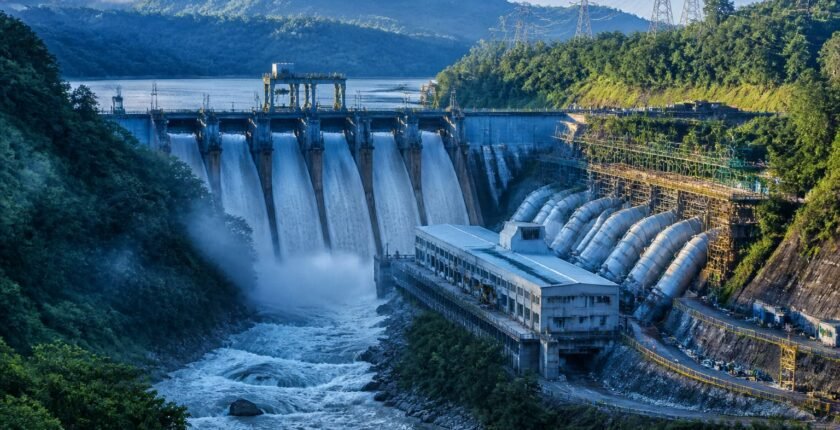
The Philippines' Economy and Development Council, chaired by President Ferdinand Marcos Jr., approved a P29.98 billion rehabilitation of the seven-plant Agus-Pulangi hydropower complex in Mindanao on 12 November 2026. The Department of Economy, Planning, and Development (DEPDev) said the work will modernise the plants, make them more reliable and deal with environmental concerns. The approval lets the project move toward implementation, but no start date, contractor or spending breakdown has been published. Timing matters here. The complex runs on the Agus and Pulangi rivers and feeds a Mindanao grid already hit by outages, while government forecasters warn that a very strong El Nino could leave 68 provinces in drought by February.
Key takeaways
- Approval: The Economy and Development Council approved the P29.98 billion Agus-Pulangi Hydroelectric Power Plants Rehabilitation and Asset Management Project on 12 November 2026.
- Scope: DEPDev says the project covers modernisation of all seven Agus-Pulangi plants, better reliability and fixes for environmental concerns.
- Open questions: DEPDev has not published a construction start date, a contract award schedule, a financing source or a breakdown of the P29.98 billion.
- Grid pressure: Outages in the Visayas and Mindanao prompted the Energy Regulatory Commission, in November 2026, to hand 13 power companies 24 show-cause orders between them.
- Drought risk: Government forecasters warned that a very strong El Nino could put 68 provinces in drought by February, a threat to hydropower-dependent Mindanao.
Table of contents
- Key takeaways
- What the Economy and Development Council Signed Off On
- Why Balisacan Ties the Rehab to Mindanao's Growth
- A Strained Mindanao Grid Raises the Stakes
- What the Approval Leaves Unanswered
- The Rest of the Council's 12 November Agenda
- The case for and against a quick payoff
- What to be careful about
- Frequently asked questions
What the Economy and Development Council Signed Off On
The formal name is the Agus-Pulangi Hydroelectric Power Plants Rehabilitation and Asset Management Project. DEPDev set out three aims for it: modernising the seven plants, raising their reliability and addressing environmental concerns at the complex. The approved budget is P29.98 billion.
The Economy and Development Council vets large government projects before they proceed to implementation. President Marcos chairs it, and Economy Secretary Arsenio M. Balisacan serves as vice-chair. Its sign-off is a gate rather than a groundbreaking. It allows the rehabilitation to advance, but it does not by itself put crews on site.
The phrase asset management in the project title points to more than a one-off repair. Asset management is the ongoing upkeep and planning that keeps generating equipment working over its service life. DEPDev has not described how that part of the project will be organised or who will run it.
Why Balisacan Ties the Rehab to Mindanao's Growth
Balisacan pitched the decision in economic terms. He said Mindanao needs power that is both dependable and affordable if the island is to reach its potential. He added that the rehabilitation will support productivity, investment and employment across the region.
He also presented the Agus-Pulangi approval as one piece of a package. Speaking about the full slate cleared at the 12 November meeting, Balisacan said growth hinges on setting the right conditions and on public investments that strengthen each other.
That argument is a claim about outcomes, not a measured result. DEPDev has published no estimate of how much capacity the rehabilitated plants would add or recover, how many jobs the work would support, or what effect it might have on power prices in Mindanao. The affordability point in particular will depend on costs that have not been disclosed. Until those figures appear, the growth case rests on Balisacan's framing.
A Strained Mindanao Grid Raises the Stakes
Hydropower plants turn the flow of rivers into electricity, so their output is only as steady as the water feeding them. The Agus-Pulangi complex draws on two rivers, the Agus and the Pulangi. The Maria Cristina Falls in Iligan City sit on the Agus.
The grid the complex supplies has been under pressure. Earlier in November 2026, outages across the Visayas and Mindanao led the Energy Regulatory Commission to send 13 power companies a total of 24 show-cause orders. Each such order compels the recipient to explain why it should not be sanctioned.
Weather adds a second pressure. In November, government forecasters said a very strong El Nino had developed over the Pacific, and they projected drought across 68 provinces by February. For an island that relies heavily on hydropower, a dry spell cuts directly into how much electricity its plants can generate, which is why the rehabilitation's timing matters as much as its budget.
What the Approval Leaves Unanswered
DEPDev's announcement omitted most of the details that decide when Mindanao might feel any benefit. It set no construction start date and no schedule for awarding contracts. It did not break down how the P29.98 billion will be spent.
Financing is also unstated. The announcement did not say whether the money will come from the national budget, loans or another source, and it named no contractor to carry out the modernisation.
Those gaps are where the real test lies. A council approval signals intent, but on a grid already operating under repeated alerts, getting capacity back depends on funding, procurement and construction moving in sequence. The same meeting offered a reminder that approved costs can move: the Samal Island-Davao City Connector came back with a higher price and a later completion window.
The Rest of the Council's 12 November Agenda
The council approved changes to the Samal Island-Davao City Connector, including design revisions and a cost increase from P23.04 billion to P26.78 billion, a rise of about P3.74 billion. Its implementation period now runs to 30 November 2029.
It also approved a pilot of Project BALAY, short for Building Access to Learning for Students, which the Commission on Higher Education will run at five state universities and colleges. The goal is safe, low-cost dormitory space for students from disadvantaged backgrounds.
On policy, the council endorsed a proposed executive order setting out which planning duties belong to local government units and which to national agencies, and simplifying how farmland is reclassified and converted. It adopted a Social Protection Floor Prioritization Matrix to rank which social protection programmes get money in the National Expenditure Program. Separately, phase one of the Metro Manila Flood Management Project received a six-month extension to 31 May 2027.
| Item | Action | Cost | Deadline or timing |
|---|---|---|---|
| Agus-Pulangi hydropower rehabilitation | Approved | P29.98 billion | Not stated |
| Samal Island-Davao City Connector | Design and cost adjusted | P26.78 billion (was P23.04 billion) | 30 November 2029 |
| Project BALAY (CHED) | Pilot approved at five state universities and colleges | Not stated | Not stated |
| Land use executive order | Proposed order endorsed | Not applicable | Not stated |
| Social Protection Floor Prioritization Matrix | Adopted | Not applicable | Not stated |
| Metro Manila Flood Management Project, phase one | Six-month extension (separate decision) | Not stated | 31 May 2027 |
The case for and against a quick payoff
The case for
- A P29.98 billion approval covering all seven Agus-Pulangi plants addresses the whole complex rather than single units.
- The council's approval clears the main screening step for large government projects, letting the rehabilitation advance.
- DEPDev has tied the work to reliability and environmental fixes on a grid the ERC is already policing over outages.
The case against
- No construction start date, award schedule or contractor has been named, so benefits cannot yet be timed.
- The financing source and spending breakdown of the P29.98 billion are undisclosed.
- A very strong El Nino could put 68 provinces in drought by February, testing hydropower output long before any rehabilitation is finished.
What to be careful about
- The timetable is open: without a start date or award schedule, the rehabilitation could lag the grid problems it is meant to ease.
- The P29.98 billion has no published financing plan or cost breakdown, leaving funding and cost control unclear.
- Drought linked to the very strong El Nino could reduce river flows on the Agus and Pulangi before upgrades arrive.
- Approved costs can be revised later, as the Samal Island-Davao City Connector's rise from P23.04 billion to P26.78 billion at the same meeting shows.
The bottom line
The Agus-Pulangi approval puts a P29.98 billion figure and a stated purpose behind the seven-plant complex. It also ties the work to Balisacan's argument that cheaper, steadier power is a precondition for growth on the island. What it does not yet supply is a schedule. With the Energy Regulatory Commission pursuing 13 power companies over outages, and forecasters warning that drought could reach 68 provinces by February, the gap between approval and finished work is the figure that matters most, and DEPDev has not given it. The next useful signals will be a financing plan, a procurement timetable and named contractors. Until they arrive, the approval remains a budget line rather than added reliability on the Mindanao grid.
What to watch
- Watch for DEPDev or the implementing agency to publish a construction start date, a contract award schedule and a financing plan for the P29.98 billion; no date has been set.
- Watch whether the very strong El Nino pushes 68 provinces into drought by February, as government forecasters warned, and how that affects hydropower output in Mindanao.
- Watch for the Energy Regulatory Commission's next steps on its 24 show-cause orders to 13 power companies; no date for decisions has been given.
Frequently asked questions
What is the Agus-Pulangi hydropower complex?
It is a group of seven hydroelectric power plants in Mindanao that draw water from the Agus and Pulangi rivers. The Maria Cristina Falls in Iligan City sit on the Agus River that feeds the complex.
When will the Agus-Pulangi rehabilitation start?
No start date has been announced. DEPDev's 12 November 2026 statement gave no construction schedule, contract award timetable or named contractor for the P29.98 billion project.
Who approved the P29.98 billion Agus-Pulangi project?
The Economy and Development Council, chaired by President Ferdinand Marcos Jr. with Economy Secretary Arsenio M. Balisacan as vice-chair, approved it. The council screens large government projects before they move to implementation.
Why does El Nino matter for Mindanao's hydropower?
Hydropower output depends on river flow, and Mindanao relies heavily on it. Government forecasters warned in November 2026 that a very strong El Nino could leave 68 provinces in drought by February.
Related reading