
Blog
Zimbabwe Solar for Health Reaches 1,200+ Medical Sites
Estimated reading time: 6 minutes · Last updated:
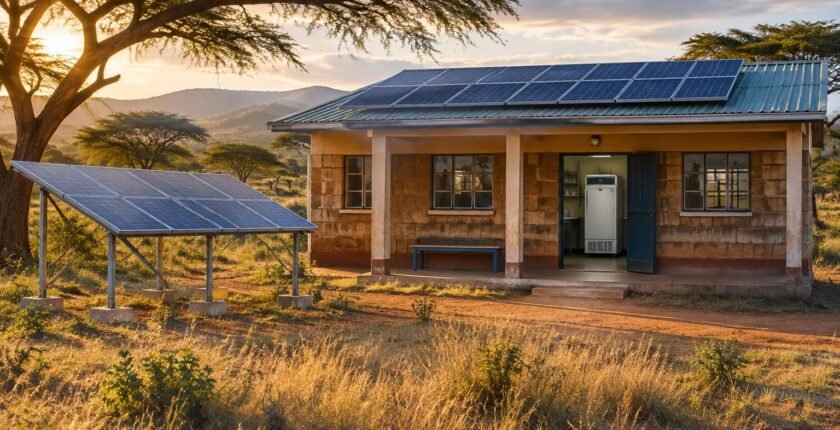
More than 1,200 medical facilities in Zimbabwe ran on solar energy systems as of August, the U.N. said. They are the result of a solar for health program launched in 2015. The U.N. Development Program, the Global Fund and Zimbabwe's government set it up so clinics could keep vaccines and other temperature-sensitive drugs refrigerated whenever the national grid failed. The need was acute. Drought had drained the dams and lakes feeding the country's hydroelectric plants, and health workers were coping with blackouts of up to 18 hours a day. Installations now range from a clinic dispensary in Harare to a 500-kilowatt solar and battery system at Parirenyatwa Group of Hospitals. They also reach back into the national medicine supply chain.
In the past, each time I would be admitted here, there would be total darkness with no alternative when power went off. But with solar now, that is no more.
Neliet Magosvongwe, patient
Key takeaways
- Scale: More than 1,200 medical facilities in Zimbabwe had solar energy systems as of August, the U.N. said.
- Origins: UNDP, the Global Fund and Zimbabwe's government launched the solar for health program in 2015, after drought weakened hydroelectric supply and outages ran up to 18 hours a day.
- Hospitals: Parirenyatwa Group of Hospitals pairs 500 kilowatts of solar with battery storage, while United Bulawayo Hospitals, which serves five provinces, runs a 350-kilowatt plant.
- Supply chain: In 2024 UNDP gave a 450-kilowatt-peak array to be shared by the National Pharmaceutical Company and the health ministry.
Table of contents
Why Zimbabwe's Clinics Were Left in the Dark
Zimbabwe's hydroelectric output depends on the water held in its dams and lakes, and drought drew those reserves down. Less water meant less generation, and the gap reached hospitals as blackouts. Staff were trying to deliver essential care through outages that ran as long as 18 hours a day, as first reported by Health Policy Watch, which spoke to a nurse and a patient at facilities now running on solar.
The cost showed up in maternity wards and pharmacies. Women gave birth by candlelight. Staff rushed to keep refrigerated stock, critical vaccines included, from warming. For a clinic, a fridge without power is a supply problem as well as a lighting one.
The response came in 2015, when the U.N. Development Program, the Global Fund and the government launched the partnership. Its logic is simple. If generation sits at the clinic itself, the lights and fridges stop depending on the grid.
How Solar Keeps Medicine Cold in Harare
Budiriro Polyclinic in Harare was an early recipient. Its dispensary now holds four large refrigerators. When the grid drops out, solar keeps the temperature-sensitive medicines inside them cold.
Parirenyatwa Group of Hospitals runs a 500-kilowatt system that pairs solar panels with battery storage. Battery storage means banks of cells that hold surplus daytime output for later use. That pairing matters because panels generate nothing after dark, and an outage does not wait for sunrise. No battery capacity figure accompanies the 500-kilowatt rating.
A nurse at Parirenyatwa described how the routine used to work. "Before the coming of solar here, as nurses, we would order expecting mothers to buy candles and torches for lighting because power outages were severe," the nurse said. "We no longer do that because solar has made our lives better."
Why Solar Moved Upstream to the Medicine Warehouses
In 2024, UNDP's support reached the supply side. It donated a 450-kilowatt-peak array to be shared by the National Pharmaceutical Company and the health ministry, formally the Ministry of Health and Child Care. Kilowatt-peak is the output a solar array is rated to produce under standard test conditions, so day-to-day generation usually comes in lower.
That gift moves protection upstream. A clinic fridge guards the doses on its own shelves, but medicines sit in central storage before they are distributed to any clinic. Powering that link shields stock earlier in its journey, not only at the final stop.
The U.N.'s August count of more than 1,200 medical facilities shows how far the effort has spread since 2015. It does not show the combined capacity installed or how many sites have batteries. Nor does it show how much of the health network still lacks its own power.
What Bulawayo Shows About Diesel and Reliability
United Bulawayo Hospitals is a central referral hospital that takes patients from five provinces. It now has a 350-kilowatt solar plant in full operation. A hospital staffer reported two gains: more dependable power, and lower spending on the diesel that feeds its backup generators.
Diesel is the default fallback for a hospital on a weak grid, and the cost comes back with every long outage. No savings figure came with the staffer's account. The benefit therefore remains a description from inside the hospital rather than a measured number.
For patients the change is simpler to describe. "I'm so happy because there is solar power here now," said Neliet Magosvongwe, a patient. "In the past, each time I would be admitted here, there would be total darkness with no alternative when power went off. But with solar now, that is no more."
| Site | Role | System | Reported effect |
|---|---|---|---|
| Budiriro Polyclinic | Clinic in Harare | Solar, size not given | Four large refrigerators kept cold |
| Parirenyatwa Group of Hospitals | Hospital group | 500 kW solar with battery storage | Mothers no longer told to bring candles |
| National Pharmaceutical Company and health ministry | Medicine supply | 450 kWp, UNDP donation in 2024 | Stock protected before distribution |
| United Bulawayo Hospitals | Referral hospital, five provinces | 350 kW solar plant | Better reliability, less diesel (staffer) |
How far solar can carry Zimbabwe's health system
The case for
- Battery storage at Parirenyatwa lets a 500-kilowatt system cover outages that start or continue after dark.
- United Bulawayo Hospitals reports lower diesel spending on generators, a running cost that solar displaces.
- The 2024 450-kilowatt-peak donation protects medicines at the supply stage, not only in clinic fridges.
- Coverage had passed 1,200 medical facilities as of August, the U.N. said.
The case against
- Only Parirenyatwa's system is described as including battery storage, so night-time coverage at other sites is unclear.
- No figures on diesel savings or uptime have accompanied the reported gains.
- The program was launched by UNDP and the Global Fund alongside the government, so its expansion is tied to partner backing.
What to be careful about
- Facilities with solar but no storage may still lose refrigeration during night-time outages of up to 18 hours.
- Kilowatt-peak ratings overstate typical daily output, so a 450-kilowatt-peak array delivers less in ordinary conditions.
- Without published savings or reliability data, reported improvements at Bulawayo cannot be compared across sites.
The bottom line
Zimbabwe's solar for health program has grown from a 2015 partnership into a network of more than 1,200 medical facilities. Its systems range from a clinic dispensary in Harare up to 500 kilowatts at Parirenyatwa. So far the evidence is mostly operational and personal. Fridges stay cold, births are no longer lit by candles, and a Bulawayo hospital is buying less diesel. What is missing is measurement. Without figures on installed capacity, battery coverage and savings, it is hard to judge whether every site can ride out an 18-hour outage, or only the best equipped. The next U.N. tally will show how far the network has reached. Data on storage would show how deep it goes.
What to watch
- Watch for the U.N.'s next update on how many Zimbabwean health facilities carry solar beyond the more than 1,200 counted in August; no date has been set.
- Watch whether United Bulawayo Hospitals or the Ministry of Health and Child Care publishes diesel savings from the 350-kilowatt plant; no date has been announced.
- Watch for any disclosure of how many solar-equipped sites also have battery storage like Parirenyatwa's; no timetable has been given.
Frequently asked questions
Do Zimbabwe's solar clinics keep working at night?
It depends on storage. Parirenyatwa Group of Hospitals pairs its 500-kilowatt solar system with batteries, which carry power past sunset. Storage at most of the other 1,200-plus sites has not been specified.
Who funds solar power at Zimbabwe's health facilities?
The solar for health program was launched in 2015 by the U.N. Development Program, the Global Fund and Zimbabwe's government. UNDP also donated a 450-kilowatt-peak array in 2024 to the National Pharmaceutical Company and the health ministry.
How many health facilities in Zimbabwe have solar power?
More than 1,200 medical facilities had solar energy systems as of August, the U.N. said. Named examples include Budiriro Polyclinic in Harare and United Bulawayo Hospitals, which has a 350-kilowatt plant.
Related reading