
Blog
Superhot Geothermal Gets Google as Quaise Signs 50MW Deal
Estimated reading time: 6 minutes · Last updated:
Quaise Energy, a geothermal developer based in Houston, has agreed to sell Google 50 megawatts of superhot geothermal electricity from Project Obsidian, a site near Newberry Volcano in central Oregon. The power is earmarked for Google's data centers in The Dalles, Oregon, and could start flowing as early as 2030. Quaise announced the power purchase agreement on 17 November 2026, a contract that gives the company its first commercial customer. The Wall Street Journal reported that the deal could be worth more than $500 million over its life. Google gets firm, carbon-free supply from rock hotter than 300°C. That depends on Quaise drilling to that rock with a technology not yet proven at commercial scale.
Key takeaways
- The deal: Quaise Energy announced on 17 November 2026 that Google will buy 50 megawatts from Project Obsidian in central Oregon, which Quaise says makes Google its first commercial customer.
- Timing and destination: The electricity is intended for Google's data centers in The Dalles, Oregon, with deliveries possible from 2030 at the earliest.
- Reported value: The Wall Street Journal reported the contract could be worth more than $500 million, against early-phase development costs estimated at about $350 million.
- The drilling challenge: Quaise aims to reach rock above 300°C at depths of up to about 4.8 km near Newberry Volcano by combining conventional rigs with gyrotron-based millimeter-wave drilling.
- Funding run: Quaise raised a $180 million Series B in August 2026 and secured up to $25 million in US Department of Energy support in September 2026.
Table of contents
What Google Is Buying From Project Obsidian
A power purchase agreement is a long-term contract in which a buyer commits to pay for electricity a project has not yet produced. For a developer, that signature works as a form of security. Lenders and investors find it far easier to back a plant that already has someone lined up to take its output.
Google's side of the bargain is 50 megawatts, destined for the data centers it already runs in The Dalles. The supply is described as firm and carbon-free. Firm power is electricity available at every hour, rather than only when the wind blows or the sun shines, and that is the profile a server hall running nonstop needs.
The timing is the soft part. Deliveries are pegged to 2030 at the earliest, a phrasing that sets a floor rather than a promise. Key terms, including the length of the contract and the price Google will pay per unit of power, remain undisclosed.
How Quaise Plans to Reach Rock Above 300°C
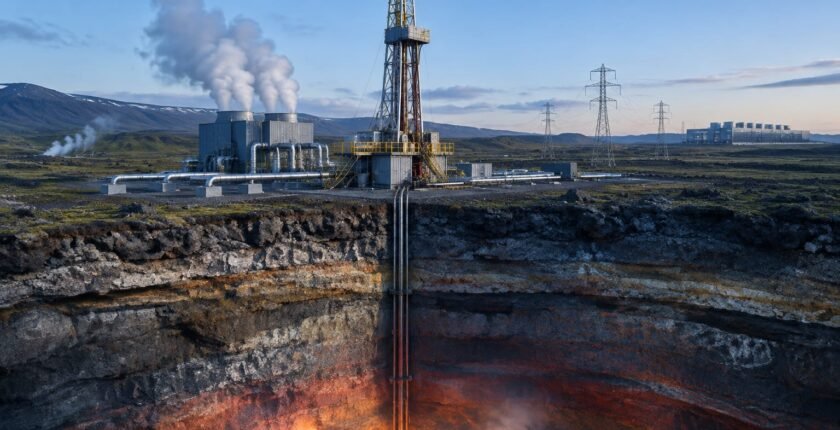
Project Obsidian sits close to Newberry Volcano, a location picked for its underground heat. Quaise is aiming for superhot rock, meaning rock above 300°C, at depths that extend as far as about 4.8 km below the surface.
Getting down there calls for two methods. Quaise intends to combine ordinary drilling rigs, the product of a mature industry, with millimeter-wave drilling, a technique that relies on devices known as gyrotrons.
That second method is where the project's real risk lives. Millimeter-wave drilling has not been proven at commercial scale, and boring about 4.8 km into rock this hot is the kind of job where schedules tend to stretch. The 2030 start depends on the newer tool performing in the field.
For Google, that uncertainty looks like a cost worth carrying. Signing years before any electricity exists reserves a share of a resource that could become contested if superhot geothermal performs as hoped.
Do the Reported Numbers Cover the Build?
Two figures frame the economics. The Wall Street Journal reported that the total value of the agreement could exceed $500 million. Separately, the cost of developing Project Obsidian's early phases is put at about $350 million, though no author of that estimate has been named.
Side by side, the reported contract value is larger than the estimated early-phase spend, which would leave Quaise a margin on the initial build. Both numbers carry caveats. One is a reported possible value of payments spread over years. The other is an estimate made before the hardest drilling has been attempted.
Revenue under a power purchase agreement also arrives only when electricity does. If first deliveries slide past 2030, the income that justifies the outlay slides with them. Quaise would then have to bridge the gap with existing capital or fresh money from investors.
Why 2026 Brought Fresh Capital to Quaise and Fervo
The Google contract follows two funding events earlier in 2026. In August, Quaise raised $180 million in a Series B round. In September, the US Department of Energy committed up to $25 million in support.
Together those sums give the company capital to start work, but they fall short of the about $350 million estimated for the early phases. That gap is why a creditworthy buyer matters. The Google agreement is the sort of contract that can help attract project finance for the rest.
Rivals have drawn capital too. Fervo Energy, which competes with Quaise in next-generation geothermal, listed its shares in 2026 at a valuation of more than $10 billion. Investor appetite for geothermal that can supply round-the-clock power to data centers is plainly strong, and Quaise now has a signed customer to show for its share of that interest.
| Milestone | Month | Amount | Counterparty |
|---|---|---|---|
| Series B funding round | August 2026 | $180 million | Not disclosed |
| Federal support | September 2026 | Up to $25 million | US Department of Energy |
| Power purchase agreement | November 2026 | 50 MW; reported value above $500 million |
What could help or hurt Project Obsidian
The case for
- A signed contract with Google gives lenders a committed buyer for the plant's output.
- The $180 million Series B and up to $25 million from the US Department of Energy give Quaise working capital before revenue begins.
- Data centers such as Google's in The Dalles need firm power, and firm carbon-free sources are scarcer than intermittent ones.
The case against
- Millimeter-wave drilling with gyrotrons has not been demonstrated at commercial scale.
- 2030 is the earliest delivery date, not a committed one, so revenue timing is uncertain.
- The about $350 million early-phase cost is an estimate made before drilling to about 4.8 km has been done.
What to be careful about
- If millimeter-wave drilling fails to perform at depth, Project Obsidian may not reach rock above 300°C on schedule or at all.
- A delay beyond 2030 would postpone the revenue that underpins financing for the early phases.
- Development costs could exceed the about $350 million estimate, narrowing the gap to the reported contract value.
- The more than $500 million figure is a reported possible value, and the contract's length and pricing have not been disclosed.
The bottom line
The Quaise and Google agreement moves superhot geothermal from a drilling concept to a project with a named buyer and a megawatt figure attached. Google gains a claim on 50 megawatts of firm, carbon-free power for The Dalles. Quaise gains a contract the Wall Street Journal valued at potentially more than $500 million, set against early development costs estimated at about $350 million. What the deal cannot do is prove the drilling. Everything hinges on millimeter-wave tools working at depths of about 4.8 km and temperatures above 300°C, on a timetable that begins no sooner than 2030. Until Project Obsidian produces heat, the contract is a vote of confidence rather than evidence that the technology works.
What to watch
- Watch for progress reports on drilling at Project Obsidian, especially any field results from millimeter-wave drilling; no date has been set.
- Watch whether Quaise closes project finance for the early phases estimated at about $350 million; no timetable has been given.
- Watch for first power deliveries to Google's data centers in The Dalles, which could begin as early as 2030.
Frequently asked questions
What counts as superhot geothermal energy?
At Quaise's Project Obsidian, superhot refers to rock above 300°C. Quaise is targeting that rock at depths of up to about 4.8 km near Newberry Volcano in central Oregon.
What are gyrotrons used for in geothermal drilling?
Gyrotrons are the devices behind millimeter-wave drilling, which Quaise plans to pair with conventional rigs at Project Obsidian. The technique has not been proven at commercial scale, making it the main technical uncertainty for the deal with Google.
When will Google receive power from Quaise Energy?
Deliveries of the 50 megawatts could begin as early as 2030, feeding Google's existing data centers in The Dalles, Oregon. The 2030 date is the earliest possible start rather than a fixed commitment.
How does Quaise Energy compare with Fervo Energy?
Both companies work in next-generation geothermal. Fervo Energy listed its shares in 2026 at a valuation above $10 billion, while Quaise raised a $180 million Series B in August 2026 and has now signed Google as a buyer.
Related reading